Person // Biotech Dealmaker
Vincent Ling
He read the risk structure everyone else skipped, and found the science behind the COVID vaccine years before the world did.
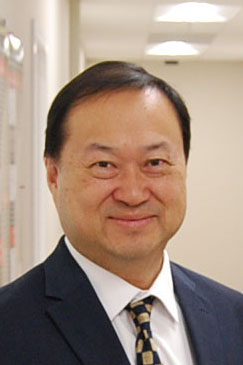
// The scout, mid-stride. Boston-Cambridge, present day.
He read the risk structure everyone else skipped, and found the science behind the COVID vaccine years before the world did.
// The scout, mid-stride. Boston-Cambridge, present day.
In a Laval lab, a team is coaxing stem cells into something that behaves like a liver. Not a model of a liver, not a chip pretending to be one - a piece of working tissue you could one day implant in a person whose own organ has quit. The man in charge of turning that science into deals, partners, and money is Vincent Ling, and he has done this kind of thing before. The last time, it ended in a Nobel Prize he had nothing to do with winning and everything to do with funding.
Ling joined Morphocell Technologies as Chief Business Officer in August 2024. Morphocell is a regenerative medicine company with a single stubborn idea: that severe organ dysfunction should not be a death sentence solved only by a transplant waiting list. Its iPSC-derived platform - induced pluripotent stem cells, reprogrammed back to a blank slate and then steered into specific tissue - is aimed first at liver disease, where the gap between need and available organs is brutal.
That is the job in front of him. The job behind him is the one that explains why Morphocell wanted him.
For 12 years, Ling worked at Takeda's Center for External Innovation, where his title was Senior Director and his actual function was something closer to a talent scout for molecules. He hunted early-stage science across therapeutic areas, decided what to finance, and shepherded ideas that were too raw for most balance sheets. Most of those bets are footnotes. One of them is history.
It is worth sitting with what that role actually demands. A pharmaceutical company the size of Takeda does not lack money or ambition; what it lacks is the rare person who can walk into a university lab, look at a result that has not yet been replicated by anyone, and decide whether to wire a franchise's worth of belief behind it. That is not a finance job and it is not a science job. It is both, held in the same head at the same time. Ling spent more than a decade doing exactly that across billion-dollar franchises, and the people who hired him into Morphocell were buying that specific muscle.
"I am honored to join Morphocell's team in creating a bioengineered therapy to address liver diseases."
- Vincent Ling, on becoming Chief Business Officer
At Takeda, Ling identified and supported the Kariko-Weissman mRNA technology coming out of the University of Pennsylvania - work most of the field had filed under "interesting, unproven."
That platform became the basis for the first COVID mRNA vaccines, deployed to billions of arms during the pandemic.
In 2023, Katalin Kariko and Drew Weissman won the Nobel Prize in Physiology or Medicine for the discoveries that made it work.
Spotting a winner after it wins is easy. Backing it while it is still a stack of papers and a stubborn researcher is the whole game, and it is the part nobody hands out medals for. Ling's instinct for that moment - the gap between "too early" and "obvious" - is the thread that runs through his career.
The hard part is not recognizing the breakthrough. It is funding it before anyone agrees it is one.// The Ling method, paraphrased
He brings the same skepticism to the deals he reads in public. On LinkedIn, dissecting Summit Therapeutics' cancer-drug pact with China's Akeso, he cut past the headline and asked the only question that mattered: where does the money actually go, and who is left holding the risk?
Before the boardrooms, there was the bench. Ling took a BA from UC Berkeley, then an MS and a PhD from the University of Illinois, then a postdoc at Harvard. That sequence matters, because the thing that makes him unusual is not that he can read a term sheet - plenty of executives can - but that he can read the science underneath it and tell whether it will hold.
He spent that fluency at the front edge of the field: cell therapy, biologics, genetic engineering, novel biomaterials, and cellular bio-delivery systems. At Neurotech Pharmaceuticals he ran biological sciences for encapsulated cell therapy - engineering tiny capsules of living cells as a delivery system, which is exactly the kind of strange, specific work that makes the leap to Morphocell's engineered tissue feel less like a pivot and more like a continuation. Along the way came stops at Genetics Institute (now Wyeth), Adnexus Therapeutics, and a vice presidency at Dragonfly Sciences.
He also advises the Bill & Melinda Gates Foundation and a roster of academic and non-profit institutions, and he is, by every account, a relentless communicator about the business and science of medicine - the rare executive who will explain the deal mechanics to you whether you asked or not.
BA, UC Berkeley. MS and PhD, University of Illinois. Postdoc, Harvard.
Leadership at Genetics Institute (now Wyeth).
Head of Biological Sciences for Encapsulated Cell Therapy, Neurotech Pharmaceuticals.
Leadership at Adnexus Therapeutics; VP at Dragonfly Sciences.
Senior Director, Center for External Innovation. Backs the mRNA platform that becomes the COVID vaccine.
Named Chief Business Officer, Morphocell Technologies.
The premise of Morphocell is uncomfortable and simple. A transplant requires someone else's organ, a matching donor, and a queue that many patients do not outlast. Engineered tissue flips the dependency: build the working biology from reprogrammed cells, and the bottleneck of donor supply starts to dissolve.
The company's iPSC-derived platform is designed to produce tissue-engineered solutions for severe organ dysfunction, with liver disease as the opening target - acute and acute-on-chronic liver failure, the conditions where the clock is least forgiving. The toolkit reaches toward cryopreserved cell products, minimally invasive delivery, and tissue that can be manufactured rather than harvested.
Ling's job is to turn that science into a business: partners, financing, and a path to the clinic. By late 2025 the company had raised a reported $50 million Series A, part of roughly $90 million in total funding, with a 44-person team split between research and the work of turning a platform into a product.
It is, in a sense, the same bet he made at Takeda, only now he is on the inside of it. Find the science that is almost ready, fund the gap, and be early enough that being right looks like luck. He has done it once at planetary scale. He is trying to do it again, one engineered liver at a time.
The difference this time is that the upside and the downside both land on him. A scout collects winners and walks away from losers; a Chief Business Officer owns the consequences of the platform he is selling. The work is less glamorous than the Nobel headline suggests - it is data rooms, term sheets, partnership talks, and the patient grind of convincing capital that a manufactured tissue is not science fiction but a near-term product. Ling has spent a career learning the exact dialect that conversation requires, fluent on both sides of the table: the biology that has to be true and the economics that have to close.
What keeps the story from being a tidy victory lap is how much remains unproven. Engineered tissue is hard. Manufacturing living biology to a consistent, clinical-grade standard is harder. The field is littered with elegant platforms that never crossed from the lab into a patient. Ling knows this better than most, which is precisely why his presence reads as a signal rather than a slogan. He is not a man who chases warm ideas. He arrives when he thinks the science is about to become real, and his timing, at least once, was good enough to change the world.
Reviewing Summit Therapeutics' deal with Akeso, he flagged the asymmetry: the developer banked roughly $475M in upfront payments and royalties, while public shareholders carried the full weight of the FDA approval risk.
His instinct is to ignore the headline and study the mechanics - who profits regardless of outcome, and who is exposed if the trial reads out wrong.
He is described as a prolific communicator on scientific, biotech, and pharma affairs - the rare leader happy to narrate the deal logic out loud.
Plenty of executives go quiet about how the sausage gets made. Ling does the opposite. He treats the financial architecture of a drug deal as a thing worth explaining in public, because the structure - not the press release - is where the real story lives. His three-word question, "where does the money go?", is the whole philosophy compressed: follow the cash, find the risk, and you find the truth about a deal long before the clinical data does.
Where does the money go?// Four words that double as a method
It is the same lens he turns on his own field. A platform is only as good as the economics that can carry it to a patient, and a patient is only helped if the science underneath actually holds. Ling has spent three decades refusing to separate those two questions - and that refusal, more than any single title, is the through-line of his career.
He helped surface the science behind the mRNA vaccines roughly a decade before "mRNA" became dinner-table vocabulary.
His early lab work involved encapsulating living cells - sealing them in capsules as a delivery system. Engineering tissue is the logical next chapter.
He advises the Gates Foundation on top of his corporate roles, a habit of staying close to where big science meets big money.
His academic trail - Berkeley, Illinois, Harvard - means he can argue the biology, not just the balance sheet.