Steve Herne|CEO, Unlearn.AI///Digital Twins for Clinical Trials|$130M+ Raised///38% Control Arm Reduction in Parkinson's Studies|Series C: $50M led by Altimeter Capital///EMA-Qualified AI Models|25+ Years in Pharma R&D///Glasgow Caledonian & Strathclyde Educated|"We're not here to make trials 5% more efficient."/// Steve Herne|CEO, Unlearn.AI///Digital Twins for Clinical Trials|$130M+ Raised///38% Control Arm Reduction in Parkinson's Studies|Series C: $50M led by Altimeter Capital///EMA-Qualified AI Models|25+ Years in Pharma R&D///Glasgow Caledonian & Strathclyde Educated|"We're not here to make trials 5% more efficient."///
YesPress Profile

Steve
Herne

Pharma's Favorite Contrarian - Now Running an AI Company

He spent 25 years watching drug trials move too slowly, cost too much, and ask too many patients to take a placebo. Now he's the CEO of the company replacing those placebos with AI-generated digital twins - and regulators are already on board.

CEO Unlearn.AI Digital Twins Clinical Trials AI & Biopharma Series C
$130M+
Total Funding Raised
38%
Control Arm Reduction
25+
Years in Pharma R&D
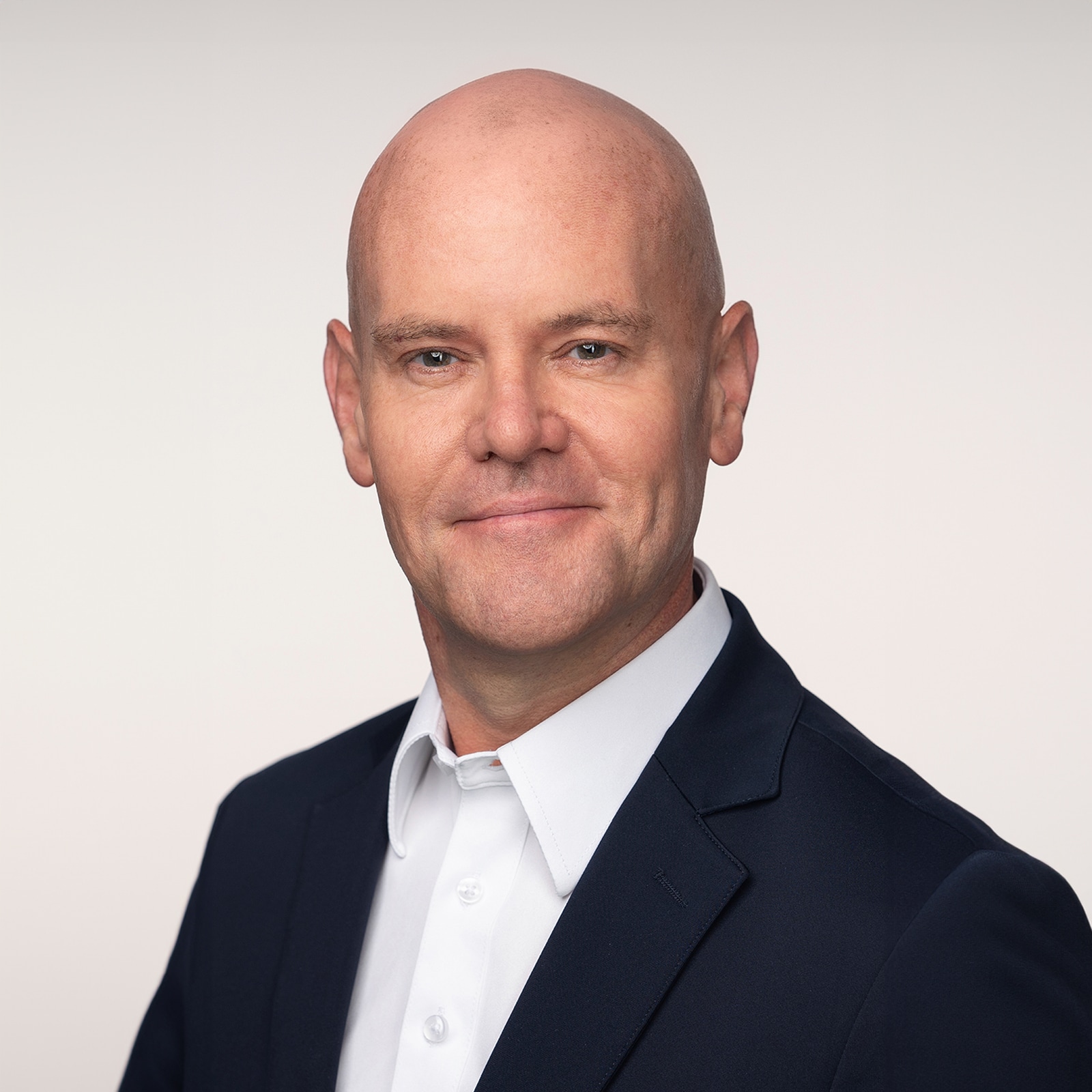
Steve Herne, CEO of Unlearn.AI
San Francisco, CA

Somewhere around year fifteen of watching pharmaceutical companies take an average of twelve years to bring a single drug to market, Steve Herne started asking a different question. Not "how do we run this trial faster?" but "what if we didn't need as many people in the control group to begin with?" That question - which most of the industry had decided was rhetorical - turned out to have an answer. He's now running the company that built it.

"We're not here to make trials 5% more efficient. We're here to help teams design smarter studies, align more quickly, and make decisions with greater clarity and confidence."

- Steve Herne, CEO, Unlearn.AI

Herne's path to Unlearn.AI is a career study in how domain expertise accumulates into something rare. He started in pharma services at Inveresk Research in Scotland, then worked his way through MDS Pharma Services, Covance, Icon Development Solutions, ERT, Bioclinica, and WCG - each move sharpening his understanding of what drug developers actually needed versus what the industry was selling them. At Bioclinica and WCG, he held the Chief Commercial Officer role, which gave him a front-row seat to every friction point in clinical development. The bottlenecks were not mysterious. They were structural.

Unlearn.AI was founded by mathematician Charles Fisher with a specific bet: that generative AI could create individual "digital twins" for clinical trial participants - virtual models that predict how each patient would have responded to placebo, even if they never actually received it. If the model is accurate enough, trial designers can shrink the placebo group significantly without sacrificing statistical power. Fewer patients take a sugar pill. Trials cost less. Results arrive faster. The science took years to validate. The European Medicines Agency qualified the methodology. The FDA issued guidance aligned with the approach. By early 2024, Unlearn had raised $130M and was looking for someone who could turn a validated research platform into a commercial business.

That someone was Herne. He joined in May 2024 as the company's first Chief Commercial Officer - specifically hired to do what the founding team, deep in AI and computational biology, hadn't fully done: build the go-to-market machine. Four months later, in September 2024, he was named CEO. The transition was characteristically unflashy. Herne describes it simply: "It's been an excellent transition, and I credit that to Unlearn's people and culture."

"Unlearn is doing what others have tried for years - innovating to overcome some of the biggest bottlenecks in clinical development. That's what excites me most."

- Steve Herne

The challenge Herne walked into was a familiar one in deep-tech: a technically superior product that customers hadn't yet made habit. The pharmaceutical industry, as he puts it, are "laggards on the adoption curve" - companies that have run trials the same way for decades and treat every new technology as a risk to manage rather than an advantage to capture. His response was not to harangue them but to challenge his own team. Most of Unlearn's engineers and data scientists had never worked on a clinical trial. Herne started requiring them to "step into our customers' shoes" - to understand the operational pressure of a trial that's running behind, the regulatory risk of a failed submission, the human cost of asking 400 patients to sit in a placebo arm when you might only need 250 of them.

The results of 2024 made the case for the approach. AbbVie used Unlearn's digital twin models and presented retrospective data at the AD/PD Vienna conference showing a 23% reduction in placebo arm size in Alzheimer's disease studies. Unlearn's own research demonstrated a 38% reduction in control arm size for a Parkinson's disease endpoint - numbers that would have seemed implausible from a startup five years ago. The company reached record customer numbers, with sponsors returning for expanded programs across additional therapeutic areas. Herne is now planning an oncology expansion for 2026.

He is based in Philadelphia, Pennsylvania - not unusual for a pharma industry veteran, a world that runs on relationships built in the corridors of the industry's East Coast hub. He has a bachelor's degree in Pharmacy Instrumentation from Glasgow Caledonian University and a master's degree from the University of Strathclyde, the Scottish roots that sit quietly behind decades of American pharma career. He rarely discusses them. He rarely discusses much that isn't directly related to the mission, which he states with the clean simplicity of someone who has stopped bothering with the hedge: eliminate trial and error in medicine.

The pivot he is executing at Unlearn - from research-driven to commercially-executed, from bespoke consulting engagements to a scalable product platform - is the kind of work that rarely gets headlines but determines whether AI companies in life sciences become tools that researchers actually use. His 2025 goal, stated plainly: have Unlearn written into trial protocols before drug development begins, not called in as a late addition. When you're writing the protocol requirements before the sponsor files their IND, you are no longer a vendor. You are part of the infrastructure.

$130M+
Total Funding
Across Seed, Series A, B, and C rounds
38%
Control Arm Reduction
Parkinson's disease endpoint study
23%
Placebo Size Cut
AbbVie Alzheimer's retrospective analysis
20+
Conferences in 2024
Unlearn science team presented across therapeutic areas

Twenty-Five Years, One Direction

Early

Inveresk Research & MDS Pharma Services

First roles in pharmaceutical R&D, building the foundation in clinical research services across Scotland and beyond.

Mid

Covance & Icon Development Solutions

Moved into senior leadership at two of the industry's largest contract research organizations, developing expertise in business development and strategic planning.

Growth

ERT (eResearchTechnology)

Leadership role at ERT, a major clinical technology company - early exposure to how technology intersects with trial design and data collection.

Senior

CCO, Bioclinica

First Chief Commercial Officer role, leading commercial strategy for a leading clinical trial management company.

Pre-2024

CCO, WCG (WCG Clinical)

Chief Commercial Officer at one of the most influential clinical trial services companies - driving commercial growth and product strategy.

2024-05

CCO, Unlearn.AI

Joined the AI clinical trials startup as its first Chief Commercial Officer following the company's $50M Series C close. Tasked with building the commercial engine around an EMA-qualified AI platform.

2024-09

CEO, Unlearn.AI

Elevated to Chief Executive Officer, succeeding founder Charles Fisher. Led Unlearn's pivot to a commercially-driven, product-first model while expanding the executive team and achieving record customer numbers.

How a Digital Twin Enters a Drug Trial

🧬

Patient Enrolled

A real patient is enrolled in a clinical trial before randomization to treatment or placebo.

🤖

Twin Generated

Unlearn's AI model generates a digital twin - a virtual forecast of how that patient would progress under placebo.

📊

Trial Powered

The twin's predicted data augments the control arm, enabling researchers to run a statistically powerful trial with fewer placebo patients.

Regulatory Cleared

The method is qualified by the EMA and aligned with FDA guidance - making these TwinRCTs submissible to regulators.

The Numbers That Changed the Conversation

Parkinson's - Control Arm Reduction 38%
Unlearn's own research showing reduction in control arm size for Parkinson's endpoint
Alzheimer's - Placebo Arm Reduction (AbbVie) 23%
Retrospective analysis presented at AD/PD Vienna conference
Scientific Conferences in 2024 20+
Unlearn science team presentations across therapeutic areas in a single year

"How fast can we implement this? What else can we do together?"

That's the question Herne started hearing from pharmaceutical sponsors in 2024 - a shift from the skepticism that once greeted AI clinical tools. The industry's legendary caution about technology adoption was finally meeting something that regulators had already blessed.

The EMA qualification and FDA guidance alignment didn't just de-risk Unlearn's technology commercially. They changed the conversation in every sponsor meeting from "can we trust this?" to "how do we scale this?"

EMA Qualified FDA Aligned Alzheimer's Parkinson's ALS Oncology 2026

What Steve Herne Says

"Unlearn is doing what others have tried for years - innovating to overcome some of the biggest bottlenecks in clinical development. That's what excites me most."

- On joining Unlearn as CCO, May 2024

"I'm challenging them to step into our customers' shoes as we work to address trial and error in medicine."

- On building a customer-centric engineering culture

"Now we're pivoting to what I call a product-first, commercially-executed stage."

- On Unlearn's 2025 business model evolution

"It's been an excellent transition, and I credit that to Unlearn's people and culture."

- On becoming CEO four months after joining

"Our goal is to ease our customers' burdens and pain points."

- On Unlearn's commercial philosophy

What Makes Herne, Herne

👟

Customer-First

He insists Unlearn's AI engineers understand the operational reality of a clinical trial before they build for it. Customer empathy is not a value statement here - it's a job requirement.

🎯

Commercial Pragmatist

25 years in pharma services taught him that great science doesn't sell itself. His job at Unlearn is to make the platform so embedded in sponsor workflows that switching becomes unthinkable.

📐

Product-First Operator

The pivot he's executing - from bespoke research engagements to a scalable product - is precisely the kind of unsexy, high-leverage work that determines a deeptech company's long-term fate.

🔍

Patient on Adoption

He calls pharma companies "laggards" but doesn't resent it. He treats institutional caution as a feature - once you win trust in this industry, you keep it.

🏗

Team Builder

In 2024 alone, Herne added a CTO (Krates Ng), VP Product (Kwame Marfo), and senior advisor Dr. Robert Lenz. He sees the org chart as the strategy.

🌐

Long-View Optimist

"The future is bright, but it's still unknown." He believes AI will be standard in clinical trials within a decade - and is building the infrastructure for that future now.