digital-twins
(61)
Esri UK puts the map to work
A sewer maintenance programme reported £1 million in savings. Heathrow is connecting information on half a million assets. Esri UK’s business begins where the pretty map ends.

IQGeo Wants to Fix the Gap Between the Map and the Mud
A network is only as useful as the records behind it. IQGeo is bringing fiber designs, field crews and AI photo checks into the same picture - with a £333 million takeover behind its next act.

PETEX wants the whole oilfield in the equation
A well can improve while the field around it suffers. PETEX built its software business around that awkward fact, connecting reservoirs, wells and pipelines so engineers can see what their decisions really do.

NM Group Sees the Power Grid the Way a Laser Does
Its aircraft collect billions of precise measurements. Its engineers turn them into a practical answer for utilities: which tree, wire or tower needs attention first?

PhysicsX Wants Engineers to Stop Waiting for Physics
Born from Formula One's impatience, PhysicsX turns expensive simulations into near-instant engineering answers. Its real product is not a magic oracle but a carefully governed loop of data, models, validation and engineers who know when to call the old solver back in.

The AI Boom Has a Heat Problem. Vertiv Built the Plumbing.
AI chips get the headlines. Vertiv sells the power, liquid cooling and factory-built infrastructure that determines whether those chips can actually run - and its $15 billion backlog shows how physical the digital boom has become.
The $880,000 Shelf Bet: InContext Solutions Built a Store Where Failure Is Cheap
Before a retailer resets 22,000 displays, InContext Solutions lets the bad ideas lose inside a digital twin. What began as custom virtual-store research is now a software, services and AI business built around one useful proposition: make the expensive mistake on a screen.

The Grid's Boring Bottleneck Is Worth Billions. SBS Automated It.
Utilities do not lose weeks only in the field. They lose them while engineers redraw the same pole, reconcile the same spreadsheet, and retype the same bill of materials. SBS built a business by making that expensive middle disappear.

The $1,100 Map Shop That Became the Operating System for Where
Esri began as a tiny land-use consultancy. Fifty-seven years later, its software helps cities find buried valves, retailers choose corners, and emergency teams see trouble before it spreads - while a difficult desktop transition tests the loyalty of the mapmakers who built their careers on it.

Shirin Hameed Turns Engineering Detail Into a Reason to Care
At Detroit Engineered Products, the CMO works in the narrow gap between simulation data and human judgment. Her playbook favors useful questions, specific outcomes and trust that survives the sale.

Marianna Kantor Is Making the Case That Every Business Problem Has a Geography
The Esri CMO has spent a career translating technical systems into business language. Her current argument is disarmingly simple: AI can know what, but decisions still happen somewhere.

Niklas Panten Is Teaching Heavy Industry to Stop Guessing
A sailing fan turned control engineer, he learned inside a working research factory that the costliest machines are often run by habit. Now his company is taking that lesson from Darmstadt to San Francisco.

Phillip Li Is Building a Practice World for AI Agents
The former Team Canada épée fencer left UBC in his final year. Now he and a calculus-class friend are giving software agents somewhere safe to make expensive mistakes.

Justin Scott Wants to Retire the Product Photo
After helping sell homes, creator culture, and policy intelligence, Justin Scott arrived at a stubborn idea: online shopping should feel less like reading a catalog and more like meeting the product.

Swarup Mavanoor Is Building Solar's Memory
A cost overrun exposed a simple problem: solar projects forget too much. Swarup Mavanoor has spent the years since turning scattered images, field notes, and handoffs into a living record of the asset.

Anne Zink Wants Every Cell Tower to Tell the Truth
The 5x5 Technologies founder spent years helping disruptive products find a market. Then she found a stubborn problem hiding inside thousands of polished drone photographs: infrastructure owners could see their assets, but they still could not reliably act on them.

Dopple Wants to Turn Every Complicated Product Page Into a Digital Showroom
The Charleston company makes products spin, swap and appear in your room. Its real trick is less cinematic: turning a snarled catalog into a buying decision people can understand.

Cate Lochead Is Turning Engineering Precision Into a Story People Can Use
After a career marketing databases, cybersecurity, cloud directories, and enterprise AI, Cate Lochead has arrived at infrastructure software with a clear brief: make complex engineering matter to the people who depend on it.
arbnco Spent 14 Years Teaching Buildings to Confess - Then the Meter Company Bought It
Landlords do not lack net-zero promises. They lack clean energy data and a sane way to decide which boiler, roof or lease problem to tackle first. arbnco built that decision layer - and in July 2026, IMSERV bought the missing piece between the meter and the retrofit plan.

Switch Automation Learned the Hard Part of Smart Buildings Is the Part Nobody Sees
The Denver proptech company connects old controls, new sensors and portfolio software in one operational layer. Its useful lesson is wonderfully unglamorous: before a building can become intelligent, someone has to make its data trustworthy.

The Startup That Turns Drone Photos of Cell Towers Into Money
Anne Zink built a company that lets you inspect a 300-foot cell tower without climbing it. The trick isn't the drone - it's what happens to the pictures after they land.

Kshitij Jaggi Is Turning Oncology’s Back Office Into a System of Action
The RISA co-founder has spent a decade learning that software only matters when it moves work. His latest bet is an AI operating layer built for the forms, portals, policies, and handoffs that decide how quickly oncology operations can run.
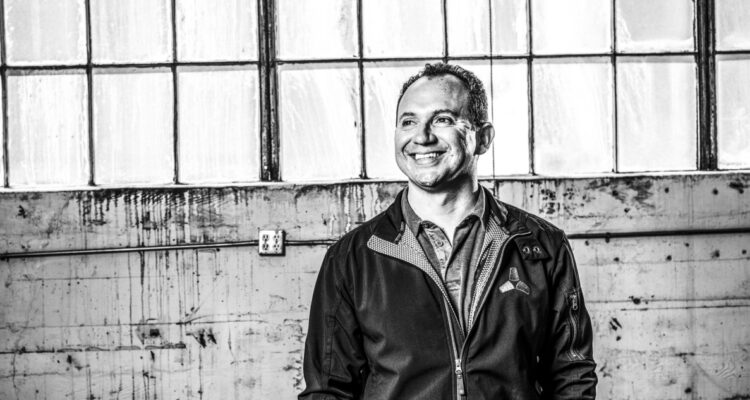
Christian Sanz Built a Map That Could Keep Up With the Ground
He began with homemade drones, free construction-site maps, and a question about what a flying camera could make newly visible. Thirteen years later, Skycatch became part of Caterpillar - proof that the useful product was never the aircraft, but a faster version of reality.
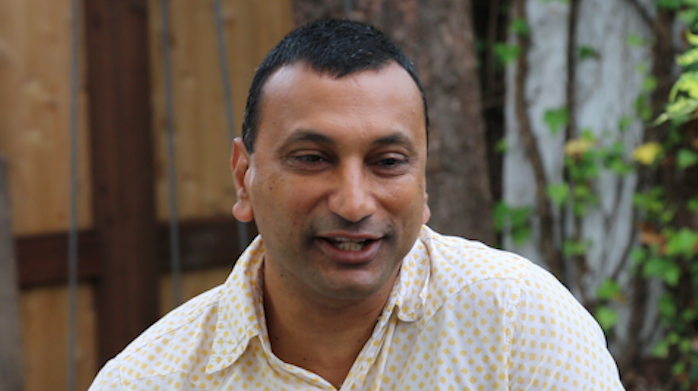
Apurva Shah Builds Worlds Where Robots Can Fail First
After two decades making digital worlds believable, the former Pixar technical leader is using simulation to make machines more dependable in the real one.

The Checkout Vanishes. The Store Starts Talking.
Cloudpick turns a shop into a digital twin that can watch products move, settle the bill, and tell an operator what happened. Its wager is that the most useful AI in retail may be the kind shoppers barely notice.
The VC That Bet the Cost Curve of a Building Can Bend
Two lifelong construction-tech investors raised $148 million, then handed their startups something rarer than money - a rolodex of the general contractors, builders, and design firms who become their first customers.
Usetech Wants AI to Leave the Demo Room and Run the Factory Floor
The Dubai-based technology company is betting that enterprise AI matters most when it can spot a failing machine, reconcile a broken data flow or turn a camera feed into an operational decision.

HeyGen
HeyGen wants to make the camera optional. Its digital twins, translation tools and video agents turn one human performance into a production system that can speak to almost anyone.

Bentley Systems
Five brothers, one CAD engine, and four decades later the software running underneath much of the world's roads, rail, and water networks - now being rebuilt around digital twins and infrastructure AI.

Trimble Inc.
Trimble began by betting on satellite navigation before GPS was a household acronym. Today its harder trick is making a construction site, a 3D model and a freight office behave like parts of the same system.