simulation
(28)
PhysicsX Wants Engineers to Stop Waiting for Physics
Born from Formula One's impatience, PhysicsX turns expensive simulations into near-instant engineering answers. Its real product is not a magic oracle but a carefully governed loop of data, models, validation and engineers who know when to call the old solver back in.
Detroit Engineered Products Built a Shortcut Through Engineering’s Slowest Loop
Every design change can send an engineer back through CAD, meshing and simulation. DEP built MeshWorks to break that loop - then turned the same playbook into a global engineering business.

Novineer Is Teaching 3D Printing to Stop Guessing - Before the Plastic Gets Expensive
A seven-person Florida startup wants to replace the print-break-redesign loop with a photograph, a toolpath and a useful prediction. Its bet is simple: the next advance in industrial 3D printing may come from software that understands how the machine actually lays down material.

The New York Fund That Bet on Robots Before the Robots Could Walk
Parkway keeps a short list of bets and a long memory of building companies. That combination led a New York firm of about 15 people to the front of the humanoid-robot and quantum-computing races.
AirGo Design
AirGo Design is a Singapore-based advanced-materials company that builds structural parts from short-fiber thermoplastic composite (SFTC), a proprietary technology it developed to replace metal in weight-critical applications. Its flagship is the world's first full-composite aircraft passenger seat, roughly 50% lighter than aluminum. The same materials and AI-driven engineering process now extend to EV battery enclosures, drone components, and food-grade parts, positioning AirGo as a lightweighting partner across aviation, e-mobility, and industrial manufacturing.

Roark
Roark is an observability, testing, and quality-assurance platform for voice AI agents. It lets teams replay real production calls against new agent versions, catch failures before they ship, track caller sentiment and vocal cues, and monitor live voice interactions with 40+ built-in metrics. Founded in 2025 and backed by Y Combinator (W25), Roark says it processed more than 10 million minutes of calls in its first six months.

Duality AI
Duality AI is a San Mateo-based simulation software company behind Falcon, a digital twin platform built on Unreal Engine. Falcon lets engineers create photorealistic, physics-accurate virtual replicas of robots, sensors, and environments, then generate the labeled synthetic data used to train and validate AI vision and autonomy models - closing the gap between simulation and the real world. Founded in 2018 by Pixar graphics veteran Apurva Shah and robotics pioneer Mike Taylor, Duality serves customers including DARPA, the U.S. Army, Honeywell, and P&G.

Lightwheel
Lightwheel is a Physical AI infrastructure company building the data layer that teaches robots to work in the real world. It produces physically accurate SimReady 3D assets, egocentric human demonstration data, and evaluation platforms so robots can learn safely and cheaply in simulation before they are deployed. Founded in 2023 by former autonomous-driving-simulation lead Steve Xie, Lightwheel partners with NVIDIA and supplies simulation assets and synthetic datasets to leading robotics teams.

Istari Digital
Istari Digital is a Cambridge, Massachusetts software company building a digital engineering platform that connects fragmented engineering data - models, simulations, requirements and test artifacts - across teams, suppliers and classified environments. Founded in 2022 by former Air Force acquisition chief Will Roper, the company aims to let regulated industries like aerospace and defense validate, secure and certify complex systems in minutes instead of months. Its flagship effort, Flyer One, is working with the U.S. Air Force Research Laboratory and Lockheed Martin Skunk Works to make a modified X-56A the world's first digitally certified aircraft.

P-1 AI
P-1 AI is a deep-tech startup building engineering AGI for the physical world. Its product, an anthropomorphized AI engineer agent named Archie, is trained on proprietary semi-synthetic, physics-based datasets to reason across multiphysics design problems and use the same complex engineering tools human engineers use. Currently operating at the level of a junior mechanical and electrical engineer, Archie is already working with design partners on data center cooling and critical power systems, with expansion planned into automotive, aerospace, and defense. Founded by former Airbus and United Technologies CTO Paul Eremenko alongside Google DeepMind and Airbus veterans, the company raised a $23M seed round in 2025 led by Radical Ventures.

Parallel Works
Parallel Works is a Chicago-based software company, spun out of Argonne National Laboratory in 2015, that builds ACTIVATE - a hybrid multi-cloud control plane for high-performance computing and AI. The platform gives researchers, engineers and defense teams a single interface to provision, orchestrate and share compute across on-premises clusters and the major clouds (AWS, Azure, Google Cloud, Oracle), with built-in cost governance, role-based access and security controls. In 2025 ACTIVATE's High Security Platform became the first hybrid multi-cloud solution to earn a U.S. Department of Defense IL5 Authority to Operate.

Brelyon
Brelyon is an MIT Media Lab spin-out building headset-free immersive displays. Its Ultra Reality monitors use patented wavefront and light-field engineering to project a curved, multi-focal virtual image up to 122 inches with a ~110-degree field of view from a desktop-sized frame, giving users the depth and scale of VR without a headset. Brelyon targets simulation and training, control centers, teleoperations, enterprise visualization and high-end gaming.
Simile
Simile is a Palo Alto applied AI lab building a foundation model that simulates human behavior. Spun out of Stanford by the team behind the viral 'Smallville' generative-agents paper, the company builds digital twins of customers, voters, employees and analysts so enterprises can rehearse decisions before making them. It emerged from stealth in February 2026 with a $100M Series A led by Index Ventures.
Vinci
Vinci (Vinci4D, Inc.) is a Palo Alto physics-AI startup building a foundation model that simulates how hardware will behave before it is manufactured. Its system runs full manufacturing-resolution physics - thermal, thermo-mechanical and warpage analysis for advanced semiconductor packaging and 2.5D/3D chips - up to 1,000x faster than traditional finite-element tools, without meshing and without training on customer data. Founded in 2023 by Dr. Hardik Kabaria and Dr. Sarah Osentoski, the company emerged from stealth in December 2025 with $46M in total funding and has been benchmarked by over half of the world's top 20 semiconductor companies.
James Brown
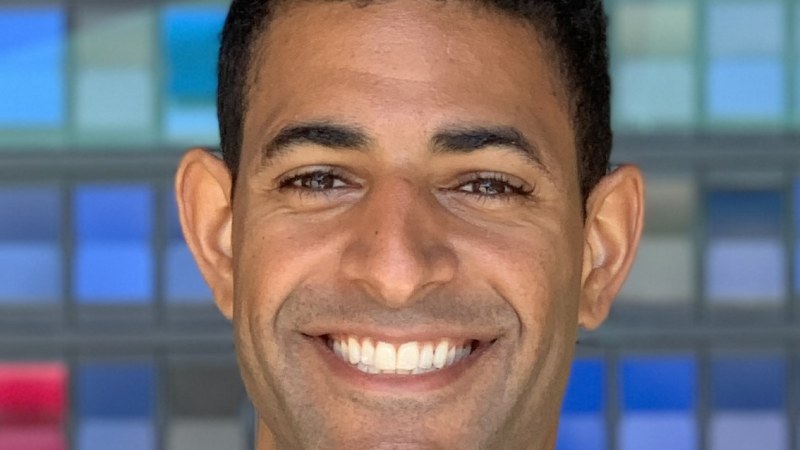
James Brown is the co-founder and CEO of Schemata, a San Francisco startup building an AI-powered spatial intelligence platform that turns ordinary 2D imagery into photorealistic 3D environments with a built-in AI instructor. A former US Marine Corps infantry and information operations officer who once briefed the Secretary of the Navy, he was the first in his family to earn a college degree, went on to a Stanford MBA and MS in Symbolic Systems, and now sells rapid-deployment virtual training to defense, energy, and infrastructure customers. Schemata emerged from stealth in May 2025 with a $5M seed round led by Owl Ventures and $3.4M in early Department of Defense contracts.
Stephen Larson
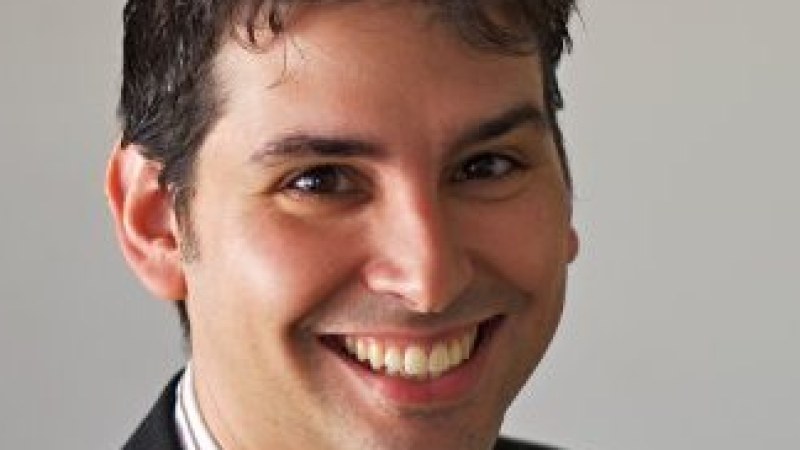
Stephen Larson is a neuroscientist and entrepreneur who co-founded OpenWorm, the open-science effort to build the first complete digital organism by simulating the 302-neuron nervous system of the roundworm C. elegans. He is co-founder and CEO of MetaCell, a life-science software company that helps pharmaceutical firms and research institutions visualize, analyze, and collaborate on complex biological data. Trained at MIT in computer science and AI and at UC San Diego in neuroscience, he sits at the intersection of code and biology, betting that understanding a worm in silico is a first step toward understanding the human brain.
Zeromatter
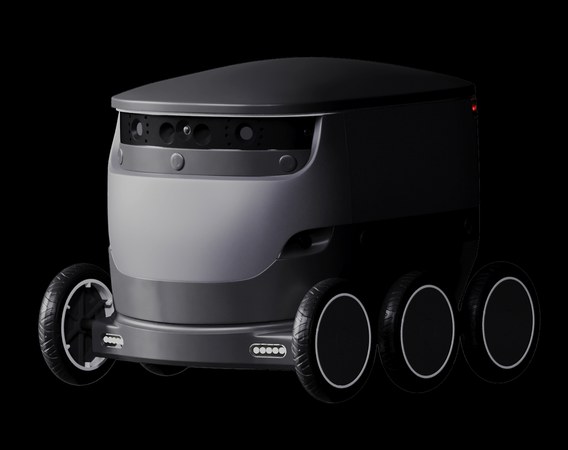
Zeromatter builds the simulation infrastructure that autonomous-systems companies use to develop, test and validate their products before they ever touch the real world. Founded by former Tesla Autopilot simulation lead Ian Glow, its platform combines high-fidelity sensor simulation, automatic environment generation, multi-agent co-simulation frameworks, execution infrastructure and developer tooling into one system - aimed at making simulation a default tool for autonomy, aerospace, automotive, agriculture, drones and green energy.

Arena Physica
Arena Physica is a New York-based AI company building 'electromagnetic superintelligence' - AI systems grounded in applied physics that accelerate the design, testing, and optimization of advanced hardware. Its Atlas platform and Heaviside foundation model predict electromagnetic behavior from geometry in milliseconds, claiming roughly 800,000x faster results than commercial solvers, and are used by hardware leaders across semiconductors, aerospace, automotive, medical devices, and defense.
Synopsys Inc
Synopsys is the quiet giant behind the world's chips. Its electronic design automation (EDA) software, semiconductor IP, and AI-driven design tools are used to design and verify nearly every advanced silicon chip on the planet - from smartphone processors to AI accelerators. Founded in 1986 by Aart de Geus and led today by CEO Sassine Ghazi, the Sunnyvale company turned the impossibly hard task of laying out billions of transistors into a software problem, and now layers AI on top of it. Its 2025 acquisition of simulation leader Ansys pushed it deeper into multiphysics and systems engineering.

Rescale
Rescale is a San Francisco-based digital engineering platform that turns high-performance computing into an on-demand cloud utility. Founded in 2011 by ex-Boeing engineer Joris Poort and Adam McKenzie, it gives scientists and engineers at companies like Samsung, Arm, General Motors Motorsports, and the U.S. Department of Defense a single workbench for simulation, AI physics, and multi-cloud orchestration.

Frenetic
Frenetic is a Madrid-born deep-tech company building AI-powered software and a manufacturing service for custom magnetic components - the unglamorous transformers and inductors at the heart of every power supply, EV charger, and electrified machine. Their platform compresses what used to take months of trial-and-error into days of simulation, and ships physical samples in roughly a week.
Tammie Siew
Tammie Siew is a General Partner and Co-Founder at Pebblebed, a San Francisco-based deep tech venture capital firm focused on foundational infrastructure—AI simulation engines, robot operating systems, developer platforms, and formal verification systems. A Cornell-educated economist and literature scholar who spent years investing at Sequoia Capital Singapore before co-founding a healthcare startup, she brings a rare operator-investor lens to backing the infrastructure layer of next-generation technology. Pebblebed's Fund II closed at $125M in 2024, with roughly 35 investments backing companies like Augment Code, OpenMind, Zeromatter, Lemurian Labs, and Logical Intelligence.

Ian Glow
Ian Glow is the co-founder and CEO of Zeromatter, a Mountain View-based simulation platform that lets robotics, aerospace, and autonomy teams build, test, and train anything in virtual environments. He previously helped pioneer Tesla's Autopilot simulation infrastructure - working as Manager of Autopilot Simulation - before striking out to democratize simulation tooling for the broader industry. Zeromatter has raised $45M and assembled a 75+ person team of engineers from Tesla, Cruise, Nvidia, Google, Microsoft, Activision, and id Software.

Charles Wong
Charles Wong is the CEO and Co-Founder of Bifrost AI, a San Francisco-based generative 3D data platform that lets robotics, aerospace, maritime, and industrial teams train and test AI models in hours instead of months. A Forbes 30 Under 30 honoree from Singapore, Wong built Bifrost after working on AI perception models for autonomous vehicles at NuTonomy (an MIT spinout). Bifrost has raised $13.7M in total funding, counts NASA JPL and the U.S. Air Force among its clients, and generates synthetic datasets for some of the world's most demanding physical-world AI challenges - from Mars rover navigation to maritime collision avoidance.
Hardik Kabaria
Hardik Kabaria is Co-Founder and CEO of Vinci4D.ai (now getvinci.ai), a Palo Alto-based AI company building a physics foundation model that makes hardware simulation 1000x faster than traditional finite element analysis. A Stanford PhD in Mechanics and Computation, he spent eight years at Carbon - the 3D printing unicorn - rising from software engineer to CXO before founding Vinci in 2023. His company emerged from stealth in December 2025 with $46M raised from Xora Innovation, Khosla Ventures, and Eclipse, already deployed with three leading semiconductor manufacturers and validated by over half the world's top 20 chip companies.
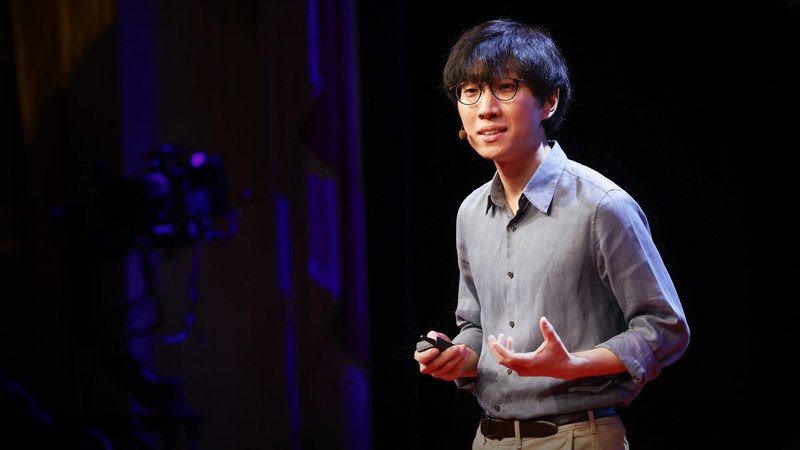
Joon Sung Park
Joon Sung Park is the CEO and Co-founder of Simile, a Stanford-spinout AI company that raised $100M Series A in February 2026 to build digital twins that simulate human behavior and predict consumer decisions. A PhD in Computer Science from Stanford (2025), Park pioneered the concept of 'generative agents' - AI actors with memory, reflection, and planning capabilities - through a landmark 2023 paper that earned a Best Paper Award at UIST and became one of the most-cited works in HCI. Before launching Simile, he was an oil painter trained in hyper-realism, a background that infuses his research with a rare sensitivity to what makes humans human. His digital-twin platform has already signed CVS Health and Telstra as customers, and his model correctly forecast 8 out of 10 questions asked at a real earnings call.
Nicolai Ouporov
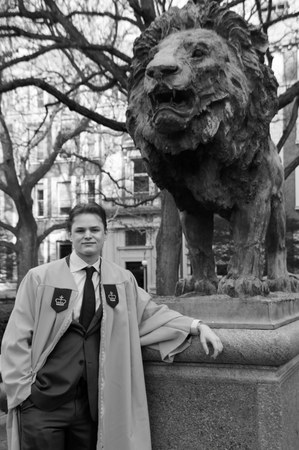
Nicolai 'Nic' Ouporov is Co-Founder and CEO of Fleet AI, a startup building reinforcement learning training environments - or 'RL gyms' - that let AI agents practice operating real software tools like Salesforce and Excel before deployment. Fleet raised ~$45M total and grew from $1M to $60M+ annualized revenue in under a year. Nic is also a 3x YoungArts Award winner in photography and visual arts, a former pre-professional ballet dancer trained at Boston Ballet and San Francisco Ballet, and a QuestBridge Scholar from Columbia University. He previously served as Founding Engineer at Respell (acquired by Salesforce in 2024) and published AI research at Stanford's Robotics and Embodied AI Lab.

Kevin McNamara
Kevin McNamara is the Founder and CEO of Parallel Domain, a San Francisco-based synthetic data and simulation platform that has raised $43.9M to power the next generation of AI perception systems. With a rare career arc spanning Pixar's animation pipeline, Microsoft's Xbox game studios, and Apple's secretive autonomous systems group, McNamara distilled a career of building virtual worlds into a platform that lets autonomous vehicle, drone, and robotics companies train their AI on infinite synthetic scenarios - accelerating ML development cycles by over 180x compared to real-world data collection.