Profile / Deep Tech Founder

Hardik Kabaria

The man who made physics run at the speed of software

Eight years building at Carbon. A Stanford PhD that solved a decade-old meshing problem. Now rewriting how the world's chips get designed - one physics equation at a time.

Physics AI Semiconductor Stanford PhD $46M Raised Series A
$46M
Total Raised
1000x
Faster Simulation
758+
Academic Citations
8
Years at Carbon
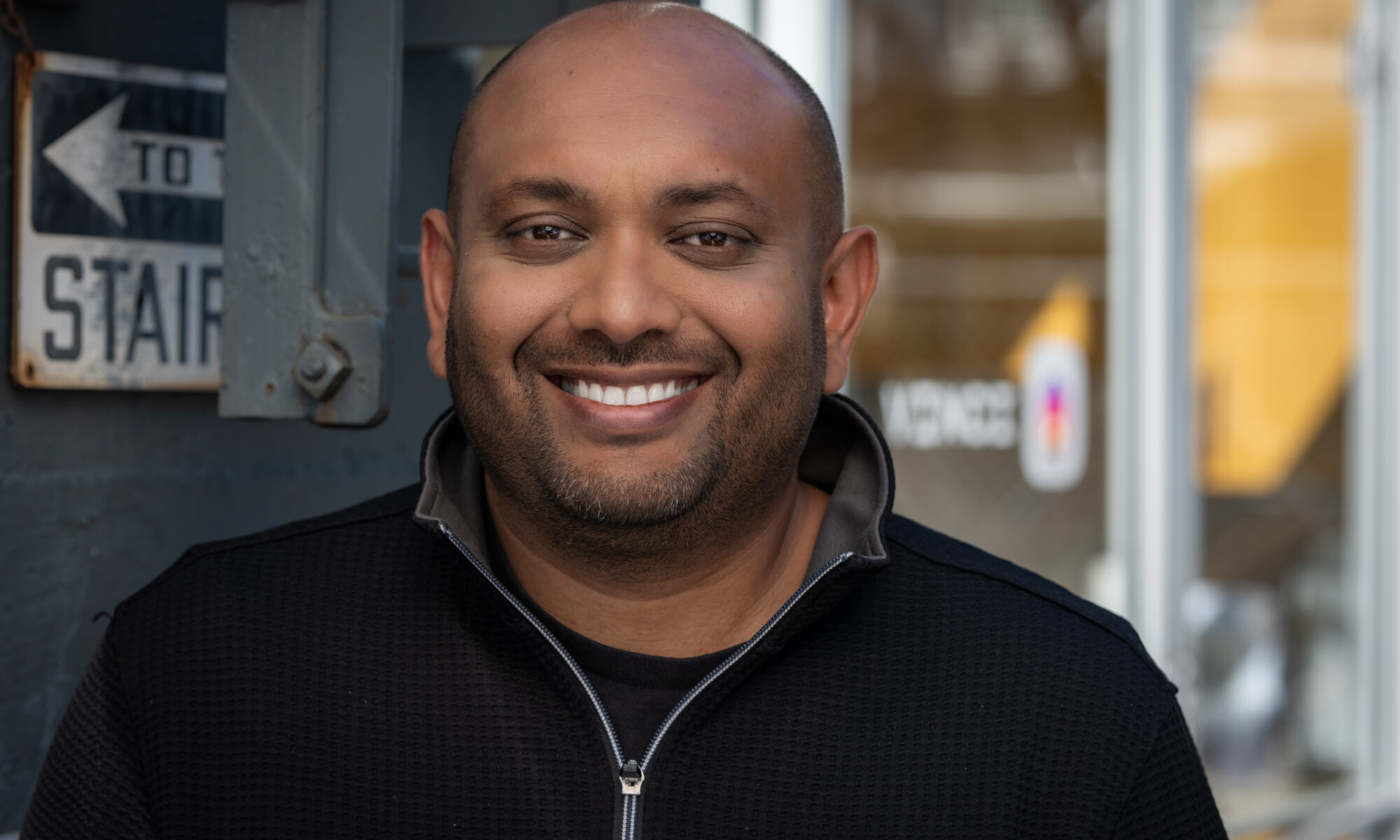
Hardik Kabaria, Co-Founder & CEO of Vinci
Co-Founder & CEO / Vinci
Series A Vinci emerged from stealth December 2025 - $36M Series A led by Xora Innovation, Khosla Ventures, and Eclipse. Production deployments already live at three semiconductor manufacturers.

The PhD who solved meshing is now solving manufacturing

Consider the gap between what a chip design looks like in CAD software and what actually comes off the fab line. It is small enough to be invisible and large enough to ruin a product. For decades, predicting that gap required a specialist, expensive software, and days of computation. Hardik Kabaria wants to close it in seconds.

His Stanford doctoral thesis tackled something called universal meshing - the problem of automatically generating high-fidelity computational grids for arbitrarily complex 3D geometries. When Hardik finished in 2015, his work was the first 3D universal meshing solution ever published. It was the kind of quiet academic milestone that only specialists notice - 758 citations and counting. Then he took that obsession with mathematical rigor somewhere unusual: a 3D printing startup called Carbon.

At Carbon, Hardik didn't just write code. He built the Carbon Design Engine from near-scratch - the computational core that let engineers design lattice structures with physics-accurate performance guarantees. Ford uses it. Adidas uses it. He joined when the company had roughly 50 employees and left eight years later having cycled through four job titles: Software Engineer, Director, VP of Software Engineering, and finally CXO - Chief Experience Officer.

The CXO title is telling. By the end, he wasn't just solving equations; he was responsible for how engineers experience the software that runs their work. That pairing - deep technical fluency and product intuition - is the exact combination you need to build developer tools for one of the most demanding audiences on earth: semiconductor hardware engineers.

In 2023, Hardik left Carbon to co-found Vinci4D.ai with Dr. Sarah Osentoski, a pioneer in large-scale machine learning and autonomous systems. They operated in complete stealth for two years. No blog posts, no press releases, no conference appearances. Just quiet deployments with actual semiconductor manufacturers, letting the results do the talking.

"At Vinci our goal is to let any engineer see how their design will perform once built."
- Hardik Kabaria, Co-Founder & CEO, Vinci
1000x
Faster than traditional FEA
<2%
Accuracy deviation vs. FEA (peer-reviewed)
240x
Faster runtime (EPTC 2025 study)
50%+
Of top 20 semiconductor firms validated

Physics as the new moat

The AI industry spent years asking language models to be smarter. Hardik's insight was different: some problems don't need smarter language - they need correct physics. When a semiconductor package warps under thermal stress, there is no ambiguity about the answer. Maxwell's equations don't hallucinate. Heat doesn't approximate. The governing equations are known; the bottleneck is computation.

Vinci's foundation model is trained not on text, but on physical laws - heat transfer, mechanical stress, electromagnetic behavior. It delivers what Hardik calls "a physics reasoning layer": AI that operates like a team of expert hardware engineers, running thousands of verified simulations in hours rather than weeks, at nanometer-level precision, without requiring customers to provide proprietary data for training.

The commercial proof came fast. Three leading semiconductor manufacturers were already running Vinci in production before the stealth launch. A peer-reviewed study presented at EPTC 2025 validated the numbers: less than 2% accuracy deviation from traditional finite element analysis, at 240x the speed. The company's first public thermo-mechanical simulation product targets semiconductor packaging warpage - a problem that costs manufacturers enormously when they discover it at the end of a development cycle rather than the beginning.

Hardik frames the access gap bluntly: "Only a very small number of specialists can run advanced physics simulations." His goal is to make first-principles physics accessible to every engineer at every stage of design. Not as a consultant's tool. Not as a weekend post-processing step. As a continuous intelligence layer embedded in the development workflow itself.

Traditional Simulation (FEA)
  • Days to weeks per simulation run
  • Requires specialist PhD-level engineers
  • Manual meshing - error-prone, time-consuming
  • High compute cost; limited iteration cycles
  • Treated as a late-stage validation step
  • Bottleneck before physical prototyping
VS
Vinci Physics AI
  • Simulations in seconds to minutes
  • Accessible to any engineer
  • No meshing required - zero approximation
  • GPU-accelerated, fraction of compute cost
  • Embedded throughout the design workflow
  • First-time-right design from day one
Performance at a Glance
Vinci vs. Traditional Simulation Methods - Validated by EPTC 2025 Peer Review
Vinci Speed 1000x faster
Traditional FEA Speed baseline
Accuracy vs. FEA <2% deviation
Market Validation >50% of top 20 semicon firms

The long game

2012 - 2015
Stanford University PhD, Mechanics & Computation. Pioneers 3D universal meshing for physics simulations. Awarded Stanford Graduate Fellowship. Publishes work that earns 758+ citations. Develops foundational techniques still used in modern simulation pipelines.
2015
Joins Carbon as Software Engineer when the 3D printing startup has roughly 50 employees. The company is pre-scale, pre-unicorn, and building technology nobody has commercialized before.
2015 - 2023
Rises through four roles at Carbon: Software Engineer → Director of Software Engineering → VP of Software Engineering → CXO / Chief Experience Officer. Leads development of the Carbon Design Engine, enabling lattice structure-based design for the Carbon DLS process. Ford and adidas become reference customers.
2023
Leaves Carbon to co-found Vinci4D.ai with Dr. Sarah Osentoski (CTO). Raises a seed round led by Eclipse. Builds in stealth, deploying with actual semiconductor manufacturers rather than building demos.
Dec 2025
Vinci emerges from stealth with a $36M Series A led by Xora Innovation. Total raised: $46M. Announces production deployments with three leading semiconductor manufacturers. EPTC 2025 peer-reviewed study validates performance claims publicly.
2026
Launches thermo-mechanical simulation for semiconductor packaging warpage. Featured in TechVoices, SemiWiki, VentureBeat, and SiliconANGLE. Vinci validated by over 50% of the world's top 20 semiconductor companies. Team grows to 35 employees.

What Hardik says about physics, AI, and design

"LLMs do language. Vinci does physics."
On Vinci's positioning vs. generative AI
"Every answer is tied to solving the governing physical equations - eliminating the risks of product failures."
On accuracy and hallucination-free simulation
"When simulation becomes faster, engineering teams run more iterations and explore previously impractical ideas, embedding physics analysis throughout development rather than treating it as a separate step."
On how speed changes workflow, TechVoices interview
"Vinci empowers engineers to simulate how designs will perform in seconds instead of days, doing so at a fraction of the compute cost."
VentureBeat, December 2025
"Only a very small number of specialists can run advanced physics simulations - despite increasing hardware complexity and nanometer-scale manufacturing precision."
On the access problem Vinci solves
"Make first principles physics accessible to everyone at all stages of development."
Vinci's core mission statement

The details that stick

Twitter Bio
His entire Twitter/X bio: "Building vinci4d.ai, @StanfordEng PhD'15" - zero hype, maximum signal.
01
Academic Record
758+ academic citations with an H-index of 15 - more than many tenured university professors in the field.
02
Stealth Mode
Vinci operated in complete stealth for two full years before its December 2025 launch - no blog posts, no conference talks. Just deployments.
03
Four Titles, One Company
Software Engineer → Director → VP → CXO at Carbon over 8 years. Four different business cards before founding his own company.
04
The Name Change
The company quietly pivoted from vinci4d.ai to getvinci.ai, shedding the "4D" without any announcement.
05
Medical Patents
Holds patent contributions on 3D-printed COVID-19 test swabs and lattice-structure medical devices from his Carbon years.
06

What he has built

01 / Academic
Stanford Graduate Fellowship Award - full financial support for doctoral studies in Mechanics and Computation
02 / Research
Pioneered 3D universal meshing - the first development of its kind, now foundational to modern simulation pipelines
03 / Research
758+ academic citations with H-index 15 and 18 publications with 10+ citations each in computational mechanics journals
04 / Carbon
Led Carbon Design Engine development, now used by Ford, adidas, and global manufacturers for lattice structure-based manufacturing
05 / Vinci
Raised $46M from Xora Innovation, Khosla Ventures, Eclipse, Brave Capital, and K5 Global to build physics AI
06 / Vinci
Validated by over 50% of the world's top 20 semiconductor companies before public launch - peer-reviewed at EPTC 2025
07 / Vinci
Achieved <2% accuracy deviation from gold-standard FEA at 240x the speed and up to 1000x faster for full workflow
08 / Patents
Patent contributions on 3D-printed medical devices and advanced manufacturing processes (lattice structures)
"When simulation becomes faster, engineering teams run more iterations and explore previously impractical ideas - embedding physics analysis throughout development rather than treating it as a separate step."
- Hardik Kabaria, TechVoices Interview, 2026

Where the foundation was built

Pre-2010
B.S. Mechanical Engineering
BITS, Pilani
2010 - 2012
M.S. Mechanical Engineering
Stanford University
2012 - 2015
PhD, Mechanics & Computation
Stanford University · Graduate Fellowship Award

Hardik's doctoral research at Stanford - under the Department of Mechanical Engineering's Mechanics and Computation program - tackled automating high-fidelity meshing for complex, real-world geometries. The resulting 3D universal meshing work became the first of its kind. His most-cited paper, "Isogeometric Kirchhoff-Love shell formulations for biological membranes" (131 citations, co-authored with Tepole, Bletzinger, and Kuhl), reveals the range of his interests: from biological tissue simulation to manufactured lattice structures. That same width of computational vision now informs Vinci's cross-domain physics AI platform.

Share This Profile