The Story
Portrait of a Simulator
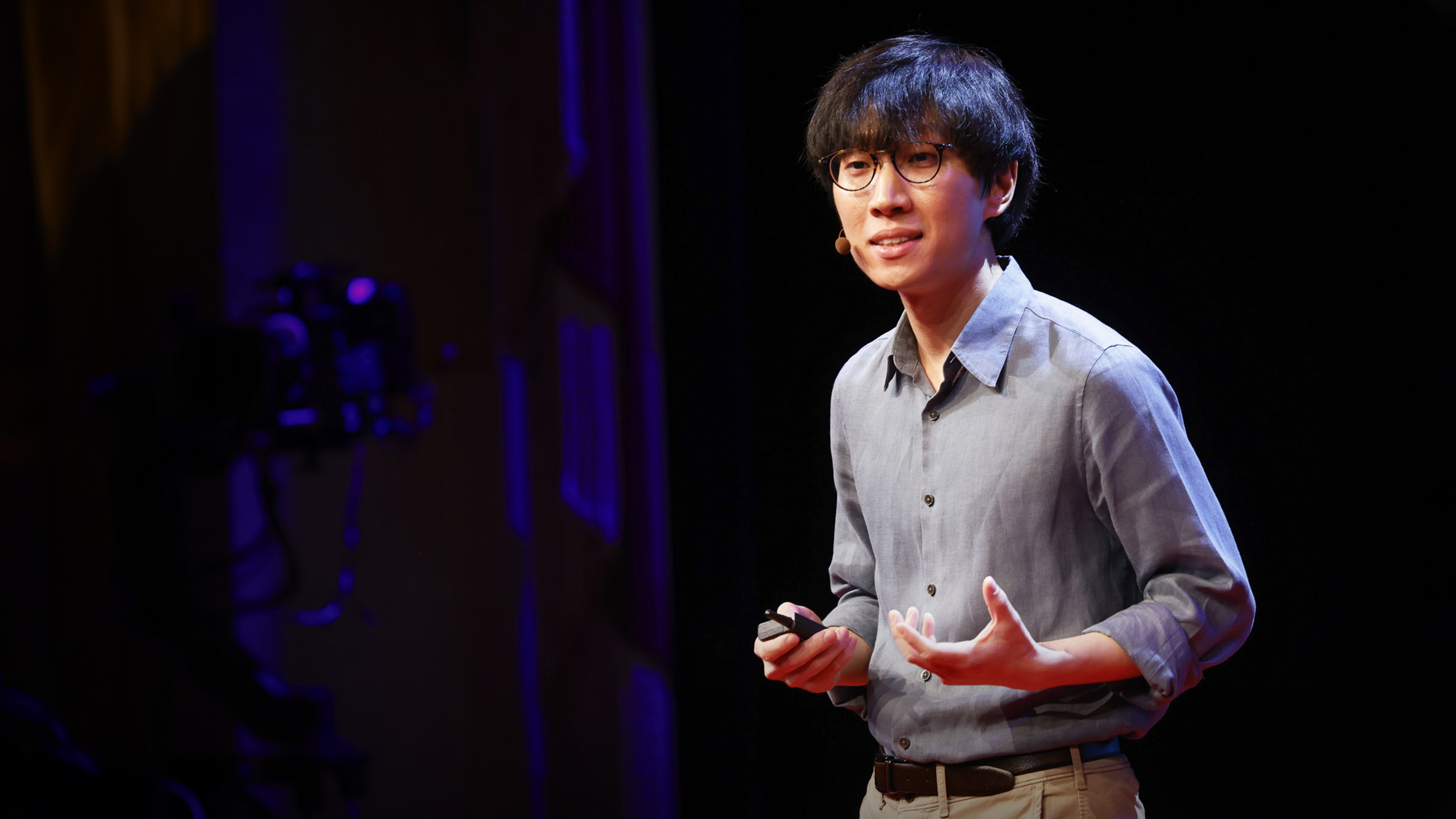
Before Joon Sung Park started building software that predicts how you'll react to a price change, he spent years painting portraits of ordinary objects - in hyper-realist oil, capturing the moment just before something vanishes.
That eye for transience - the way a thing changes just before you notice it changing - runs through everything he's built since. Simile, the Palo Alto AI company he co-founded and leads as CEO, does not predict the future. It replicates the present: the specific texture of how a specific person decides, hesitates, and then acts. The difference matters enormously, and it's why CVS Health has been a customer for months and why Telstra, Australia's largest mobile carrier, signed on before most people had heard of the company.
In a recent earnings call, we simulated - we actually predicted - eight out of 10 questions that were actually asked on this call.
- Joon Sung Park, CEO of Simile, Bloomberg TV interview
The mechanics: Simile trains AI agents on chat-style interviews with real people. Two-hour conversations about decisions, trade-offs, preferences. The agents absorb transaction histories, behavioral science literature, the particular cadence of how a person reasons about a purchase. At some point they stop being a model and become - in Park's own framing - a "digital twin" or "digital clone" of their human counterpart. CVS fed its system data from real customers and used the resulting AI population to test pet medicine placements and store layout decisions, running unlimited rounds of simulated polling without the fatigue that real survey respondents accumulate after the third questionnaire.
The company spent seven months doing exactly this kind of foundational work before Simile emerged from stealth in February 2026 - a deliberate slowness from a team that had every incentive to rush. Park's co-founders include Percy Liang and Michael Bernstein, two of Stanford's most prominent AI researchers, along with Lainie Yallen. The institutional backing is similarly serious: Index Ventures led the $100M Series A, with Bain Capital Ventures and Hanabi Capital joining in, plus personal checks from Fei-Fei Li and Andrej Karpathy.
What Simile actually does: Companies ask questions they used to answer with focus groups. Simile replaces the group with a simulated population - AI agents built from real-person interviews and behavioral data - that can be questioned indefinitely, at any time, about any scenario. No respondent fatigue. No sampling limitations. Early use cases include earnings call prep, product launch testing, and UI change reactions.
The Paper That Started It All
In April 2023, Park published a paper called "Generative Agents: Interactive Simulacra of Human Behavior" with co-authors Joseph O'Brien, Carrie Cai, Meredith Ringel Morris, Percy Liang, and Michael Bernstein. The concept: create software agents that don't just respond to prompts but live inside a persistent simulation - waking up, making breakfast, planning their day, running into each other, forming opinions, and remembering what happened yesterday.
To demonstrate, Park and his team built Smallville: a simulated town of 25 AI agents. They gave one agent a single instruction: throw a Valentine's Day party. What happened next is the detail that made the paper land hard. Without further prompting, the agents spread word of the party. They asked each other out on dates. They coordinated arrival times. They showed up together. The researchers hadn't programmed any of this - it emerged from agents that had memory, reflection, and planning. The paper won Best Paper at UIST 2023 and has since accumulated over 18,000 citations. Game designers started reaching out. Researchers in social policy saw it as a tool for testing assumptions before deploying interventions on real populations.
Human societies are complex systems. Our institutions, platforms, and policies rest on assumptions about how people perceive, decide, and act.
- Joon Sung Park, joonsungpark.com
The link between Smallville and Simile is direct. Smallville proved that AI agents with the right architecture could model social behavior at the group level. Simile asks: what if you grounded those agents in real people's data? What if instead of fictional characters in a simulated town, you had actual human beings - their preferences, their transaction histories, their specific reasoning styles - encoded into AI agents and then assembled into populations you could query? That shift from fictional to grounded is the core technical bet, and it's one Park has been building toward since at least 2021.
From Swarthmore to Stanford to Simulation
Park did his undergraduate work in computer science at Swarthmore College, a small liberal arts school in Pennsylvania that has produced an unusual number of people who think carefully about the intersection of technology and humanistic concerns. He went to the University of Illinois at Urbana-Champaign for his master's, where he worked under Professor Karrie Karahalios on how response time shapes human-algorithm interaction - an early signal of the kind of problem he finds interesting: not just what AI does, but how humans and AI systems perceive and respond to each other in time.
Stanford followed, where he joined both the Human-Computer Interaction and Natural Language Processing labs. He co-coined the term "foundation model" during this period - now a standard phrase across the entire AI industry. He received the Microsoft Research Ph.D. Fellowship in 2022, the Terry Winograd Fellowship in 2021, and the Siebel Scholar Award in 2019. He interned at Microsoft Research in Seattle, working with Drs. Meredith Ringel Morris and Ece Kamar. His work has been covered in The New York Times, The New Yorker, Forbes, WIRED, Nature, and Science.
He also taught CS 222 at Stanford in Fall 2024: AI Agents and Simulations. A PhD student designing and teaching a graduate course in the subject he invented. He finished his doctorate in 2025 and moved full-time to Simile.
The Painter's Eye
Hyper-realist oil painting trains you to look at something longer than is comfortable. The discipline - finding every gradation of shadow on a ceramic mug, every capillary of color in a piece of fruit - is an exercise in not simplifying. Most people look at a thing and accept a category. Hyper-realists look until the category dissolves and the specific thing remains.
Park trained extensively in this mode, focusing on transience - the moment before decay, the second just before a thing changes. It is not a coincidence that his AI research centers on capturing the specific texture of individual human decision-making rather than averaging across populations. His digital twins are not demographic profiles. They are not archetypes. They are attempts at specificity. The oil painter's instinct for the particular detail runs through the scientist's insistence on grounding agents in individual interview data rather than aggregate behavioral assumptions.
Index Ventures noticed. Their write-up on leading Simile's Series A describes Park as "an oil painter turned entrepreneur who combines creativity with operational excellence, ambition with realism, and competitiveness with empathy." Those paired contradictions are not marketing language. They are the load-bearing structure of how Simile works: ambitious enough to want to simulate all 8 billion humans, grounded enough to spend seven months interviewing a thousand of them before building anything.