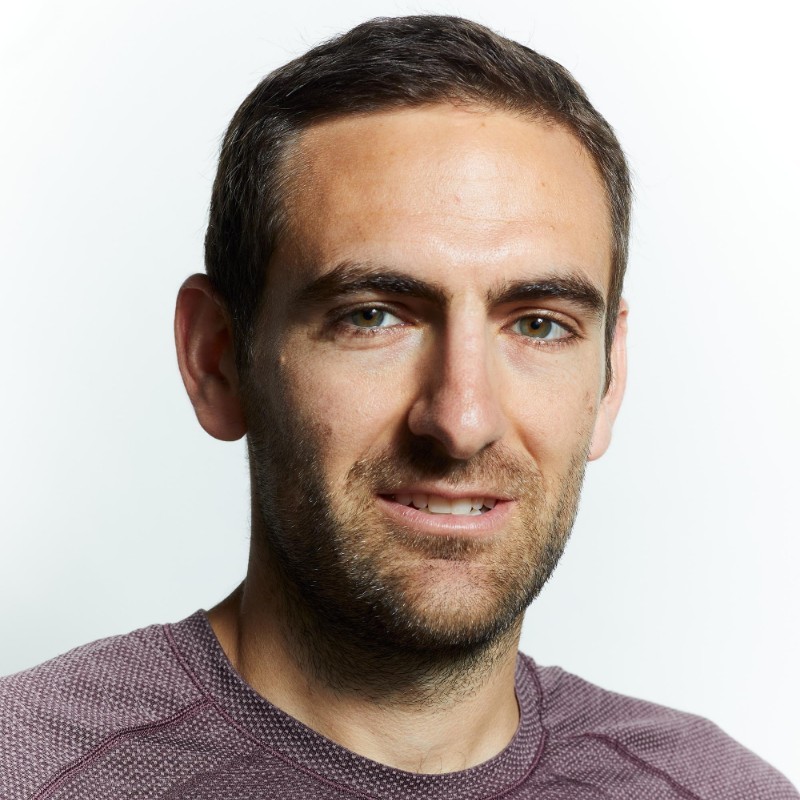
At five years old, Adam Bry was building things that fly. By eighteen, he was a two-time national champion in radio-controlled airplane aerobatics. Most people would frame that as a hobby. Bry treated it as a dataset - thousands of flight hours encoding the intuition of a champion pilot, waiting to become software.
That intuition became Skydio. Not immediately - first came Olin College (mechanical engineering), then MIT's Robust Robotics Group, where Bry helped pioneer autonomous flight in GPS-denied environments. The key insight wasn't just technical: it was that drones were constrained not by hardware, but by the humans required to fly them. The machine could do more. It just needed to think for itself.
In 2012, Google noticed. Bry and his MIT collaborator Abe Bachrach joined Google X to co-found Project Wing - the search giant's autonomous delivery drone program. For eighteen months, they built fixed-wing UAVs that could navigate at high speeds through obstacles using only onboard sensors. Then, in 2014, they quit to go do it properly.
"The main reason we decided not to do it was because we felt like they didn't really understand the importance of autonomy and how much that was going to change who could use drones and how they could use them."- Adam Bry, on declining DJI's 2014 acquisition offer
That quote comes from a meeting in Shenzhen. Shortly after Skydio's 2014 founding, DJI - then the world's dominant drone manufacturer - discovered the three-person startup and moved quickly to acquire it. Bry, Bachrach, and co-founder Matt Donahoe flew to China, met the leadership, looked at the offer, and said no. DJI, they decided, fundamentally misunderstood what was coming. Autonomy wasn't a feature. It was the whole game.
Twelve years later, DJI cannot sell drones in much of America. Chinese-made drones face bans in U.S. defense and public safety. In October 2024, Beijing sanctioned Skydio directly - after the company supplied Taiwan's National Fire Agency with autonomous drones. Bry's response was not to retreat. He rebuilt the supply chain outside China and announced a $3.5 billion U.S. manufacturing expansion.
Today, Skydio has deployed more than 60,000 autonomous drones to roughly 4,000 enterprise customers: every branch of the U.S. military, 29 allied nations, 1,200+ public safety agencies, and 45 of 51 state transportation departments. Annual revenue runs in the hundreds of millions. In April 2026, the company raised $110 million at a $4.4 billion valuation - and Bry's most notable line about the round was about its size: "The most significant fact in our Series F is how little we are raising."
That sentence is Adam Bry in full: confident enough to frame fiscal restraint as a flex. The company doesn't need the capital. Investor demand reportedly exceeded the raise significantly. Instead, Bry is building internally, with production that tripled in 2026 and a new manufacturing facility planned at five times the current footprint.
The company's flagship X10D has become something close to standard issue. A single $52 million order for nearly 3,000 units, Bry noted recently, is "actually not that much of an outlier for us these days." Skydio's drones have become what Bry predicted they would: not useful, but essential. Flying body cameras. Persistent eyes above disaster zones. Autonomous inspectors of power grids that humans can't safely reach.
On the ethics of it: Bry has been consistent. "We believe drones should be involved in emergency response situations, not active surveillance." That line holds even as defense contracts multiply. The company's technology is dual-use by nature, but Bry has drawn lines - and held them publicly, including in congressional testimony on drone policy and national security. He sits on the FAA Drone Advisory Committee. He is not just building; he is shaping the rules under which his machines operate.
There's a detail that doesn't make it into most profiles: Bry co-captained MIT's cycling team and led them to a national championship in 2012 - the same year he finished his Master's degree. He also met his wife through that team. He has always been the kind of person who competes seriously at multiple things at once, and wins.
The arc from five-year-old builder to national aerobatics champion to MIT roboticist to Google X founder to billion-dollar CEO is coherent, not accidental. Each step was Bry reverse-engineering his own expertise - asking: what does the best human do here, and how do we make the machine do it without the human? The answer, repeated across decades of iteration, turned into Skydio. The question never really changes. Only the scale does.