Breaking
Pebblebed Fund II closes at $125M 35+ deep tech investments and counting Tammie Siew: General Partner, Pebblebed Backing the foundational layers of AI and autonomy Portfolio: Augment Code, OpenMind, Lemurian Labs, Logical Intelligence Former Sequoia Capital investor, healthcare founder Cornell BA - Economics & English Literature Pebblebed Fund II closes at $125M 35+ deep tech investments and counting Tammie Siew: General Partner, Pebblebed Backing the foundational layers of AI and autonomy Portfolio: Augment Code, OpenMind, Lemurian Labs, Logical Intelligence Former Sequoia Capital investor, healthcare founder Cornell BA - Economics & English Literature
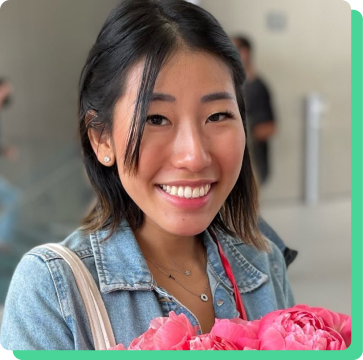
Tammie Siew, General Partner at Pebblebed
Venture Capital  /  Deep Tech  /  San Francisco

Tammie
Siew

General Partner & Co-Founder  -  Pebblebed

She bets on the infrastructure that future engineers can't build without. Not the app. The layer underneath the app. Not the robot. The operating system the robot runs on.

Deep Tech VC AI Infrastructure Robotics Biotech Simulation
$125M Fund II
35+ Portfolio Companies
2022 Pebblebed Founded
Seed - Series A Stage
SF, California HQ

The Foundation First

The Instagram bio says "janitor at @pbd.vc." The fund size says $125 million. Tammie Siew occupies that contradiction comfortably - which is partly why she's any good at what she does.

Pebblebed, the deep tech venture firm she co-founded in 2022, backs what Siew calls "the foundational layers of progress." In practice, that means developer platforms that accelerate how software gets built, robot operating systems, AI simulation engines, and formal verification systems. The category most VCs race past on the way to the application layer.

The logic is precise and a little contrarian: if you own the substrate, you don't need to predict which application wins. You just need to be right that applications will proliferate. And on that point, Siew is very willing to bet.

She describes Pebblebed's target as "self-protecting ideas" - the kind that are simple to state, punishing to replicate, and valuable precisely because most investors hear them and move on. Getting to a company like that before the herd shows up requires being able to recognize technical depth before it has traction. That's a different muscle than pattern-matching on founders or markets. It's the muscle she has been building for a decade across two continents and three roles.

"Open mindedness, curiosity, and humility to explore new models at any time."
- Tammie Siew, on what investing has taught her

Siew grew up in Singapore, won a Humanities Scholarship at Hwa Chong Institution, and went to Cornell on the back of that academic foundation - studying Economics and English Literature simultaneously, finishing with Distinction in All Subjects. The combination is not incidental. Economic frameworks and close reading are both, at their core, about finding what a thing actually means versus what it appears to say.

She graduated into management consulting - PwC, then BCG, covering fintech incubation, eSports strategy, sales infrastructure. The analyst's training, the structured decomposition of problems, still shows up in how she writes and how she talks about companies. But it was a detour, not a destination.

Three Years in Singapore, Building the Eye

In 2018, Siew joined Sequoia Capital in Singapore - one of the most demanding proving grounds in venture. She covered the full stack: seed-stage bets, growth rounds, late-stage positions across Southeast Asia. She stayed for three years, and she did something unusual on the way out: she wrote about it.

Two long-form reflections published on Medium - "One Year at Sequoia Capital in Singapore" and "(Almost) Three Years at Sequoia Capital" - gave readers a rare inside look at what it feels like to develop judgment in a high-accountability investing environment. The essays are candid in the way that takes courage to be in public: she named what she didn't know, what she got wrong, what the discipline of constant pattern refinement demands.

The habit of reflection, made legible in writing, is a tell. The best investors are students of their own mistakes. The ones who publish the post-mortems are running a different software.

When she left Sequoia, she didn't go back to investing. She became a founder.

"One year at Sequoia Capital in Singapore"

February 2019

"(Almost) Three years at Sequoia Capital in Singapore"

October 2020

"Investing in the future: Leaving my startup and returning to VC"

October 2022

The Founder Chapter

She Built Something First

Revery, the healthcare startup Siew co-founded in 2021, used gamified cognitive behavioral therapy to address mental health and wellness. It was not a small idea. Gamification in mental health sits at the intersection of behavioral science, product design, and clinical validity - each of which has its own landmines.

She left Revery in 2022 to start Pebblebed. What she took with her matters: the experience of being on the receiving end of investor meetings, the knowledge of what it costs to build something from zero, the feel of a founding team under pressure. Those aren't lessons you can read in a case study. They show up in how you treat founders, what you worry about, and which problems you recognize as existential versus theatrical.

In a 2022 Medium essay framed as an explanation for the return to VC, she described the move not as abandonment but as investment in a different time horizon. The ability to affect many companies simultaneously, at the layer that matters most. The foundational layer.

"I'm responsible for what I say. All of my analysis, humor, interpretations, errors and swear words are my own personal responsibility. These are my own thoughts, generated by me, representing me."
- Tammie Siew, Personal Disclaimer

Podcast Appearance

BRAVE Southeast Asia Tech Podcast

Episode 177 - "Sequoia VC To Founder, Mental Health and Gamer Passion & Self Awareness"

Watch on YouTube

The Firm She Built

Pebblebed launched in 2022 with a precise thesis: back companies building the infrastructure that the next wave of technical progress runs on. Not horizontally across sectors, but vertically down the stack - below the product, below the application, into the substrate.

The team Siew assembled reflects that specificity. Her co-founders and partners include Pamela Vagata, who built FBLearner Flow and was among OpenAI's founding members, and led AI infrastructure at Stripe; Keith Adams, who founded Facebook AI Research and served as Chief Architect at Slack; Michael Thomas, who scaled research teams at FAIR, Cruise, and the Chan Zuckerberg Initiative; and Kevin Liu, focused on exceptional product and infrastructure companies.

Pebblebed also runs a physical warehouse space in San Francisco where portfolio robotics companies can test hardware. The warehouse is the thesis made literal: the firm is itself infrastructure for the companies it backs.

Fund II, announced in August 2024, closed at $125 million. By early 2026, the portfolio numbered 35+ companies. The most recent disclosed investment was Cognee's Series A in February 2026.

$125M
Fund II Size
Announced August 2024
35+
Investments
Across two funds
$250K
Pre-seed check
Up to $500K
$3M
Seed check
$1M-$3M range

Investment Philosophy

Backs "self-protecting ideas" - simple to state, punishing to replicate, valuable because most investors pass on them at first hearing.

Companies in the Stack

AI Coding
Augment Code
Enterprise AI coding assistant - the kind of developer tool that becomes load-bearing infrastructure.
Embodied AI
OpenMind
Embodied intelligence platform - OM1 software stack for distributed robotic systems.
Simulation
Zeromatter
High-performance simulation engine for autonomous systems and complex physical environments.
AI Compiler
Lemurian Labs
Universal compiler for AI - hardware-agnostic model optimization and deployment infrastructure.
Formal Verification
Logical Intelligence
Theorem proving and formal verification for AI systems - mathematical rigor at machine scale.
DevOps / PaaS
Northflank
Kubernetes PaaS for developers - infrastructure abstraction that removes the ops tax.
Biotech
Orchid
Genome screening for IVF - AI applied to one of the highest-stakes decisions in medicine.
AI Platform
KREA
Unified AI creative platform - real-time generation and design tooling for professionals.
AI Knowledge Graph
Cognee
AI data pipelines and memory infrastructure - Series A backed Feb 2026, Pebblebed's most recent disclosed deal.
What Makes Her Different
01

Operator First

She built a startup before she started investing again. Revery taught her what it costs to be on the other side of a cap table. That changes which questions you ask a founder and which answers you believe.

02

Reads the Stack

The Pebblebed portfolio isn't a theme - it's a technical map. Simulation engines, formal verifiers, robot OS layers, AI compilers. Each piece connects. You don't build that by being broadly curious. You build it by understanding what depends on what.

03

Publishes the Thinking

She writes about her own career on Medium with a transparency that most investors avoid. Annual Sequoia reflections, a candid post about leaving a startup, essay-length thinking on the future of VC. It's a tell: she applies to herself the same analytical rigor she applies to companies.

Why Infrastructure Beats Applications (Long Term)

The venture capital consensus runs toward applications: the things users touch, the metrics investors can model, the TAMs that fit on a slide. Pebblebed runs the other direction.

Siew's argument, implicit in the portfolio and explicit in the firm's framing, is about durability. Applications come and go. The simulation engine that the robotics industry standardizes on does not. The AI compiler that unlocks hardware-agnostic deployment is not optional once the ecosystem locks around it. The formal verification system that regulators eventually require for autonomous vehicles becomes a toll booth, not a feature.

The keywords associated with Pebblebed's portfolio read like a taxonomy of the next decade's infrastructure debates: decentralized embodied intelligence, AI model interoperability, spectral CAD models, zeromatter simulation engines, robot operating systems. These are not consumer narratives. They are technical bets on which standards will be foundational.

Siew's background in economics gives her a structural frame for this - it's not just pattern recognition, it's a theory about where value accrues in technical ecosystems. Her literature training gives her the language to explain it clearly to founders and limited partners who didn't grow up reading academic AI papers.

The combination is rare. The $125 million Fund II is the market's response to it.

Developer Platforms

Tools that accelerate the creation velocity of other builders

Robot Operating Systems

The software layer that autonomous machines run on

AI Simulation Engines

High-fidelity environments for training and testing AI systems

Formal Verification

Mathematical proof systems for AI safety and correctness

AI + Biotech

Genomics, drug discovery, and scientific research acceleration

Building the Ecosystem

Siew doesn't just back companies - she convenes the communities that those companies need to grow. She organized the AI x Biotech Hiring Showcase in collaboration with Bits in Bio, connecting early-stage founders with technical talent at the intersection of artificial intelligence and life sciences. She has spoken at events including "The Evening of Embodied AI," where the portfolio overlaps with the emerging field of robotics and physical AI.

The physical warehouse that Pebblebed operates in San Francisco is the most literal expression of this ecosystem logic. It's not a co-working space. It's a place where robotics companies can actually run hardware - where the simulation work and the physical world meet. The VC who provides the space for your robot to learn to walk is a different kind of partner than the one who shows up for board meetings.

This is the Pebblebed theory of differentiation: be present in the technical work, not just the capital allocation. Back infrastructure, and then be infrastructure yourself.

Fun Facts
I.

Her Cornell degree combined Economics and English Literature - a combination that shows up in investor memos that are both structurally rigorous and readable.

II.

Her Instagram bio reads "janitor at @pbd.vc." She's deploying a $125 million fund. The self-deprecation is a choice, not an accident.

III.

She won a Humanities Scholarship in Singapore before pivoting entirely into venture capital and technology - a Humanities scholar who now backs AI compilers and robot operating systems.

IV.

Pebblebed maintains a physical robotics warehouse in San Francisco where portfolio companies test hardware. The firm is, in a literal sense, infrastructure for the companies it backs.

V.

She published annual reflections on each year at Sequoia - a practice of systematic self-assessment that few investors are willing to do publicly and on the record.

VI.

The name "Pebblebed" evokes layered geological foundations - not the flashy surface, but the structural substrate. The name is the thesis.

Venture Capital Deep Tech AI Infrastructure Robotics Simulation Formal Verification Biotech Developer Tools Seed Stage San Francisco Singapore Sequoia Capital Operator Turned VC AI Safety Autonomous Systems Healthcare Tech Cornell University Fund II

Further Reading

Share Twitter / X LinkedIn Facebook