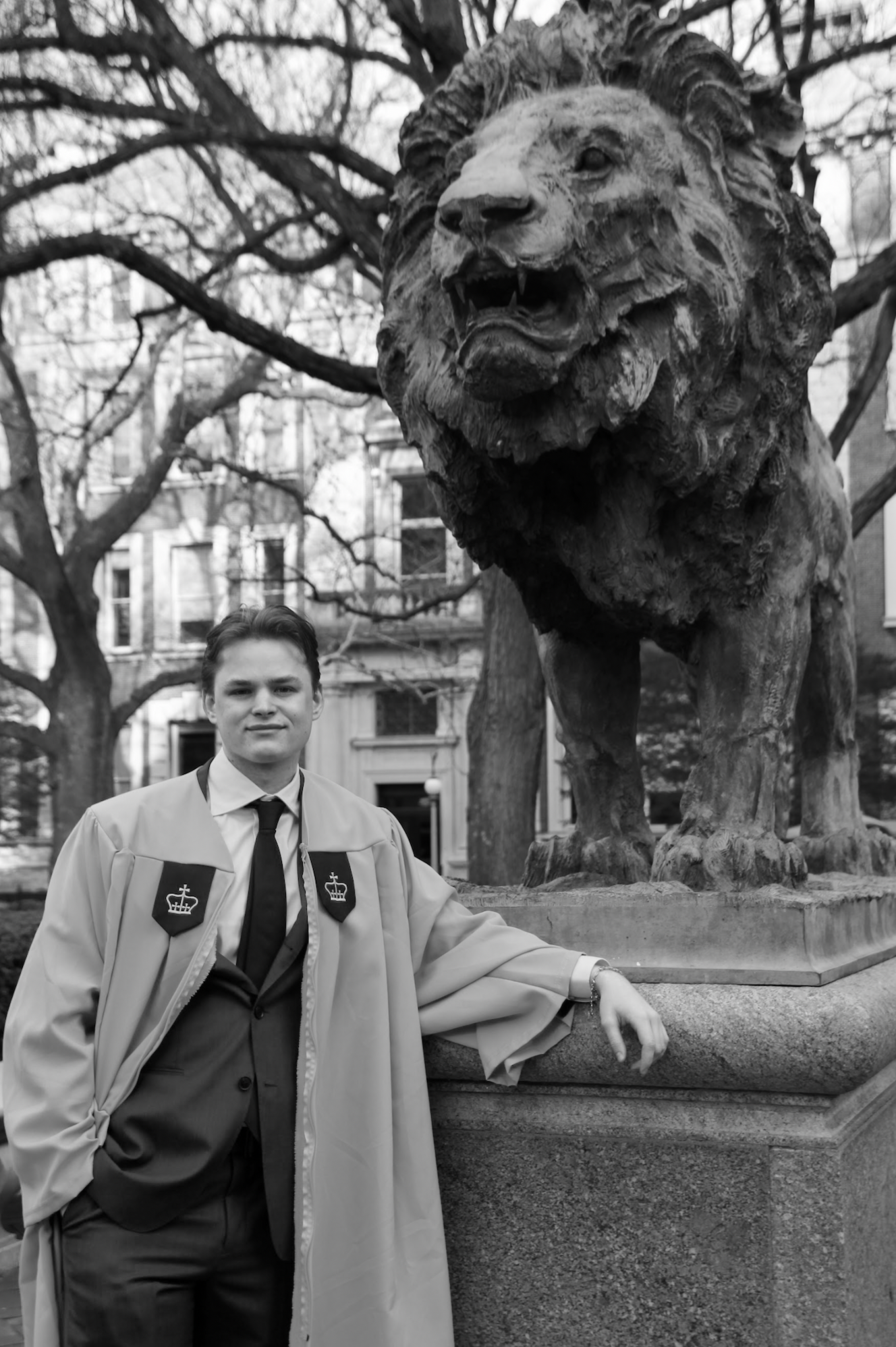
Here is the setup: one founder, trained for fourteen years in pre-professional ballet at Boston Ballet, San Francisco Ballet, and Ballet West, who simultaneously won three YoungArts awards for photography, researched self-assembling robots at Columbia, published simulation work in IEEE out of Stanford's Robotics lab, became the first hire at a generative AI startup, watched it get acquired by Salesforce, and then decided to build the infrastructure that every AI lab on earth quietly needs but nobody had built yet. That is Nicolai "Nic" Ouporov, Co-Founder and CEO of Fleet AI.
Fleet builds reinforcement learning training environments - "RL gyms" in the company's own terminology - where AI agents can practice operating real-world software applications under realistic conditions before anyone turns them loose on actual work. Think of it as a flight simulator, except the pilot is an AI agent and the cockpit is a replica of Salesforce or Excel. Fleet creates these simulation environments so that labs can train models on real, consequential tool-use without the consequences. The company went from roughly $1M in annualized revenue at the end of 2025 to over $60M in early 2026 - a 60x increase in a matter of months.
Before Fleet, Nic was building in the same space from a different angle. At Stanford's Robotics and Embodied AI Lab, he studied how simulation environments could help robots learn to work alongside humans - the same fundamental question, pointed at physical machines rather than software agents. At Columbia's Creative Machines Lab, it was physics simulations and self-replicating robots. The thread running through all of it: how do you build a world inside a computer that teaches an intelligent system how to behave in the real one?
Respell, where Nic was founding engineer, gave him his first direct look at the commercial side. The startup built no-code generative AI automation tools and was acquired by Salesforce in January 2024. That proximity to how enterprises actually use AI - and where agents break down - fed directly into Fleet's thesis. The problem was not that AI agents lacked capability. The problem was that they had no safe place to develop judgment.
Nic co-founded Fleet with Fred Havemeyer in 2024. The company's total funding has reached $45M+, with a Series A led by Craft Ventures and participation from Sequoia Capital, Menlo Ventures, and SV Angel. As of April 2026, Bain Capital Ventures is leading negotiations on a new round targeting at least $50M at a post-money valuation of approximately $750M. Fleet employs roughly 40 people and is headquartered in New York, with Nic based in San Francisco.
The name Fleet has a double meaning that Nic has cited explicitly: a team of agents operating collaboratively toward a shared goal, and the ability to move quickly. Both describe what the company is building and how it operates.