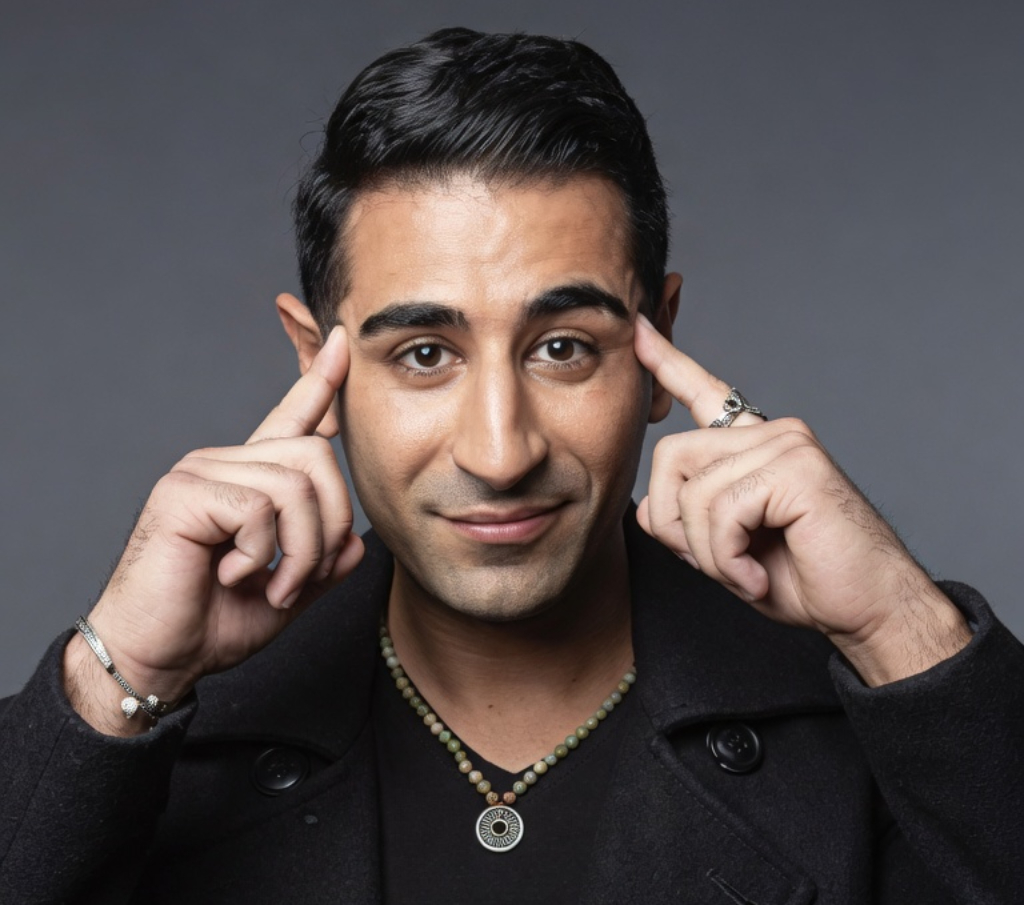
He was the kid in the wealthy California neighborhood who couldn't afford the gear. A teammate's mother quietly handed him a pair of used Nike cleats. He cried. Then he went back to mowing lawns, and started figuring out how the world actually worked. That combination - of knowing what it feels like to be on the outside and refusing to stay there - is the engine that has run Arman Assadi for the last three decades.
Most people know the Google chapter. It's the cleanest before-and-after in his story: stable income, Silicon Valley prestige, the kind of job that gets you nodded at approvingly at family dinners. He quit. Bought a one-way ticket to Cuba, of all places. Read The $100 Startup in a Havana cafe and decided that the only prisons he'd ever live in were the ones he built himself.
"The reason I left Google had nothing to do with Google. It had everything to do with the fact that I'd spent my whole life trading time for someone else's dream."
He came back and did what any reasonable former Googler would do: wrote a blog post, built a digital course about Gmail, and started charging for it. That sounds modest. The results were not. Within two years, he'd become the copywriter behind some of the biggest product launches in online marketing - thirteen of them crossing the million-dollar mark. His clients read like a Forbes byline list: Neil Patel, Jeff Walker, Lewis Howes, Jason Silva. Enterprise names followed: IBM, T-Mobile, PayPal, Booking.com, 1-800-Flowers.
The skill he was selling wasn't writing, exactly. It was the ability to make someone feel seen and then hand them a solution. That's a rare thing to be able to do at scale, and the market rewarded it accordingly.
In 2016, he and Chad Mureta - the app millionaire who built his empire from a hospital bed after a truck nearly killed him - co-created the EVO Planner. Not another productivity journal. A Kickstarter campaign that raised over a million dollars with more than 6,000 backers, making it the most-funded planner in crowdfunding history. They also co-developed the Elements Assessment, a personality framework inspired by Carl Jung that maps people to one of four brain types: Alchemist, Oracle, Architect, Explorer. Close to a million people have taken it. The data set alone is a small miracle.
The mistakes were proportional to the wins. Supply chain failures. Talent problems. Losses that climbed past six figures. Assadi talks about them the way experienced surgeons talk about difficult cases - with specificity and without drama, because the education was worth the tuition.
Steno.ai is where all of that lands now. The premise is sharper than most AI pitches: what if a Tony Robbins, a Seth Godin, a top performance coach could have a real conversation with every person who wanted one, simultaneously, forever? That's the product. An AI digital twin that replicates the voice, reasoning, and personality of an expert or creator, deployed across web, mobile, and SDK. Think voice cloning meets knowledge distillation meets always-on coaching.
The company came out of Techstars '23. Tony Robbins didn't just give his blessing - he became an advisor and investor. That's not a logo on a slide deck. That's someone who spent thirty years building the most scalable coaching operation in history deciding that this is how it scales further. Visionary Ventures also came on board. The team brought in Ian McCann as CTO and Paolo Grignaffini as CXO. The platform is live, the SDK is shipping, and the pipeline of experts wanting to clone their best selves is, predictably, not small.
At Tony Robbins events, Assadi isn't sitting in the audience. He's one of the senior leaders running teams on the floor. He's been doing it for years - at every program, every event. He showed up, stayed, and eventually became part of the machine. Then he built his own.
The Alfalfa Podcast, which he co-hosts with Nick Urbani, Stephen Cesaro, and Eric Johanson, runs live every Wednesday. It is less a career move and more a refusal to let interesting conversations stay private. Topics range from entrepreneurship to investing to philosophy to whatever happened in the world this week. There's a Discord community attached that the regulars describe with the kind of enthusiasm usually reserved for high school bands.
He is also a photographer. A music person. A soccer player who has been competing his whole life. These aren't hobbies - they're data points. The pattern is someone who wants to understand how things work by doing them, not reading about them. The Alan Watts obsession fits: Watts spent his career translating Eastern philosophy into language that Western minds could actually use. That's the move Assadi keeps repeating in different domains. Take something deep, make it usable, get out of the way.
The immigrants-from-Iran detail matters less as biography and more as context for why he runs at the speed he does. When the default path isn't guaranteed, you don't wait for permission to take another one. You mow lawns. You sell suits. You get a degree in entrepreneurship at San Diego State, then earn a machine learning certificate at Stanford, then add an AI for Business credential from Wharton - because the education that matters is the one that's actually useful right now.
The Foundr Magazine cover - Issue 66, his face alongside Branson, Cuban, Vaynerchuk, Brown, Huffington - is filed under "moment, not destination." He showed up on that cover the same way he shows up everywhere: through the work, not the positioning. The positioning followed.
What he's building with Steno.ai isn't a product for founders. It's infrastructure for wisdom itself. The argument is that the scarcest thing on earth isn't capital or talent - it's quality guidance from people who have actually solved the problem you're working on. If you can make that available at scale, you've done something genuinely useful. That's the mission. That's been the mission since a kid in borrowed cleats decided he was going to figure out how everything works.