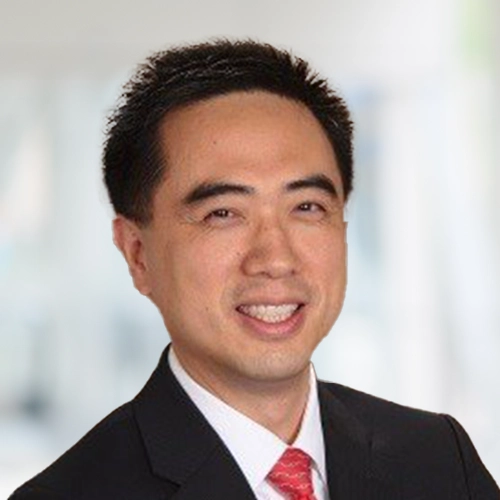
Sean X. Hu runs a Baltimore biotech that is trying to solve one of the polite lies of modern drug discovery: the idea that "undruggable" is a scientific category rather than an economic one. Rapafusyn Pharmaceuticals, where Hu is President and CEO, is building large DNA-encoded libraries of natural-product-like macrocycles it calls RapaGlues. In September 2025 the company closed an oversubscribed $44 million Series A, led by BioTrack Capital and Yonjin Capital, on top of an earlier $24 million commitment. That is a lot of money for a company whose value proposition is, roughly, that its molecules glue two proteins together and then decline to shred either one.
The polite name for this approach is "non-degrading molecular glue." The field's more famous glues, the ones investors have been chasing since roughly 2020, work by recruiting a target protein to a ubiquitin ligase like CRBN, tagging it for the cell's disposal system, and walking away. That is elegant if what you want is destruction. It is less useful if what you want is a protein to keep working, or to work differently, or to be politely restrained rather than shot. Rapafusyn's pitch to Hu, and Hu's pitch to investors, is that most biology sits in the second bucket.
The science is licensed out of the lab of Jun O. Liu at Johns Hopkins University School of Medicine, a pioneer of the molecular-glue mechanism who was recently elected a Fellow of the National Academy of Inventors. Hu's office is at 855 N. Wolfe Street, on the Hopkins medical campus, about a mile from where the chemistry was invented. It is one of the shorter tech-transfer commutes in American biotech.
The Long Detour
Hu did not take the usual path to a biotech CEO chair. He did not spin his own PhD out of an academic lab, and he did not come up through big pharma R&D. He got a bachelor's in organic chemistry at Peking University, a PhD in genomics from NYU in the mid-1990s, and then, unusually, went into industry twice before circling back for an MBA. He held operating roles at Bristol Myers Squibb, at CuraGen (the first-generation genomics company that was, briefly, an idea of what biotech might look like), and at Illumina (which is what biotech actually looked like). Then, in 2001, he finished a Wharton MBA with a double major in Entrepreneurship and Strategic Management, which is Wharton's polite way of saying you plan to run something eventually.
What he did instead was consult. For roughly fourteen years. He started at AT Kearney and IMS Consulting, then built and led consulting practices at Bionest USA and BioStrat Advisory, then landed as Head of Healthcare Consulting for the Americas at GlobalData PLC, a London-listed data and analytics business whose life-sciences arm advises the industry it also reports on. This is a lot of billable hours for someone who eventually wanted to run a company. The generous read is that it is also a lot of pattern recognition. Hu spent his consulting years scouting, evaluating, and valuing drug assets for other people. It is not the worst preparation for buying one.
With the successful closing of our Series A financing, we are positioned to propel the RapaGlue platform and to accelerate our mission to deliver transformative therapies to patients in need.— Sean X. Hu, on the $44M Series A close, September 2025
What Rapafusyn Actually Does
Rapafusyn's platform is a mouthful even for people who like mouthfuls. Its molecules are proximity-inducing, FKBP-binding, cell-permeable, macrocyclic, and non-degrading. Unpacked: they use the same FKBP scaffold that made rapamycin famous, they can get inside cells (unlike a lot of macrocycles, which sit outside sulking), they bring two proteins together in a defined geometry, and they leave both proteins alive when they're done. The company screens these molecules out of DNA-encoded libraries, which is a way of building and searching enormous chemical catalogs without paying for enormous physical warehouses.
The target list is where this starts to matter. Rapafusyn has publicly disclosed an ENT1 inhibitor program for acute kidney injury, presented in vivo data at the American Society for Nephrology's Kidney Week 2024. It has presented at the Cambridge Health Institute's Oral Peptides & Macrocyclics conference, the Molecular Glue Summit in Boston, and the Targeted Protein Degradation & Induced Proximity Summit. In 2025 it was selected to join the Roche Accelerator, a program that is not, historically, generous with its slots. Roche picking your platform is a specific kind of validation, in the sense that Roche does not have to.
An Unusual Cap Table
The Series A syndicate is a good tell for what Rapafusyn is trying to be. BioTrack Capital and Yonjin Capital led. 3E Bioventures, Proxima Ventures, Lapam Capital, and Jiangsu Tianqin Investment participated. This is a heavily China-connected group backing a Baltimore biotech running Hopkins IP, a configuration that would have seemed exotic a decade ago and now increasingly does not. Hu is the natural CEO for that configuration. His CV includes an adjunct professorship at the Chinese National Human Genome Center in Shanghai and a senior advisor role at the Beijing Genomics Institute, alongside the standard American credentials. The trans-Pacific fluency was not a résumé accessory. It appears to have been a fundraising thesis.
Sean Hu's career, by dollar-weighted attention
Before Rapafusyn
Hu built and ran Avotres Inc., a clinical-stage biopharma developing therapies for autoimmune disease and cancer through regulatory T cells. Avotres is the kind of company that does not generate press releases every quarter but does generate an actual pipeline, and Hu's tenure there gave him something a lot of first-time biotech CEOs lack: a clear idea of how a small clinical-stage team spends money, and how quickly it can run out. He also founded and served as the first president of BioKatalyst, a professional network for Chinese-American life-science leaders, in 2019. He has sat on the editorial board of Personalized Medicine, a peer-reviewed journal, since well before personalized medicine became the phrase everyone used and stopped defining.
The Bet
The bet Rapafusyn is asking investors and partners to make is a specific one. It is that molecular glues will turn out to be a platform of platforms, not a single mechanism, and that the non-degrading branch of that tree will contain more addressable biology than the degrader branch. It is that DNA-encoded macrocycle libraries, screened against difficult targets, will produce enough hits to feed a genuine pipeline rather than a single asset. And it is that Baltimore, of all places, is a reasonable headquarters for a company whose scientific advisory root system runs through Hopkins and whose capital base runs partly through Asia.
The Quiet Part
The quiet part of Hu's story is that he is a very late first-time public-facing biotech CEO, and it does not seem to bother him. He is not selling a personal narrative. There are no viral LinkedIn posts, no podcast tour, no obligatory founder-origin essay. Rapafusyn's press releases are competent and unadorned. The team page is short. The one direct quote in public circulation is the sentence he offered at Series A close, which is the sentence a CEO is supposed to offer at Series A close. In a category prone to overclaiming, Hu's public presentation is notably restrained. Whether that reflects strategy or temperament is unclear. In biotech, the two often converge.
Career, briefly
- 1990sBS in organic chemistry, Peking University. PhD in genomics, NYU.
- Late 1990sIndustry stints at Bristol Myers Squibb, CuraGen, Illumina.
- 2001MBA, Wharton (Entrepreneurship & Strategic Management).
- 2000s-10sConsulting: AT Kearney → IMS → Bionest USA → BioStrat.
- 2010s-20sSVP, Head of Healthcare Consulting Americas, GlobalData PLC.
- 2019Founding President, BioKatalyst.
- 2020sCEO, Avotres Inc.
- 2024Appointed CEO, Rapafusyn Pharmaceuticals.
- Sep 2025Closes oversubscribed $44M Series A.
What to Watch
Three things are worth watching over the next year. First, the ENT1 program for acute kidney injury, which is the most publicly disclosed asset in the pipeline and the one whose in vivo data will translate most cleanly into a market-sized conversation. Second, whatever emerges from the Roche Accelerator work, because pharma-accelerator programs either produce a co-development deal within about eighteen months or produce a polite silence. Third, whether Rapafusyn stays private. A $44M Series A in Hu's segment usually funds two to three years of pipeline work, after which the choices narrow to a Series B, a partnership, or an IPO window that has been intermittently open since 2023. Hu has watched enough companies from a consultant's seat to know which of those doors closes first.
None of this is guaranteed to work. Molecular glues are a young enough category that the failure modes have not been fully catalogued. FKBP-based chemistry is elegant but crowded. DNA-encoded libraries throw off a lot of false positives. And the specific bet on non-degrading mechanisms may turn out to be a niche within a niche. But Hu is not building for the easy scenario. He is building the platform he spent fourteen years of consulting recommending someone else build.
Filed from Baltimore · Rapafusyn Pharmaceuticals