space-infrastructure
(13)
Mitchell Fogelson Is Folding a Power Plant Into a Rocket
The Beyond Reach Labs co-founder turned a PhD in deployable structures into a bet on orbital power - and a 16,000-square-foot Brooklyn factory built to make space hardware repeatable.
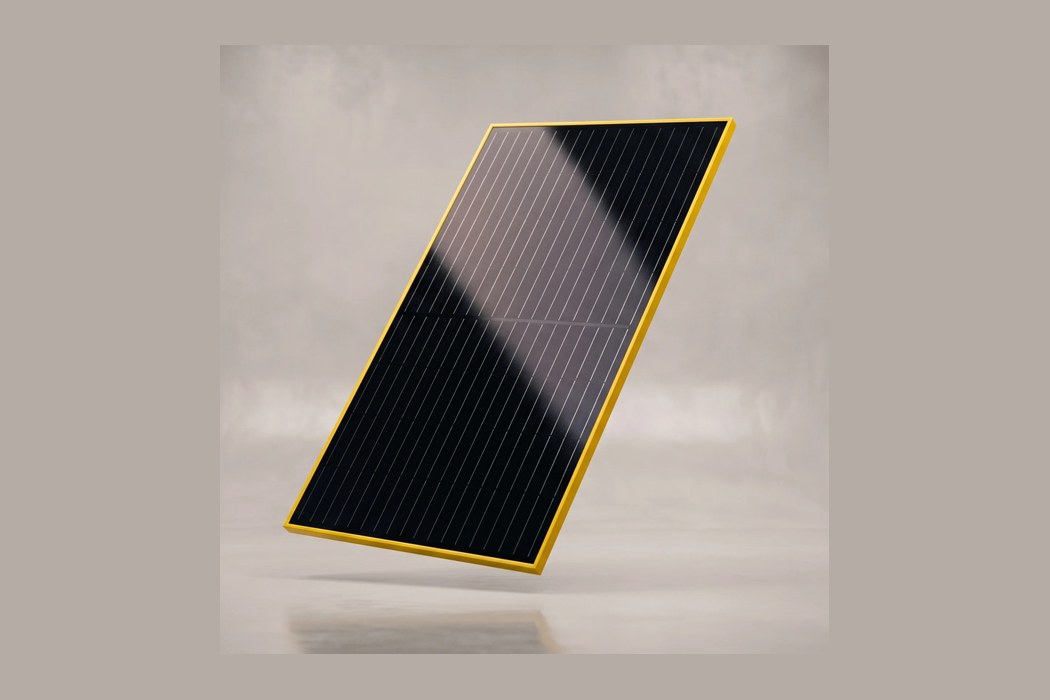
The Space Race Has a Solar Panel Problem - Source Energy Wants to Make It Boring
Satellites cannot work without electricity, yet their solar arrays can take longer to buy than the spacecraft takes to build. Source Energy is betting that standardized silicon, automated production, and a catalog mentality can turn a mission risk into an ordinary purchase order.

The Recruiter and the Rocket Scientist Funding America's Hard Tech
A recruiter who once staffed early Snap and Tinder teamed up with a rocket engineer to fund the companies most VCs can't read a spec sheet for - and got the Space Force to sign first.

Beyond Reach Labs
Beyond Reach Labs is a New York space-hardware startup building ultra-light deployable solar arrays that pack down to the size of a dining table and unfold to the size of a football field in orbit, delivering roughly 10x more usable power per launch without adding mass or volume. Founded by former NASA researcher Mitchell Fogelson and ex-SpaceX parachute lead Pele Collins, the company grew out of NASA-funded research into kilometer-scale space structures and is targeting a 2027 in-space flight demonstration.

Spaceium Inc.
Spaceium is a Y Combinator (S24) aerospace startup building unmanned refueling and servicing stations in orbit - what its founders call service stations along a 'space superhighway.' Its proprietary cryogenic storage system holds multiple metric tons of fuel for up to a decade in orbit without boil-off, and its high-precision robotic arm transfers propellant and performs repairs. The goal is to let spacecraft top up in space instead of carrying all their fuel from launch, extending missions and lowering costs for satellites, orbital transfer vehicles, and eventual Moon and Mars missions.

RBC Signals
RBC Signals is a Seattle-area space communications company that runs a global Ground Station as a Service (GSaaS) network, moving data between satellites and Earth for commercial, government, and research operators. Built on a sharing-economy model, it stitches together company-owned antennas and unused capacity from partner-owned ground stations into a single on-demand network of more than 80 antennas across 60-plus locations. Alongside downlink and telemetry, tracking and command (TT&C) services, the company has expanded into dynamic and fractional spectrum leasing through its STORM platform, giving satellite operators flexible, pay-for-what-you-use access to the ground and spectrum they need.

Halen Mattison
Halen Mattison is the co-founder and CEO of General Galactic, an El Segundo space-propulsion company building Genesis, a water-fueled engine that aims to combine hydrazine-level thrust with xenon-level efficiency. A former SpaceX engineer who worked on propellant generation for Starship, he left after being told his Mars-fuel vision was too long-term, studied at Stanford, and started the company to build the propulsion and propellant infrastructure he believes will become a railroad to Mars. The company raised roughly $9.9M across pre-seed and seed rounds and first emerged converting CO2 into methane on Earth before sharpening its focus on high-agility spacecraft and water-based propulsion.
Northwood Space
Northwood Space is an El Segundo, California company building the ground side of the space economy: rapidly manufactured, software-defined phased-array ground stations that pull data down from satellites. Its flagship product, Portal, electronically steers beams to track many satellites at once instead of mechanically pointing a single dish, which the company argues removes the bottleneck choking modern satellite constellations. Founded in 2023 by CEO Bridgit Mendler, CTO Griffin Cleverly, and head of software Shaurya Luthra, Northwood has raised $136.4M total, including a $100M Series B in January 2026, and holds a $49.8M U.S. Space Force contract to modernize the Satellite Control Network.

Loft Orbital
Loft Orbital is a San Francisco-based space infrastructure company that flies customer payloads on standardized satellites - selling space access the way AWS sells compute. Customers skip the spacecraft-building part and ship hardware, software, or on-demand data tasks to orbit on Loft's YAM satellites.

Pierre-Damien Vaujour
Pierre-Damien Vaujour is the co-founder and CEO of Loft Orbital, the San Francisco-based company that turned satellite deployment from a multi-year aerospace engineering odyssey into something closer to provisioning a cloud server. A French aerospace engineer by training — ISAE-SUPAERO class of 2008, master's from University of Michigan — he cut his teeth at ESA, NASA, the Google Lunar X PRIZE, and was among the first hires at Spire Global before co-founding Loft Orbital in 2017 with Alex Greenberg and Antoine de Chassy. Under his leadership, the company reached unicorn status in January 2025 with a $170M Series C, surpassed $500M in cumulative bookings, and is now building the default AI execution layer for orbital infrastructure.

Astro Digital
Astro Digital designs, builds and operates small-satellite systems delivered as turn-key 'Mission-as-a-Service' offerings - covering spacecraft bus, payload integration, launch, ground network and mission operations - for earth observation, communications, science and in-orbit demonstration customers from LEO to GEO.

Ignacio Montero
Ignacio Belieres Montero is the founder and CEO of Epic Aerospace, a Los Altos, California-based company building orbit transfer vehicles and space tugs that move satellites from one orbit to another. A Stanford aerospace engineering graduate and Y Combinator S19 alum, he started building rockets at 16 and founded Epic Aerospace in 2017. The company's CHIMERA LEO 1 launched aboard SpaceX Transporter 6 in January 2023, and CHIMERA GEO 1 launched on SpaceX's Intuitive Machines-2 mission in February 2025, reaching 53 million kilometers from Earth. Epic Aerospace reached $4.2M in annual revenue in 2024 with a 28-person team, pioneering non-toxic hypergolic propulsion technology for cost-effective in-space transportation.

Chris Biddy
Chris Biddy is the Co-Founder and CEO of Astro Digital, a California-founded aerospace company that has delivered 35+ satellites and operates 10+ missions in orbit. A mechanical engineer by training (M.S., Cal Poly San Luis Obispo), Biddy steered Astro Digital from an Earth observation startup into a full Mission-as-a-Service platform - cutting the cost, schedule risk, and complexity barrier for organizations wanting to put hardware in space. He previously led engineering at Canopus Systems, and has been active in the commercial smallsat movement since its early commercial days.