humanoid-robots
(20)
1X and the $20,000 Laundry Problem
1X is bringing humanoid robots into the home, where a crumpled shirt can be harder than a factory shift. Its bet is that a useful robot learns best in the place where people actually need it.
Robots in the Real World: Four CEOs on the Machina Stage
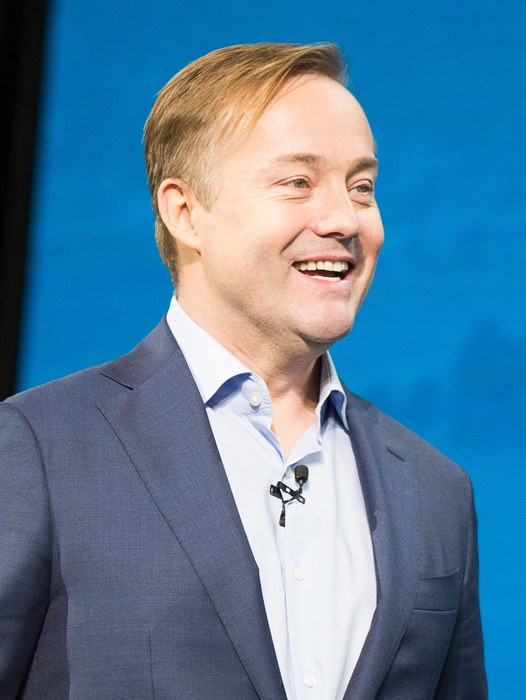
At the Machina conference in Paris, All-In host Jason Calacanis sits down with the leaders of four of the world's top robotics companies—ANYbotics, 1X, Boston Dynamics, and Agility Robotics. Across four rapid-fire interviews, the CEOs explain why four-legged 'dog' robots conquered industrial inspection first, why humanoids are finally doing useful work, how teleoperation and internet-scale video data are training the next generation of machines, and where the real money and the real dangers lie—from explosive oil rigs to weaponized robots coming out of China. The through-line: robots are no longer research demos, they're deployed assets measured by ROI, and 'hard takeoff' where robots build robots may be as little as three years away.

Avea Robotics
Avea Robotics builds Sentinel, ultra-low-latency software that lets a human operator step into a robot from anywhere in the world. When an autonomous robot gets stuck on an edge case, an operator teleoperates it back on track - keeping fleets running and capturing the intervention data that makes the next model better. Founded in 2026 by UIUC engineers Ary Indarapu and Vikram Vadrevu and backed by Y Combinator (P26), the company reports roughly $18K MRR and has helped deploy close to 30 robots.

Steve Xie
Steve Xie is the founder and CEO of Lightwheel, a physical AI infrastructure company building simulation and synthetic data systems that teach robots to learn and operate in the real world. A physicist by training with a Columbia PhD, he led autonomous driving simulation at Cruise, NVIDIA, and NIO before starting Lightwheel in 2023. The company supplies SimReady 3D assets, egocentric human data, and robot evaluation tools to labs including NVIDIA, Google DeepMind, and Figure, and raised roughly $137.5 million in 2026 to expand its data and evaluation infrastructure.
Jeff Cardenas
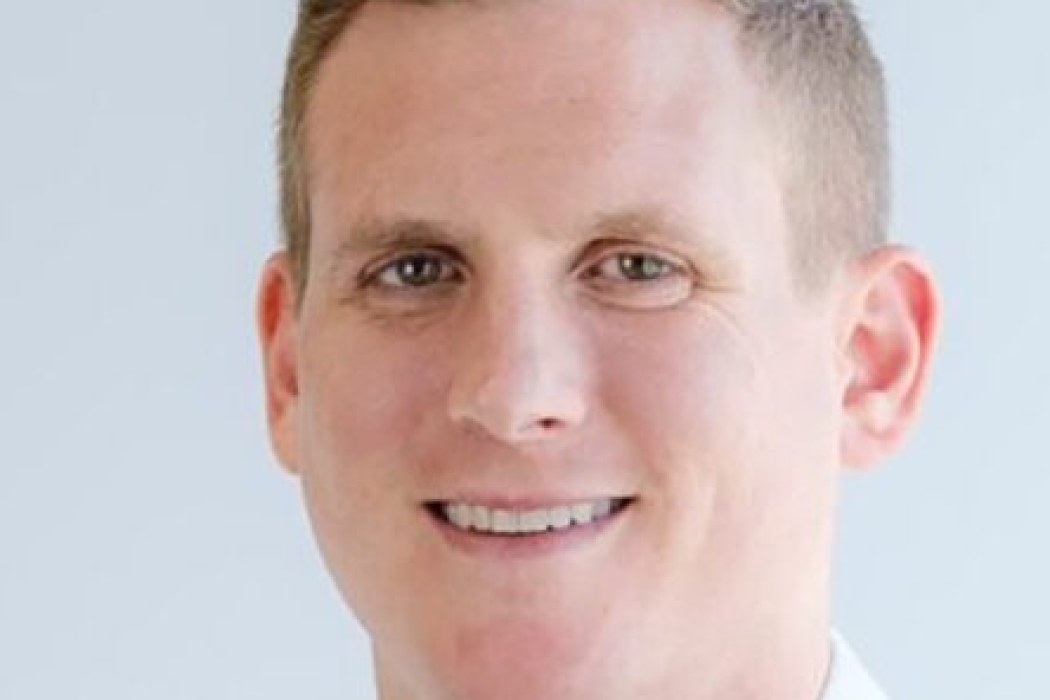
Jeff Cardenas is the co-founder and CEO of Apptronik, an Austin-based robotics company building Apollo, a general-purpose AI-powered humanoid robot. He spun the company out of the University of Texas Human Centered Robotics Lab in 2016 and has since raised close to $1 billion, secured a strategic partnership with Google DeepMind's Gemini Robotics, and positioned the company among the small handful of credible US humanoid players. He frames the race to build practical humanoids as the 'space race of our time.'

Po-Shen Loh on Education, Opportunity, and Humanity After AI
Mathematician Po-Shen Loh, the longtime U.S. International Math Olympiad coach, argues that AI is about to erase the promise of a 'stable life' and that the way humanity thrives afterward is by building high-trust networks of curious, caring people. Drawing on visits to a high-poverty fourth-grade classroom in rural South Carolina and to Africa, he describes vast untapped pools of authentic talent, a coaching pipeline where students mentor younger students across borders, and a new 'economic flow system' powered by trust and remote work. He warns about the risks of an interconnected, AI-written, robot-run world, and reframes education around intention, curiosity, and the ability to solve non-standard problems. A brief closing segment features a Stanford instructor describing the rise of the 'AI-native engineer.'

Lightwheel
Lightwheel is a Physical AI infrastructure company building the data layer that teaches robots to work in the real world. It produces physically accurate SimReady 3D assets, egocentric human demonstration data, and evaluation platforms so robots can learn safely and cheaply in simulation before they are deployed. Founded in 2023 by former autonomous-driving-simulation lead Steve Xie, Lightwheel partners with NVIDIA and supplies simulation assets and synthetic datasets to leading robotics teams.

Matthieu Masselin
Matthieu Masselin is the CEO and co-founder of Wandercraft, the Paris-based robotics company behind Atalante, the Eve personal exoskeleton, and the Calvin-40 humanoid robot. Trained as an engineer at Ecole Polytechnique, he took over as CEO in 2018 and led the company through FDA clearances, a Renault manufacturing partnership, and a Series D that brought total funding to about $169M.

General Robotics
General Robotics is a Kirkland, Washington startup building general-purpose intelligence for robots. Its flagship GRID platform delivers modular, composable AI skills - perception, reasoning, and control - that deploy across humanoids, arms, quadrupeds, wheeled and aerial robots in minutes, without local GPUs. Founded in 2023 (originally Scaled Foundations) by a team of ex-Microsoft AI researchers, the company argues that robot intelligence emerges from composing many reusable skills rather than from one ever-larger model.
Proception
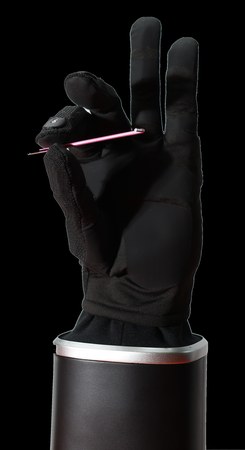
Proception is a Palo Alto and Mountain View robotics company building the dexterous robotic hand that humanoids are missing. Its flagship ProHand 1.0 packs 22 degrees of freedom, tendon-driven fingers and skin-like tactile sensors into a hand designed with input from surgeons - close enough to a human hand that robots can learn directly from human demonstration. A companion sensor glove, ProGlove, captures real human manipulation data at scale to train those movements. Founded in 2024 by former Tesla Optimus engineers Jay Li and Jack Xu, the company raised an $11M seed led by First Round Capital and is shipping its first hands to research labs and robotics companies.

Jay Li
Jay Li is the founder and CEO of Proception, a Palo Alto robotics startup building high-dexterity robotic hands for humanoid robots. A former electronics lead on Tesla's Optimus program, he left to bet that the fastest path to capable robots runs through hardware close enough to the human hand that machines can learn directly from people. His ProHand packs 22 degrees of freedom and skin-like tactile sensors; its companion ProGlove captures human manipulation data with no robot in the loop. In June 2026 Proception shipped its first hands, settled a Tesla trade-secret lawsuit, and closed an $11M seed round led by First Round Capital on the same day.
Reflex Robotics
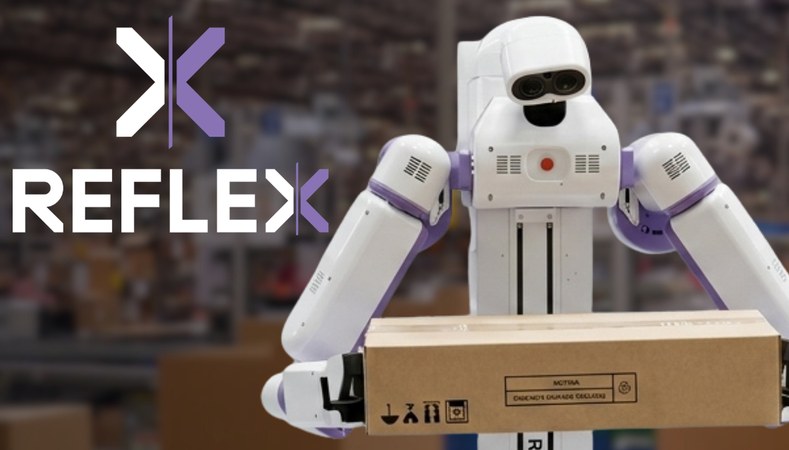
Reflex Robotics builds a wheeled, general-purpose humanoid that does real work on warehouse floors. Founded by MIT alumni with hardware chops from Tesla, Boston Dynamics, Anduril and Oculus, the company designs and ships affordable humanoids that start with a human-in-the-loop and learn their way to autonomy. Their robots are deployed in pilots with GXO and other Fortune 100 logistics operators, with a manufacturing footprint planned in Nuevo Leon, Mexico.
Ashish Kapoor
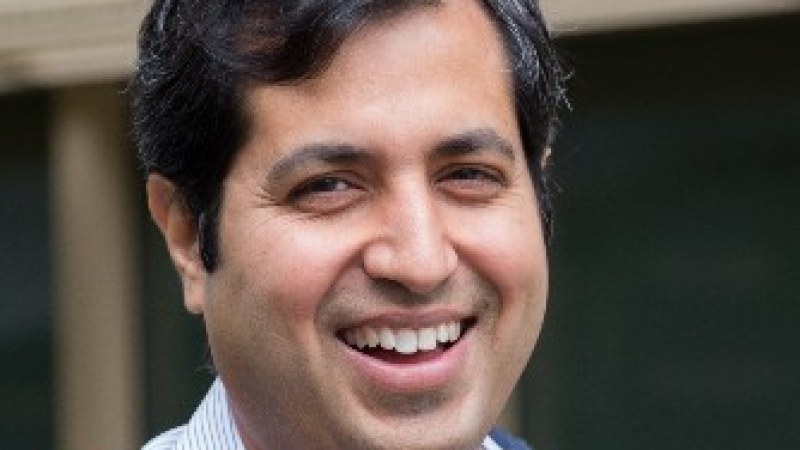
Ashish Kapoor is the co-founder and CEO of General Robotics (formerly Scaled Foundations), a Redmond, Washington startup building a unified intelligence layer for robots of every shape. After 17 years at Microsoft, where he led the Autonomous Systems and Robotics Research group, created the open-source AirSim simulator, and co-authored the widely read 'ChatGPT for Robotics' paper, Kapoor set out in 2023 to make robot intelligence portable across hardware. His thesis: general intelligence emerges from the rich composition of many robot skills, not from a single ever-larger model. He holds a PhD from the MIT Media Lab, flies and has built his own airplane, and treats simulation as the laboratory where machines learn to be safe before they touch the real world.
Skild AI
Skild AI is a Pittsburgh-based robotics company building the Skild Brain, a single general-purpose foundation model designed to control any robot - quadrupeds, humanoids, tabletop arms, mobile manipulators - across many tasks without bespoke retraining. Founded in 2023 by former Carnegie Mellon professors Deepak Pathak and Abhinav Gupta, the company trains on a mix of large-scale simulation, internet video, teleoperation and real-world deployment data. After a $1.4B Series C in January 2026, Skild AI is valued at over $14 billion.
Deepak Pathak
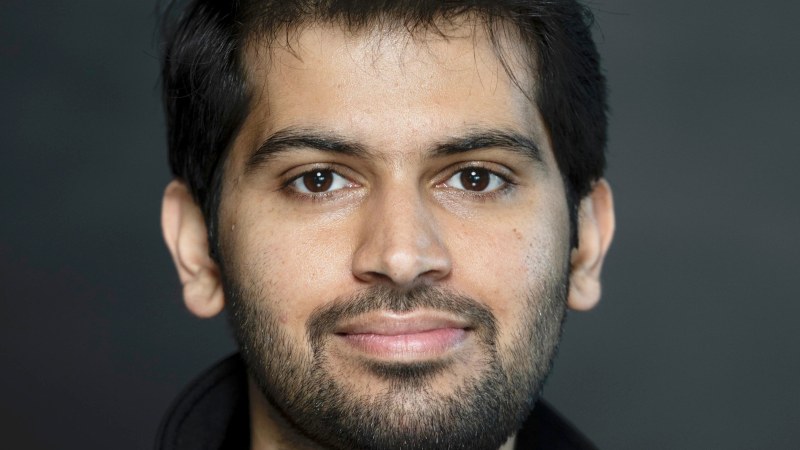
Deepak Pathak is the co-founder and CEO of Skild AI, the Pittsburgh robotics company building a single general-purpose 'brain' that can run any robot from a quadruped to a humanoid. A Raj Reddy Associate Professor at Carnegie Mellon, he earned a gold medal at IIT Kanpur and a PhD at UC Berkeley before betting that physical intelligence, not language, is the real path to AGI. In January 2026 Skild raised $1.4 billion at a valuation north of $14 billion, backed by SoftBank, Nvidia, and Jeff Bezos.
Summer Robotics
Summer Robotics is a Campbell, California machine-vision company giving robots what it calls superhuman perception. Its patented Kortx platform fuses event-based sensors with continuous laser scanning - a category the company calls laser-event sensing - to deliver blur-free 3D tracking with sub-5ms latency, 100-micron precision and 100Hz tracking. The technology lets robots see and react in dynamic, unstructured, variably lit environments, including on metal, glossy and transparent surfaces that defeat conventional cameras, unlocking automation in manufacturing, logistics and humanoid applications.
Tutor Intelligence
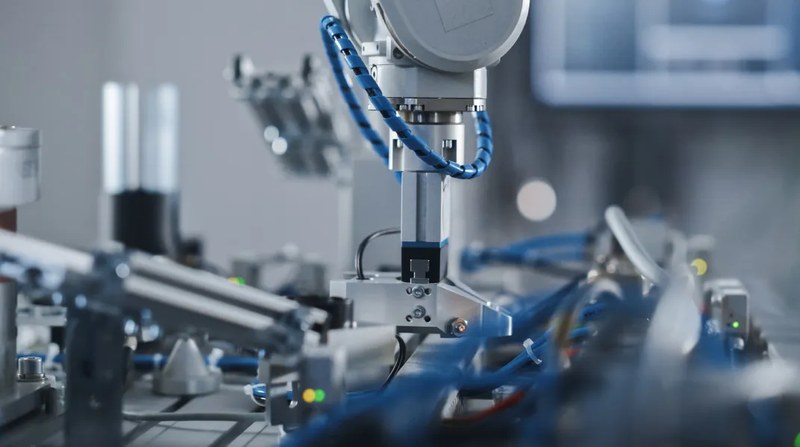
Tutor Intelligence builds AI-powered collaborative robots that pick, pack, and palletize alongside people on factory and warehouse floors. Born out of MIT's CSAIL, the company sells robots by the hour - a Robots-as-a-Service model that drops a working robot onto a line in days, not months, with no programming required. Its flagship Cassie handles infinite SKUs at up to 14 cases per minute, while Data Factory 1, a 100-robot facility in a renovated Watertown mill, trains the next generation of factory-ready robot AI on real-world data.

Figure
Figure is a Bay Area robotics company building autonomous, general-purpose humanoid robots powered by Helix, its in-house vision-language-action model. Founded by Brett Adcock in 2022, Figure is one of a small handful of companies racing to put commercially viable humanoids inside factories, warehouses and - by late 2026 - homes.
Tony Zhao
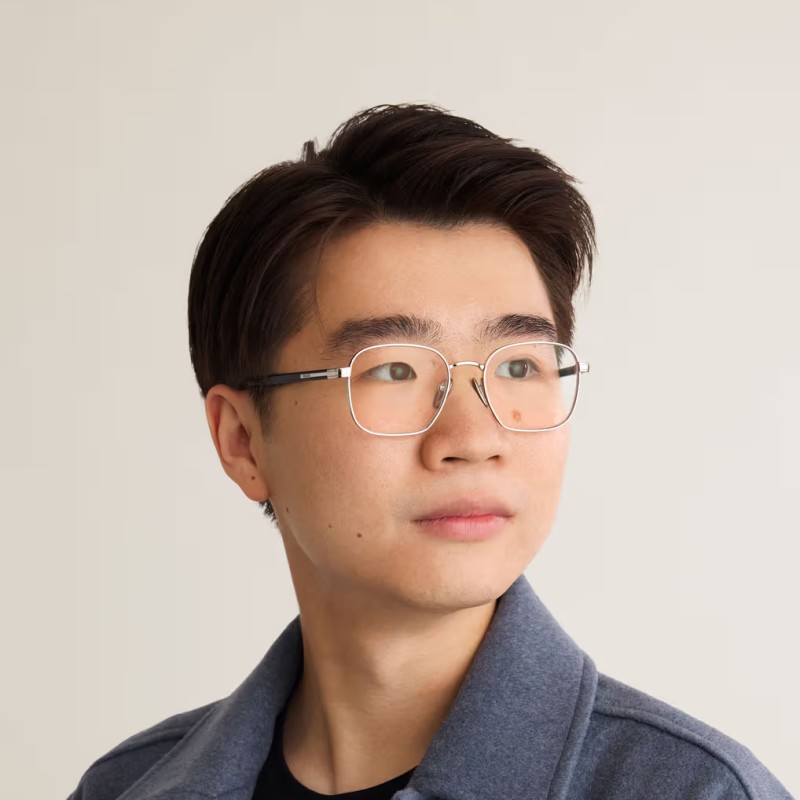
Tony Zhao is the co-founder and CEO of Sunday, a Mountain View-based robotics company building Memo - a home robot trained on 10 million episodes of real household routines. A Stanford PhD dropout and UC Berkeley EECS alum, Zhao invented ALOHA and ACT during his doctoral research, open-source frameworks that became foundational to modern robot manipulation. Sunday reached unicorn status in March 2026 with a $165M Series B led by Coatue, putting the company at a $1.15B valuation with a mission to put a helpful robot in every home.
Ritesh Ragavender
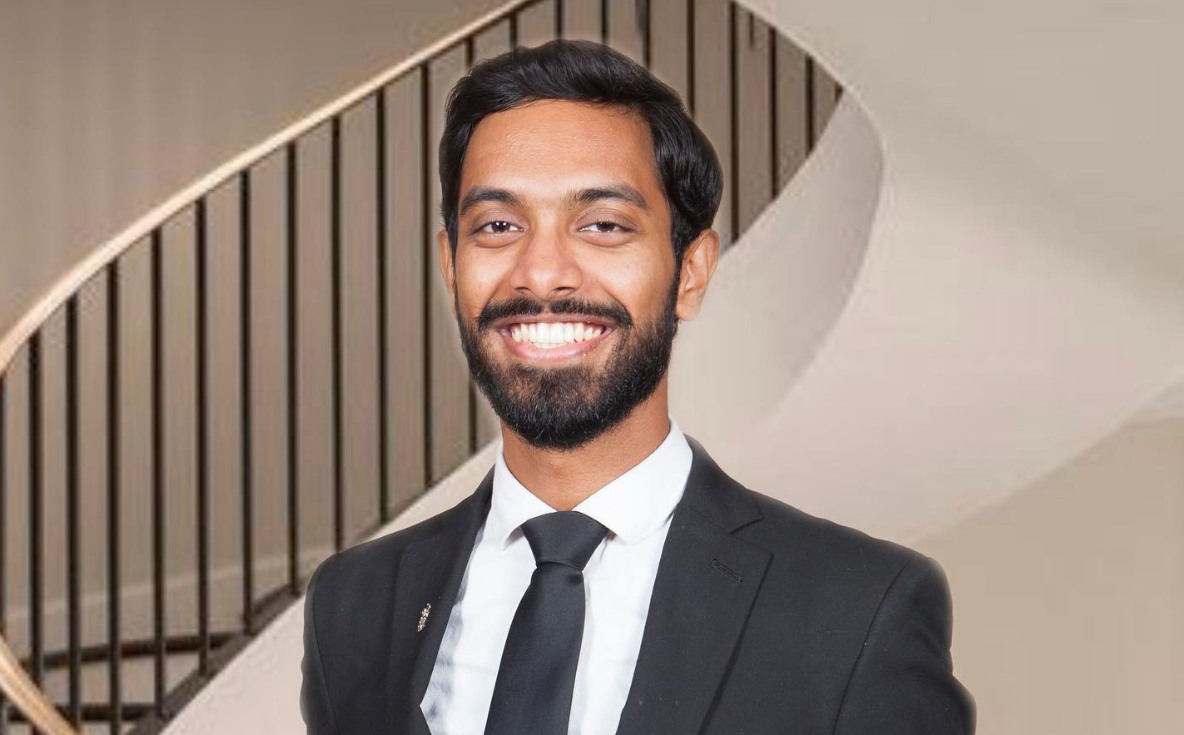
Ritesh Ragavender is the Founder and CEO of Reflex Robotics, a New York-based startup building affordable, general-purpose wheeled humanoid robots for warehouse and logistics operations. A former MIT student with roots in quantitative finance and a prior YCombinator-backed startup, Ragavender launched Reflex in 2022 with a team drawn from Boston Dynamics, Tesla, Anduril, and Oculus. The company raised a $7M seed round led by Khosla Ventures in 2024 and has since partnered with GXO Logistics - the world's largest pure-play contract logistics provider - for live warehouse deployments. Reflex's robots aim to be 20x cheaper than competing humanoids, combining AI policies that improve with every shift with human-in-the-loop remote supervision.