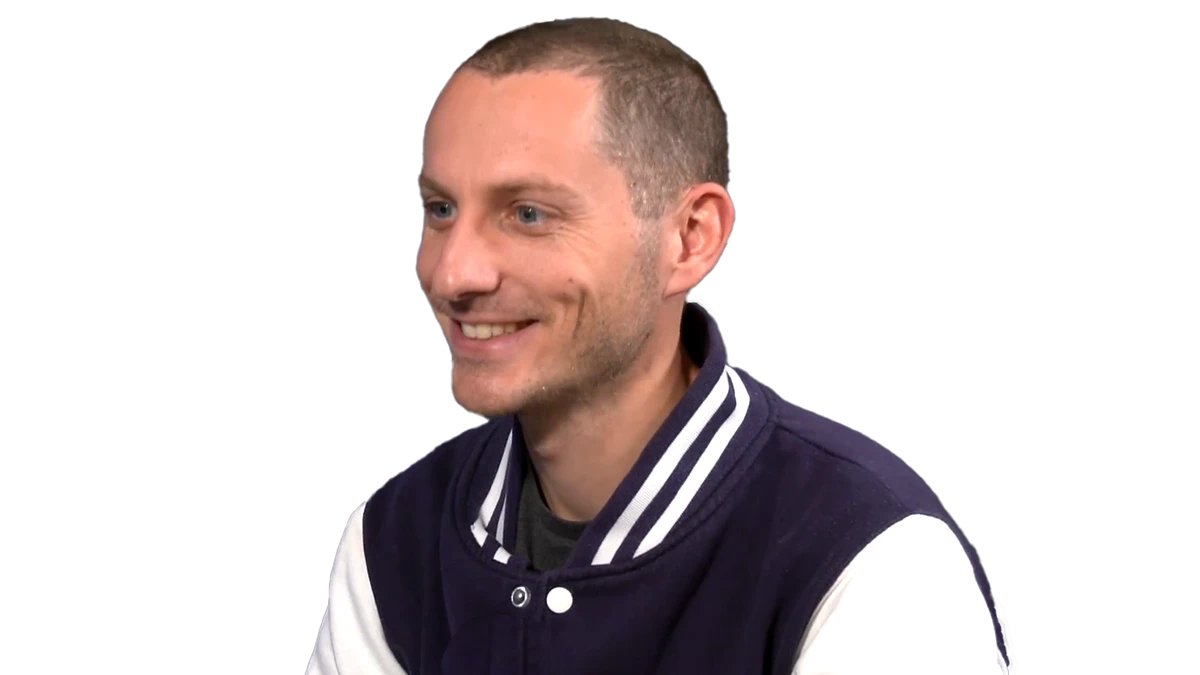
The Wandercraft humanoid robot does not have a head. It also does not have hands. It is called Calvin-40, and it is a stack of legs, a torso, and a control system that was originally designed to carry a person up and down a flight of stairs without falling over. Matthieu Masselin, who co-founded the company in 2012 and became its CEO in 2018, will tell you the head was left off because a head does not help with navigation, and that hands were left off because hands are, in his words, very fragile. There is a small industry of people building humanoid robots with faces. There is a smaller industry of people building humanoid robots without them. Masselin is running the smaller one, and he is doing it out of an office at 88 Rue de Rivoli in Paris.
To understand Wandercraft in 2026 you have to accept a slightly boring premise: for a decade, Masselin and his team were building a humanoid robot. They just called it an exoskeleton. The core engineering problem - keep a bipedal machine upright while it moves in the real world, carrying a payload of roughly 220 pounds, without asking the payload to help - is the same problem you have to solve if the payload is a person with a spinal cord injury or if the payload is a car door. The physics does not know the difference. This is Masselin's public message, delivered in the flat register of someone who has been saying it since long before Tesla put a robot on a stage.
The company he actually runs
Wandercraft was founded by Nicolas Simon, Alexandre Boulanger, and Masselin. In its first decade, it produced Atalante, a clinical exoskeleton used in rehabilitation settings to help patients with paralysis or neurological injury stand upright and walk through a session of physical therapy. Atalante got a CE Mark. It has since been deployed in more than a hundred clinical sites globally. Before he was CEO, Masselin ran the company's command and algorithms team, which is the sort of role in French deep-tech companies that reliably ends in the corner office if the underlying science works. In 2018, the underlying science worked, and he took over.
Since then Wandercraft has done three things at once. It brought Atalante to market. It designed Eve, a self-balancing Personal Exoskeleton that a user can wear at home, walking without crutches, and unveiled it at a New York event in December 2024. And it started building humanoid robots for industry - specifically Calvin-40, developed in partnership with the Renault Group for factory deployment. Three products, one control stack, one CEO. In June 2025 the company closed a $75 million Series D, bringing its total funding to about $169 million.
A very European kind of scale-up
The scale-up story here is unusual in a specific way. Wandercraft is not a company that reached a valuation and then went looking for a product. It is a company that spent ten years qualifying for the FDA and the CE Mark, which is a slow, expensive, medically supervised process that discourages both hype and pivots. When the humanoid robot boom arrived, Wandercraft did not have to raise capital to build a control system - it already had one. It did not have to hire a team of biped locomotion specialists - it already employed them. What it had to do was take a machine that had been engineered to carry a fragile human safely, and adapt it to carry a heavy industrial payload safely. This is a design change that a mid-sized engineering team in Paris can make in months, not years.
Masselin's public tone about the humanoid category is worth noting because it is unusually quiet. He rarely makes claims about superintelligence, general-purpose robots, or the year the entire economy will be automated. What he says instead is that the technology his team has been developing is the same technology now attracting headlines, and that Wandercraft can ship a product because its constraints have always been physical.
Why hands are fragile, according to a CEO
The decision to omit hands from Calvin-40 is small and telling. Robotic hands are the sort of thing that gets a demo reel. Getting a five-fingered robotic hand to pick up a coffee cup is a beloved computer science problem. Getting a robotic hand to survive an eight-hour shift in a factory, hitting things and being hit, is a harder problem. Masselin, in interviews, essentially says: we do not need to solve the second problem to be useful. Calvin-40 is targeted at tasks that are dangerous, physically punishing, or hard to hire for. The tasks do not require dexterity. They require presence, balance, and the ability to move something from one place to another. Wandercraft ships the presence. The head can wait.
This is not the philosophy of a company chasing a science-fiction endpoint. It is the philosophy of a company that has been selling FDA-cleared medical devices for years and has learned that the customer does not care about the demo. The customer cares whether the machine works today, at scale, without hurting anyone. When Masselin's team decides what to leave off a product, they are performing the same trade-off calculation they perform when they decide how a paraplegic user's exoskeleton should behave during a stumble. In both cases, the answer is: fewer moving parts, more reliable behavior, less surface area for failure.
The founding math
Masselin studied energy at Ecole Polytechnique from 2008 to 2012, which is the graduation year most commonly cited on his official biographies. He co-founded Wandercraft the same year. That is not a case of a student launching a company on a dorm-room whim. Ecole Polytechnique is a French military-affiliated engineering school where undergraduates hold a rank in the French army during their studies, and where the alumni network functions as an informal but powerful spine for the country's deep-tech economy. Building a robotics company out of that pipeline, with co-founders, at 22, is entirely on-brand for the institution. Building a robotics company that ships FDA-cleared hardware fourteen years later is not.
What Masselin has done, over the decade in which he moved from the command-and-algorithms team to the CEO's chair, is convert a school project into an industrial enterprise. Wandercraft now employs around 150 people, generates roughly $15 million in annual revenue, and is preparing to expand into three simultaneous markets - clinical rehabilitation, at-home personal mobility, and industrial humanoid deployment - using one shared platform. The company's technology, in Masselin's telling, is not three different products. It is one control system with three different jobs.
What comes next
The Series D funding is earmarked for scale. Wandercraft has moved from a phase where it demonstrates a robot at an event in New York to a phase where it manufactures robots at industrial volume. That step is where robotics companies typically die, because it exposes a set of problems - supply chain, quality control, unit economics - that are not solvable by clever algorithms. Whether Wandercraft survives that step is the interesting question about the company for the next two years. Masselin's bet is that a company that has spent a decade certifying a robot for medical use has already survived, in miniature, exactly this kind of transition. Medical devices demand identical units, identical software builds, and identical reliability from every machine that leaves the factory. That discipline is expensive to acquire and hard to fake. Wandercraft acquired it building Atalante. Calvin-40 gets the benefit.
Masselin, personally, is a quieter figure than his contemporaries in the humanoid robotics space. His public appearances tend to be at engineering conferences and mobility summits rather than founder podcasts. He rarely rehearses a founding myth. When he does speak on record, he sounds like an engineer describing a payload spec. This is probably why Wandercraft's story reads the way it does. It is not the story of a visionary who saw the future first. It is the story of a small European team that solved a hard physics problem in 2012, kept solving it, and looked up in 2025 to find the rest of the industry standing next to them, trying to catch up.