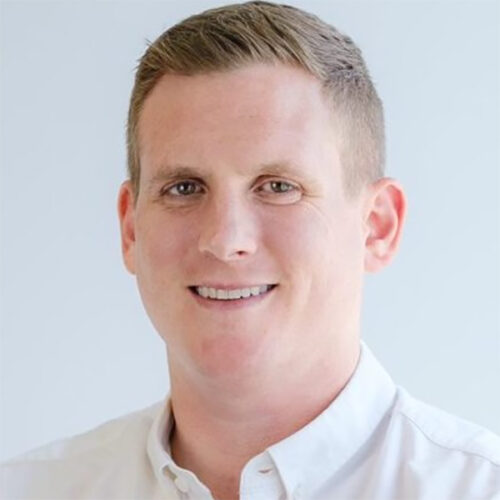
Jeff Cardenas is not trying to build a robot that does a backflip on the internet. He is trying to build one that clocks in, moves totes across a warehouse floor, and comes back the next morning to do it again.
That distinction sits at the center of Apptronik, the Austin robotics company Cardenas co-founded in 2016 and still runs as CEO. Its humanoid robot, Apollo, is designed to work alongside people in factories and fulfillment centers - lifting, sorting, stacking, tending machines. In 2026 the company raised a $520 million Series A extension at a valuation of roughly $5 billion, pushing its total Series A past $935 million and its total capital raised toward $1 billion. Google, Mercedes-Benz, John Deere, AT&T Ventures and the Qatar Investment Authority are all on the cap table.
What makes the story worth telling is not the fundraising, though. It is how long Cardenas has been at this. Apptronik was spun out of the University of Texas Human Centered Robotics Laboratory, part of the Cockrell School of Engineering, with co-founders Dr. Nick Paine and Dr. Luis Sentis. For years the company built actuators, controllers and full robots for others - including work connected to NASA's humanoid research - before the current wave of investment made humanoids the hottest category in hardware.
When the hype arrived, Cardenas already had the engineering. That is the quiet advantage he keeps pointing to when he notes, with some amusement, that roughly a hundred companies now claim to be building humanoid robots. In his telling, fewer than five in the United States are truly credible. Apptronik intends to be one of them.
"Humanoid robots are the space race of our time."
Jeff Cardenas, Apptronik CEO
A business major running a robotics empire
Cardenas is an unusual fit for the job. He did not come up through a robotics PhD program. He earned a business degree from UT Austin in 2008, worked in the technology practice at Deloitte Consulting, then returned to UT for a Master of Science in Technology Commercialization, finishing in 2013. Along the way he worked in the Global Commercialization Group at the university's IC2 Institute, whose whole purpose was taking research out of the lab and into the market.
That is essentially what he has spent a decade doing with robots. His earlier ventures included startups and a nonprofit. One attempt at a mobile-app company went nowhere - the market was already saturated - which nudged him toward a much harder, much less crowded problem. A robot shaped like a human turned out to be exactly that kind of problem.
The son of an Air Force colonel, Cardenas moved frequently as a kid, though his family is originally from Dallas. He talks about being outdoors and spending time with his wife and young son. Watching that son grow, he has said, gave him a sharper appreciation for how staggeringly complex human movement and learning really are - a useful humility for anyone trying to reproduce them in metal and software.
Human-centered by design
The phrase Cardenas returns to most is "human-centered." At Apptronik it is not marketing gloss so much as an engineering constraint. Apollo is meant to look approachable, to be safe around people, and to slot into workplaces built for humans rather than requiring the world to be rebuilt around it. He frames the machines as helpers, not replacements.
"These are tools to augment human productivity and capability," he told an interviewer. "They're thought of and designed to be human helpers versus something that replaces humans." Push him on why this matters personally and the answer gets specific: "My dream is that for my parents, they'll have a robot that helps take care of them so that they can age with dignity."
The commercial path, as he lays it out, starts in industry - warehouses, manufacturing, logistics - where the work is structured and the economics are clearest. Healthcare, hospitality and elder care come later, on a three-to-five-year horizon, once the technology and trust have matured.
"These are tools to augment human productivity and capability - designed to be human helpers versus something that replaces humans."
On Apptronik's design philosophy
The unglamorous part: manufacturing
Cardenas is candid that the hard problem in humanoids was never the demo. It is the tenth-thousandth unit. "If we really are going to ramp to tens of thousands, hundreds of thousands of units," he has said, "we need to really learn about how to do manufacturing right and do it at scale." That thinking led to a partnership with Jabil, a global contract manufacturer, and to a broader focus on producibility that most flashy robot videos gloss over.
It also led to Robot Park, a 90,000 square foot facility Apptronik opened in 2026, described as a humanoid data factory. There, Apollo robots do repetitive work under observation, generating the training data that makes them better - the physical-world equivalent of the data pipelines that power large language models. The AI side of Apollo increasingly runs on Google DeepMind's Gemini Robotics models, the product of a strategic partnership that reshaped the company's roadmap.
Measured, on purpose
For someone leading a company in one of the most hyped corners of technology, Cardenas is notably restrained. When Bloomberg profiled Apptronik's walking humanoids in mid-2026, the takeaway was that the CEO was not bragging yet. He treats the current moment as the beginning of a long deployment, not a finish line. The demos are ending; the real work of putting robots into daily operation is starting.
That patience is the throughline of his career. He tried the crowded market once and lost. He picked the hard problem, spent ten years on the engineering, and was ready when the capital and the AI caught up. Recognition has followed - Automotive News named him a 2025 All-Star - but the goal he describes is bigger than any single milestone: a world where general-purpose humanoids are as ordinary, and as useful, as any other tool people rely on to get through the day.
Whether Apollo becomes that tool is still an open question. What is not in doubt is that Cardenas has positioned himself, and Apptronik, to find out.