Skild AI valued above $14 billion SoftBank leads $1.4B Series C One brain, any robot Nvidia & Bezos back the bet MIT 35 Under 35, 2024 Physical intelligence over language Built in Pittsburgh, not Palo Alto Skild AI valued above $14 billion SoftBank leads $1.4B Series C One brain, any robot Nvidia & Bezos back the bet MIT 35 Under 35, 2024 Physical intelligence over language Built in Pittsburgh, not Palo Alto
Robotics / The Profile

Deepak Pathak

He is building one brain that can wake up inside any robot body - and the smartest money in the world is betting he is right.

▸ Co-Founder & CEO, Skild AI
▸ Raj Reddy Associate Professor, Carnegie Mellon
▸ Pittsburgh, Pennsylvania, USA
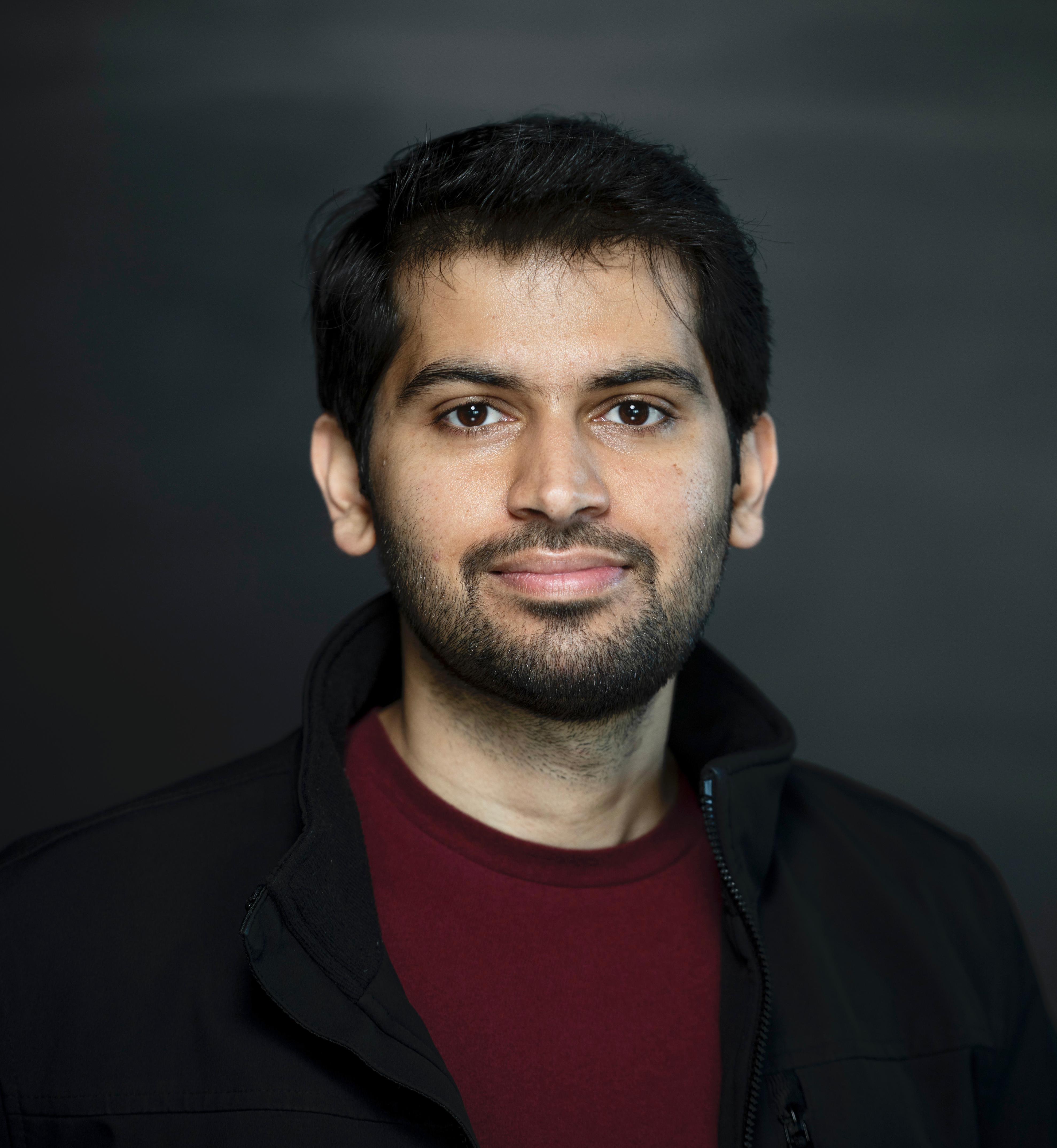
Deepak Pathak, co-founder and CEO of Skild AI The professor who quit waiting for the future
$14B+
Skild valuation, Jan 2026
~$2B
Raised since 2023
1
Brain for every robot
15 yrs
On the hardest problem in AI
The Pitch

A robot that keeps walking after you pull off its leg.

Skild AI showed the world a dog-shaped robot trotting across a floor, then a humanoid doing its own thing nearby. Same software running both. Then someone removed one of the dog's legs mid-stride. The robot stumbled, recalculated, and carried on. No re-coding. No reset. The brain just figured it out.

That demo is the entire thesis of Deepak Pathak's company, compressed into a few seconds. Skild calls it omni-bodied intelligence: one general-purpose model that can be dropped into a quadruped, a humanoid, an inspection robot, or an arm on a factory line, and simply work. Not a model trained for each robot. One model for all of them.

In January 2026, investors decided that was worth more than $14 billion. SoftBank led a $1.4 billion Series C. Nvidia put money in. So did Jeff Bezos. The company that started in 2023 with a $14.5 million seed has now pulled in roughly $2 billion, most of it for a product you cannot hold: a brain you download into a machine.

Pathak is the co-founder and CEO. He is also, still, a professor - the Raj Reddy Associate Professor at Carnegie Mellon, where the company was born and where it remains, in Pittsburgh, a long way from the usual coordinates of an AI gold rush.
“One general-purpose brain for any robot and any task.” - The Skild AI thesis, in seven words
The Heresy

Why he thinks AGI won't come from language.

Most of the AI world spent the early 2020s convinced that scaling language models was the road to general intelligence. Pathak built his career on a quieter, more stubborn idea: a machine cannot be truly intelligent until it has lived in the physical world.

His favorite example is gravity. You can feed a language model every physics textbook ever written and every description of a falling object, and it will recite the equations flawlessly. Ask it to picture what happens when you open your hand and let go of a ball, and it has nothing - no felt sense of weight, no expectation of the drop. It has read about the world. It has never been in it.

That is the gap Skild is trying to close. Pathak argues the robotics industry is even collecting its data wrong, and that a self-driving dataset, however massive, will not teach a humanoid to generalize to a kitchen it has never seen. Intelligence, in his telling, is grounded in action.

“Train a model on every physics textbook on earth, and it still can't visualize what happens when you drop a ball from your hand.” - Pathak, on why language isn't enough

At Davos in 2026, he made a prediction that landed harder than most: desk jobs, not factory jobs, will be the first ones robots take.

The Long Way Here

Gold medal to general intelligence.

Before the billions, there was a thesis nobody was funding. Pathak's PhD work at UC Berkeley centered on curiosity-driven learning - building agents that explore the world with no reward at all, simply to see what happens. Drop one into a video game and it pokes at everything, the way a toddler empties a kitchen drawer. That instinct, that machines should learn by doing rather than being told, runs straight through everything he has built since.

He came up through IIT Kanpur, where he graduated in 2014 with a gold medal and the best undergraduate thesis award. Berkeley followed, advised by Alyosha Efros and Trevor Darrell, with a stretch alongside Pieter Abbeel and a year inside Facebook AI Research working with Jitendra Malik - a who's-who of modern computer vision and robotics. In 2020 he joined Carnegie Mellon's faculty. Three years later, with his colleague Abhinav Gupta, he turned a research idea into a company.

2014

Graduates IIT Kanpur - gold medal, best undergrad thesis.

2019

PhD at UC Berkeley; a year at Facebook AI Research.

2020

Joins Carnegie Mellon's Robotics Institute as faculty.

2023

Co-founds Skild AI; $14.5M seed from Lightspeed & Sequoia.

2024

$300M Series A at $1.5B; MIT 35 Under 35.

2025

Series B near $4.5B; Sloan Research Fellowship.

2026

$1.4B Series C led by SoftBank; valuation tops $14B.

The Trophy Shelf

A researcher's resume, an entrepreneur's nerve.

MIT 35 Under 35

Named one of MIT Technology Review's top innovators under 35 in 2024.

Sloan Fellow, 2025

The Sloan Research Fellowship, awarded to early-career scientists of unusual promise.

Okawa Award, 2022

The Okawa Research Award for contributions to information and telecommunications.

Raj Reddy Chair

Holds a CMU professorship named for a Turing Award-winning AI pioneer.

ONR Young Investigator

Office of Naval Research Young Investigator Award, 2026.

Industry Faculty Awards

Research awards from Google, Samsung, Sony, and GoodAI.

Off The Record

Five things that don't fit on a slide.

He runs a $14B-plus robotics company out of Pittsburgh - not Silicon Valley, on purpose.

His earliest research taught machines to explore purely out of curiosity, with no reward at all.

Skild's word for its goal is “omni-bodied intelligence” - one mind, many bodies.

His academic handle is “pathak22”; on X he posts as @pathak2206.

He never fully left academia - he co-built a unicorn while keeping his CMU chair.

Follow The Thread

Where to find him.