agi
(20)
Liang Wenfeng and the expensive business of curiosity
Before DeepSeek became a global argument about the price of intelligence, Liang Wenfeng built a trading firm that could pay for his questions. Then he gave other people the means to explore the answers.
EMAD MOSTAQUE: AI Will RUN Our Countries Soon! We Aren't Ready!
In a wide-ranging interview on the Beyond Tomorrow podcast, Stability AI founder Emad Mostaque argues that within 30-40 years every country will be run by AI, that democracy is in its final decade or two, and that most digital jobs will be economically irrelevant within roughly a thousand days. He puts his personal probability of catastrophe (P-doom) at 50%, warns of intelligence being rationed by a duopoly of powerful labs, and lays out a counter-vision: sovereign, collectively owned 'national champion' AI utilities that give every citizen access to intelligence and a share of the robot fleet. Along the way he explores AI personhood, brain-computer interfaces, longevity escape velocity, quantum computing, and whether we should push a button to eliminate all human suffering.
Dario Amodei
Anthropic co-founder and CEO Dario Amodei sits for a wide-ranging interview at what the host calls the center of the AI universe. He describes the felt experience of running the fastest-growing company in the industry as a 'smooth exponential' that feels like accelerating away from Earth at relativistic speed. Amodei explains why Anthropic bet on enterprise and coding over splashy consumer apps, recounts why he left OpenAI (a loss of trust, not merely a safety disagreement), and defends the company's controversial choices: working with the Department of Defense while drawing red lines against mass surveillance and autonomous weapons, warning about entry-level white-collar job loss, and holding back Mythos, a cyber model so capable that early testers called it a 'super weapon.' Throughout he returns to a single thesis: respond to AI's accelerating power rationally and steadily, never 'yo-yoing' between complacency and panic.

Tim Lupo
Tim Lupo is the co-founder and CEO of Deeptune, a New York startup that builds high-fidelity reinforcement learning environments - which he calls 'training gyms' or 'flight simulators' - where AI agents learn to do real digital work across enterprise software like Salesforce and Slack. In early 2026 the company raised a $43M Series A led by Andreessen Horowitz. Deeptune started life as an AI video-dubbing tool that landed Lupo and co-founder Lukas Schmit on the Forbes 30 Under 30 list, then pivoted to become RL infrastructure for frontier AI labs. A former founding engineer at Hebbia and a full-merit USC scholar, Lupo pitches the roughly 20-person, in-person team as one of the only early-stage places in New York to work on AGI.

Vlad Chernyshov
Vlad Chernyshov is the co-founder and CEO of Dasha.AI, a New York conversational-voice-AI company he started in late 2016 to build machines that talk like people - with the ums, the breaths, the interruptions and all. A competitive programmer out of Novosibirsk, Russia, he landed his first paying customer (a San Francisco dental practice) the day after Y Combinator rejected him, raised a $2M seed from RTP Global in 2019, and has framed Dasha's real target not as call centers but as artificial general intelligence reached through speech.

Integral AI
Integral AI is a Japan-US startup building foundation world models - AI systems meant to learn, plan, and act in the real world the way people do, with an emphasis on energy efficiency and continuous, autonomous skill learning. Founded in 2021 by ex-Google AI leaders Jad Tarifi and Nima Asgharbeygi, the company positions its interactive world models as infrastructure for an AI-based economy, spanning robotics, universal simulators, and multimodal interfaces. In December 2025 it made headlines by claiming to have tested the world's first AGI-capable model, TOWA.

Pareto.AI
Pareto.AI is a San Francisco-based, talent-first human data platform that connects AI labs with a deeply vetted network of expert labelers to produce premium training data, RLHF, and evaluation signals. Founded by Thiel Fellow Phoebe Yao, the company started as a bootcamp for women and work-from-home mothers, pivoted into AI data labeling in 2023, and now positions itself as the 'verification layer' for reinforcement learning on real-world expertise, turning specialist judgment into durable reward signals under the banner 'Expert data for AGI.'
Jad Tarifi
Jad Tarifi is the co-founder, CEO and Chief AI Scientist of Integral AI, a Tokyo- and Silicon Valley-based startup building energy-efficient, interactive world models aimed at scalable artificial general intelligence and embodied robotics. Before founding the company in 2021, he spent nearly a decade at Google, where he founded and led the company's first generative AI team and worked on neocortex-inspired learning from limited data. Born and raised in Lebanon, he holds a PhD in computer science and AI from the University of Florida and an MS in quantum computing. In December 2025 he drew global attention - and skepticism - by claiming Integral AI had built the world's first AGI-capable model, TOWA. He is also the author of the four-volume 'Freedom Series' on AI and human potential.
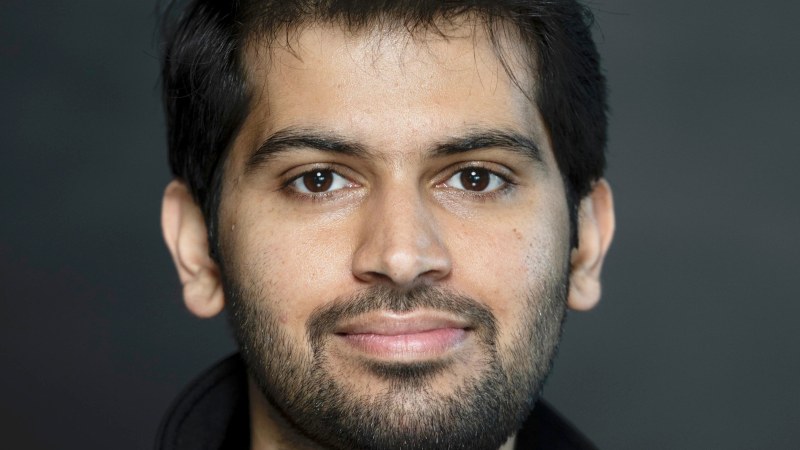
Deepak Pathak
Deepak Pathak is the co-founder and CEO of Skild AI, the Pittsburgh robotics company building a single general-purpose 'brain' that can run any robot from a quadruped to a humanoid. A Raj Reddy Associate Professor at Carnegie Mellon, he earned a gold medal at IIT Kanpur and a PhD at UC Berkeley before betting that physical intelligence, not language, is the real path to AGI. In January 2026 Skild raised $1.4 billion at a valuation north of $14 billion, backed by SoftBank, Nvidia, and Jeff Bezos.

Imbue
Imbue is a San Francisco AI research lab building agents that can reason and code. Founded in 2021 as Generally Intelligent and renamed in 2023, the company is led by CEO Kanjun Qiu and CTO Josh Albrecht. After a $200M Series B that valued it above $1B, Imbue is focused on practical agent tools - most visibly Sculptor, a UI for running parallel coding agents safely in containers - guided by a mission to keep humans in control of powerful AI.

Luma AI
Luma AI is a Palo Alto-based generative AI lab building multimodal foundation models that turn text, images, and ideas into video, 3D, and interactive scenes. Its flagship product, Dream Machine, has crossed 30 million users; its Ray3 model was the first reasoning-driven video model to generate native 16-bit HDR. Backed by HUMAIN, NVIDIA, Andreessen Horowitz, AMD, and Amplify, the company is racing toward what its founders call 'unified general intelligence' for the physical world.
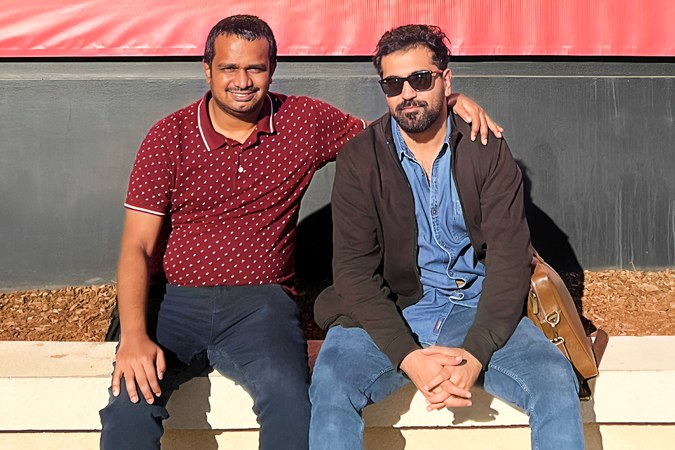
Ishaan Bhola
Ishaan Bhola is the Co-Founder of SuperAGI, a Palo Alto-based AI company building full-stack autonomous agent infrastructure and a next-generation AI-native CRM. A serial entrepreneur who has founded or co-founded six ventures across consumer apps, home decor e-commerce, fintech lending, account-based marketing, and now AGI infrastructure, Bhola has scaled teams to 200+ employees and built products used by millions. SuperAGI raised a $10M Series A led by WhatsApp founder Jan Koum's Newlands VC in March 2024, and has grown to $9.9M in revenue with an open-source platform boasting 15,200+ GitHub stars.
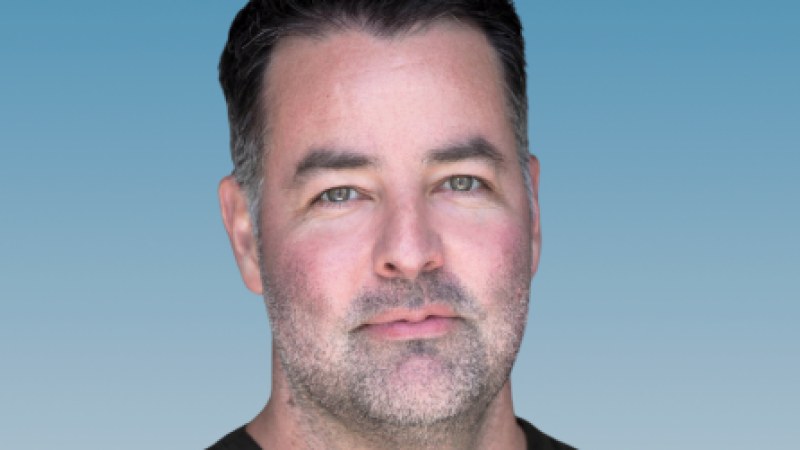
Jason Warner
Jason Warner is the co-founder and CEO of Poolside, a San Francisco-based frontier AI lab building proprietary foundation models for software development with $626M raised and a $3B+ valuation. Before Poolside, he was CTO of GitHub - where he launched Actions, Packages, Codespaces, and incubated what became GitHub Copilot - and then a Managing Director at Redpoint Ventures. A self-described 'average developer but excellent architect,' Warner is betting that reinforcement learning from code execution will make software the first domain where AI surpasses human-level intelligence.

Poolside
Poolside is a San Francisco AI lab building foundation models purpose-built for software engineering. Founded in 2023 by former GitHub CTO Jason Warner and serial entrepreneur Eiso Kant, it trains its frontier models (malibu, point) with a technique called Reinforcement Learning from Code Execution Feedback - then deploys the whole stack inside customer environments for Global 2000 enterprises, financial institutions and the public sector.

SuperAGI
SuperAGI is a Palo Alto-based AI company building autonomous agents that run real work - sales outreach, software engineering, marketing, support - on a single platform. Founded by Ishaan Bhola and Mukunda NS, it began as an open-source agent framework on GitHub and grew into a 25+ app super-platform used by SMB and enterprise teams, backed by $10M Series A from Jan Koum's Newlands VC.
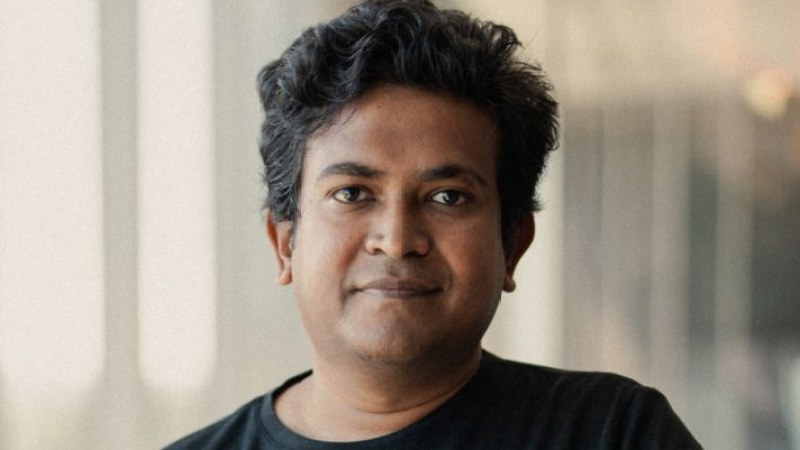
Jonathan Siddharth
Jonathan Siddharth is the CEO and Co-founder of Turing, a $2.2 billion AI-powered talent and AGI infrastructure company based in San Francisco. A Stanford CS alum with a lifelong obsession with artificial intelligence, he built his first neural network as a teenager to drive a simulated car. After founding and selling Rover (an AI content discovery app) for ~$30M, he launched Turing in 2018 to build the world's largest intelligent developer talent cloud. Today, Turing partners with frontier AI labs including OpenAI to train and improve the world's most capable language models, and counts Fortune 500 companies among its 900+ enterprise clients. He has raised $334M in total funding and led Turing to over $167M in annualized revenue.
Demis Hassabis
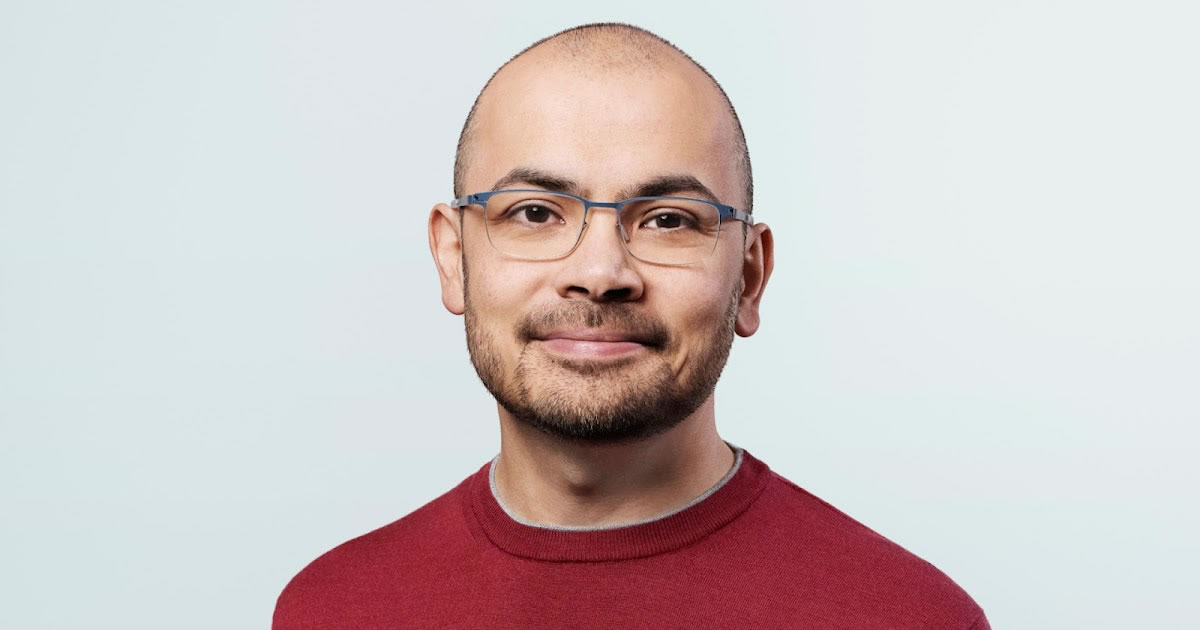
Sir Demis Hassabis CBE FRS is a British AI researcher, neuroscientist, chess prodigy, and game designer who co-founded DeepMind in 2011 and serves as CEO of Google DeepMind. He won the 2024 Nobel Prize in Chemistry for AlphaFold's protein structure prediction, was knighted for services to AI, and is widely regarded as one of the most influential figures in the development of artificial general intelligence.

D. Scott Phoenix
D. Scott Phoenix is a deep tech entrepreneur and venture capitalist who co-founded Vicarious, an artificial general intelligence company that raised $250M from Elon Musk, Mark Zuckerberg, Jeff Bezos, and other tech luminaries before being acquired by Alphabet in 2022. Now a partner at Fifty Years, he invests in scientists and engineers solving humanity's biggest problems. A Y Combinator alum who founded his first startup at 16, Phoenix is a leading voice in AI safety advocacy and believes artificial general intelligence will be 'humanity's last invention.'
Azalia Mirhoseini
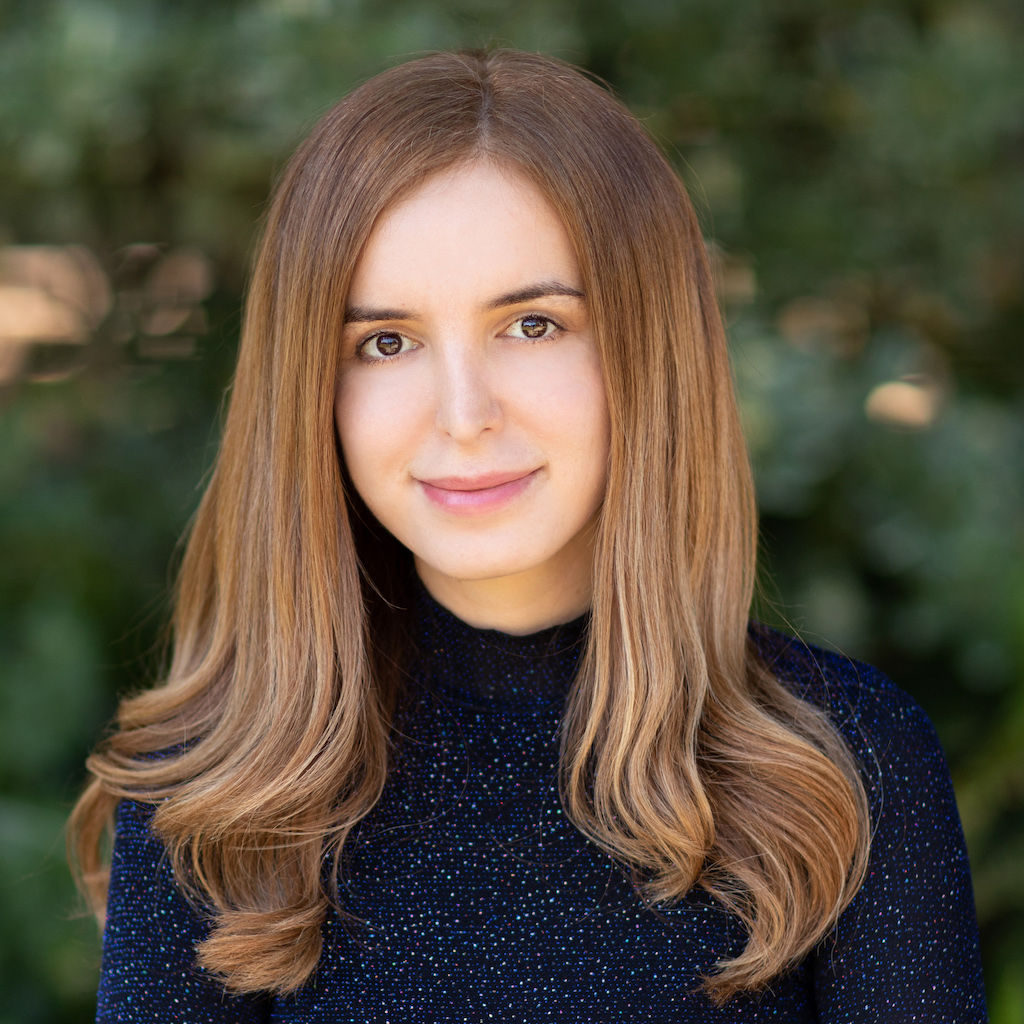
Azalia Mirhoseini is an Iranian-born AI researcher, Stanford professor, and co-founder of Ricursive Intelligence - a frontier AI lab valued at $4 billion that uses AI to design better chips, which in turn train stronger AI. Best known for AlphaChip, the deep reinforcement learning system that now designs Google's TPUs and has compressed chip floorplanning from months to hours, she also co-invented the Mixture-of-Experts architecture underpinning GPT, Claude, and Gemini. With 20,000+ citations and a $335M-funded startup launched in under four months, she is closing the recursive loop between artificial intelligence and the hardware it runs on.
OpenAI's $122B Megaround Shows AI Funding Has Gone Nuclear
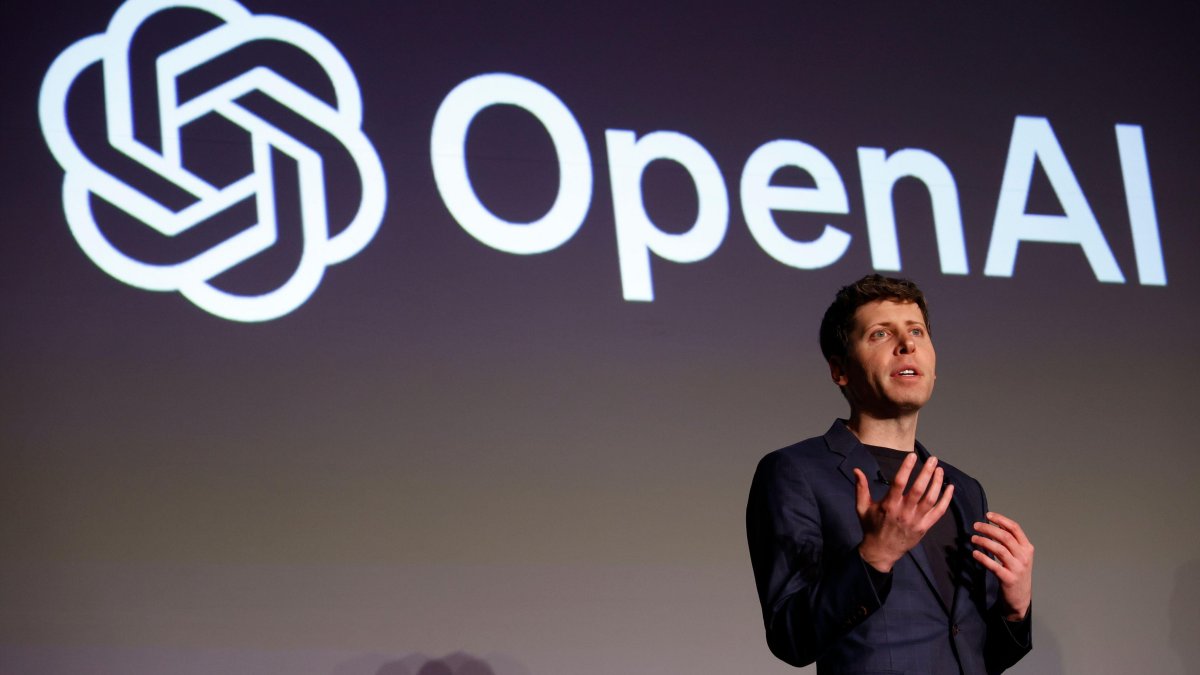
On March 31, 2026, OpenAI closed the largest private funding round in history — $122 billion in committed capital at a post-money valuation of $852 billion. Anchored by Amazon ($50B), Nvidia ($30B), and SoftBank ($30B), with continued participation from Microsoft and a sweeping syndicate of global institutions, the round dwarfs every prior private tech raise and cements OpenAI as the world's most valuable startup by a wide margin. The company is generating $2 billion in monthly revenue, counting 900 million weekly ChatGPT users, and is widely expected to pursue an IPO.