When the WhatsApp Guy Bets on You
Jan Koum does not make many bets. The WhatsApp co-founder, who sold his company to Facebook for $19 billion and then quietly exited, runs Newlands VC from deliberate obscurity. His fund rarely announces deals. When it backed SuperAGI in March 2024 - leading a $10 million Series A - it was one of the rare times Newlands made noise.
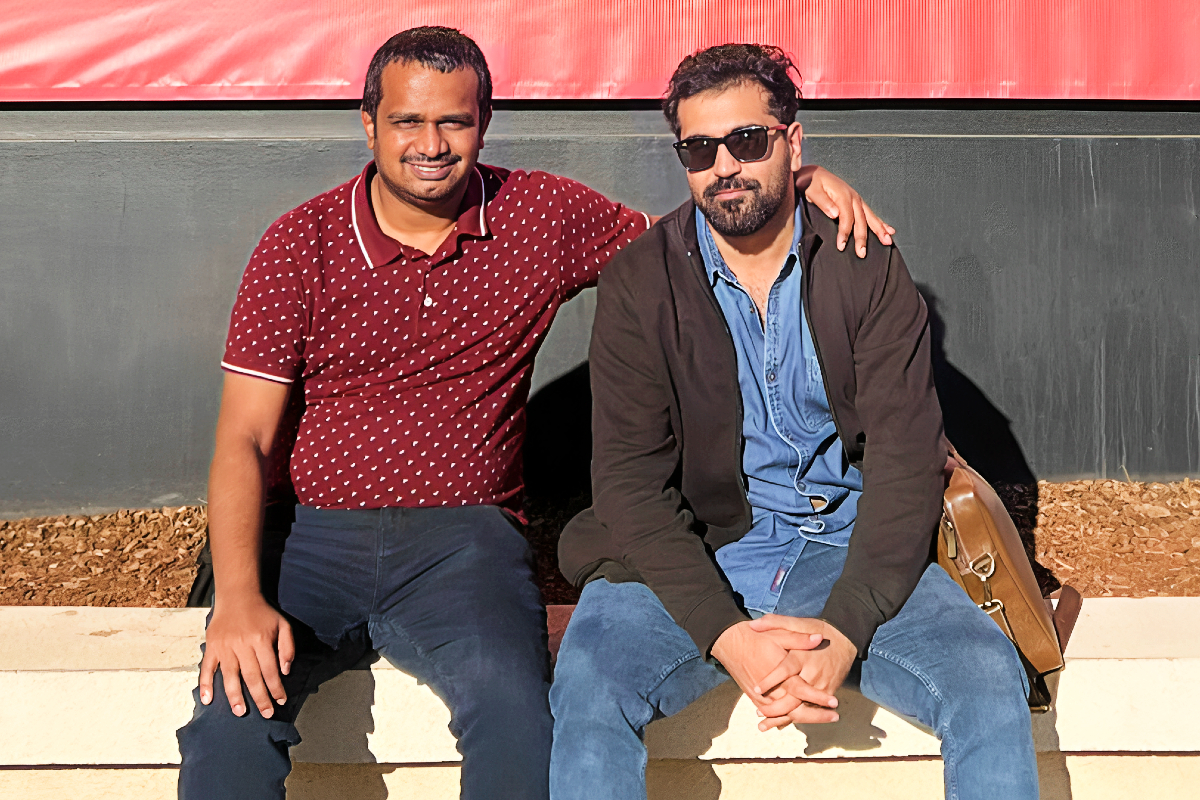
The person Koum chose to back was Ishaan Bhola, a serial entrepreneur from Palo Alto who had spent fifteen years building things that ranged from a home decor marketplace to India's largest digital lending app. Bhola's co-founder is Mukunda NS, his partner from their previous venture Contlo. The two had a thesis: large language models keep failing the moment they need to do something. Not answer. Not generate. Act.
SuperAGI is the infrastructure layer built to fix that gap.
Since launching in May 2023, the platform has accumulated 15,200+ GitHub stars, grown to 190 employees, and crossed $9.9M in annual revenue. The open-source repository became a signal: developers found SuperAGI before the investors did. That kind of organic traction is hard to fake and harder to replicate.
The Jan Koum Vote of Confidence
Newlands VC, the investment firm of WhatsApp co-founder Jan Koum, led SuperAGI's $10M Series A in March 2024 - alongside participation from investors including Kae Capital. Koum's fund rarely surfaces publicly. That it backed SuperAGI made the round one of the more noticed AI investments of 2024.
The Problem Nobody Wanted to Name
Bhola's thesis starts with a frustration most enterprise software buyers recognize but few can articulate cleanly: AI models are brilliant in conversation and useless when handed a task with ten steps, four systems, and two approvals required.
The problem is not the model. It is the infrastructure around it. LLMs hallucinate when asked to plan across time. They lose context. They cannot monitor their own loops or correct their trajectory. SuperAGI is built to solve exactly this - with an agent framework that handles concurrent execution, graphical management interfaces, vector database connections, trajectory fine-tuning through feedback loops, and looping detection heuristics that stop runaway agents before they run off a cliff.
The company describes itself as "full-stack AGI." The research engine sits at the base, generating insight and capability. Above it, SuperAGI's middleware layer - the agents - do the actual work. The application layer at the top is where enterprise users interact: sales automation, marketing orchestration, customer support, and software development.
The AI-native CRM that SuperAGI launched positions itself as something different from Salesforce. Not a database where salespeople log calls. A system of record that generates calls autonomously, enriches leads in real-time, sequences outreach without prompting, and surfaces intent signals without a data team. The distinction is architectural, not cosmetic.
Six Companies. One Through-Line.
Bhola graduated from the Indian Institute of Technology Roorkee, one of India's most selective engineering schools, and took a winding road to co-founding one of the more talked-about AI companies in the Bay Area. The path included marketing, project management, a viral app business, a funded home decor startup, fintech, and B2B marketing software - before landing on autonomous AI agents.
In 2012, Bhola founded Bitnomix Labs and hit twenty million downloads. That is a meaningful number in any era. He was generating $2,000 a day from a mobile app business before most entrepreneurs had figured out app store optimization. It was an early signal that Bhola could find product-market fit in competitive, attention-saturated markets.
Zimply came next - a home decor content-commerce platform he co-founded with Anshuman Tripathi, Viraj Verma, and Karan Baweja. Lightspeed Venture Partners led the Series A, Matrix Partners participated, and the team scaled to over two hundred employees. The company was eventually deadpooled. Bhola has spoken less about what went wrong than about what the experience taught him about scaling operations and building teams across functions - technology, supply chain, business development, and customer support simultaneously.
At Navi, Sachin Bansal's fintech company, Bhola joined as Head of Product for the lending division. Within three months of launch, the app became one of India's largest digital lending applications. He was managing forty-five engineers and five product and design professionals, plus twenty people in business, operations, and customer support. The experience gave him a template for what fast-scaling consumer technology actually requires at the organizational level.
Then came Contlo - an AI-powered customer data and marketing platform for e-commerce - co-founded with Mukunda NS. The two raised $6.79 million across three rounds. Contlo was the direct predecessor to SuperAGI: same co-founders, sharpened thesis, harder problem.
What the Numbers Say
- 2012Bitnomix Labs: 20 million downloads and $2,000/day revenue from a bootstrapped mobile app business
- 2014Zimply: Series A from Lightspeed Venture Partners; scaled to 200+ employees across tech, product, design, marketing, supply chain
- 2019Navi: grew the lending product to one of India's largest digital lending apps within 3 months of launch
- 2021Contlo: raised $6.79M to build AI-powered marketing infrastructure for e-commerce brands
- 2023SuperAGI launched in May 2023; open-source repo hit 15,200+ GitHub stars with 4,900+ Discord members
- 2024Closed $10M Series A led by Jan Koum's Newlands VC; total funding reached $15M
- 2025SuperAGI crossed $9.9M ARR with 190 employees; launched AI-native CRM, Verk, SuperCoder 2.0, Agent Swarms
The Portfolio of a Serial Founder
| Company | Years | Sector | Notable | Status |
|---|---|---|---|---|
| Bitnomix Labs | 2012 | Mobile Apps | 20M downloads, $2K/day revenue | Exited |
| Zimply | 2014-2018 | Home Decor E-commerce | Lightspeed-backed Series A, 200+ employees | Deadpooled |
| Serfo | 2017-2021 | B2B Marketing / ABM | AI-powered comms API for SaaS companies | Exited |
| Navi (as operator) | 2019-2021 | Fintech / Lending | Head of Product; India's largest lending app in 3 months | Left 2021 |
| Contlo | 2021-2023 | Marketing Automation | $6.79M raised; AI CRM for e-commerce | Predecessor to SuperAGI |
| SuperAGI | 2023-Present | AI Infrastructure / AGI | $15M total, $9.9M ARR, 15K+ GitHub stars | ● Active |
What They're Building
SuperAGI Core
Open-source autonomous agent infrastructure. Concurrent agent execution, GUI management, vector DB connections, trajectory fine-tuning, looping detection. 15,200+ GitHub stars.
AI-Native CRM
A system of record for both human and AI agent actions - not just a database. Autonomous outreach, lead enrichment, intent signals, 300+ integrations.
Verk
An AI employee. Operates as sales rep, graphic designer, market researcher, or social media manager. Autonomous execution across business functions.
SuperCoder 2.0
AI-powered software development agent with integrated version control, web-hosted IDE, planning module, and performance on global coding benchmarks.
Agent Swarms
Coordinated multi-agent email automation. Sequences that write, test, personalize, and execute at scale without human intervention at each step.
SuperAGI Academy
Educational platform for the AGI era. Paired with a Campus Ambassador Program connecting with student communities globally.
CybOrgs and the Shape of What's Next
In March 2026, Bhola posted about something he called "CybOrgs" - cybernetic organizations. He referenced Ghost in the Shell. The idea: organizations where AI and human agents are so tightly integrated they operate as a single system. Not AI tools that workers use. Not automation that replaces workers. Something in between and beyond both.
It fits with his December 2024 declaration that 2025 would be "the year of self-learning AI agents." His reading of the field goes back to bio-mimicry, the origin point of deep learning itself - systems that learn from feedback the way biological systems do, that improve from experience rather than just from training runs.
The target Bhola has set publicly: one of the top three AI research companies globally. That is a specific, audacious claim. It is also the kind of claim that attracts a certain type of engineer - the ones who want to work on problems that matter at a civilizational scale, not just optimize an existing product's funnel.
SuperAGI's open-source approach is not altruism. It is strategy. Fifteen thousand GitHub stars before a Series A means Bhola and Mukunda built credibility with the technical community that no marketing budget can replicate. The community builds awareness. The enterprise tier - CRM, Verk, Agent Swarms - generates revenue. The research engine feeds both. The loop is intentional.
The infrastructure-first thesis also explains why SuperAGI is building across sales, marketing, support, and software development simultaneously. Bhola is not making a product bet. He is making a platform bet - that the winners of the AI era will be the companies that own the middleware layer between frontier models and enterprise workflows. The application layer follows the infrastructure. It always has.
The Stack Behind SuperAGI
SuperAGI's infrastructure reflects Bhola's belief in production-grade, scalable systems over prototypes. The technology stack spans cloud, data, AI tooling, and enterprise integration: