The Man Who Thinks in Centuries
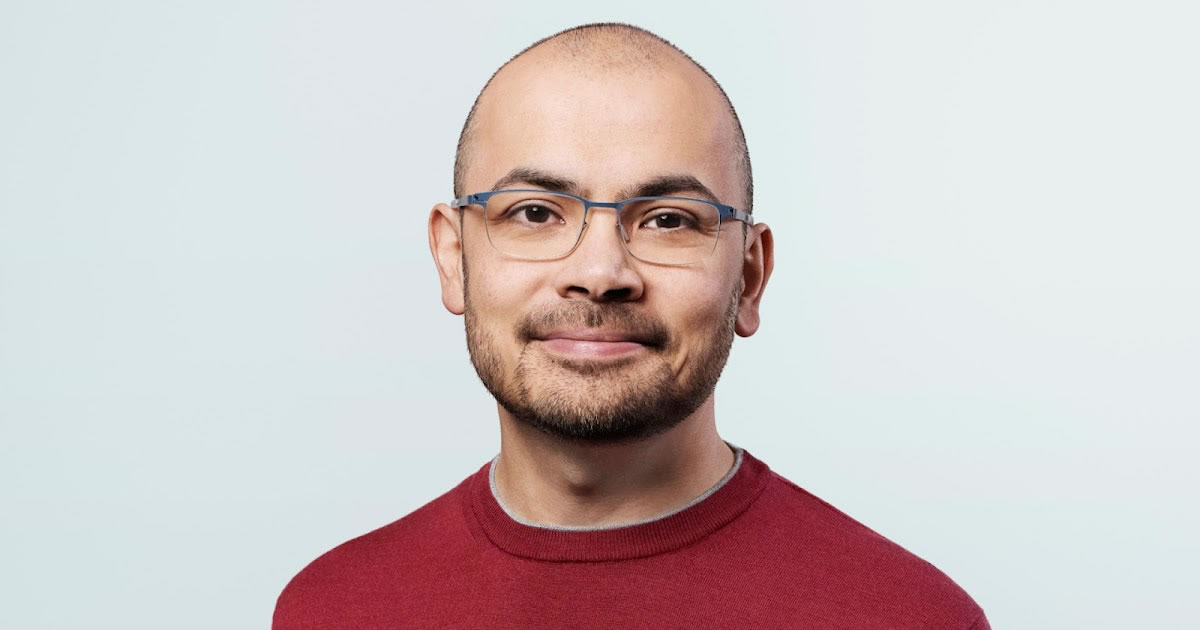
There's a photograph from the 2024 Nobel Prize ceremony in Stockholm: Sir Demis Hassabis, 48, accepting the medal in Chemistry for solving the protein folding problem with AlphaFold. In his Twitter bio, he still describes himself as "trying to understand the fundamental nature of reality." The Nobel Committee caught up. The bio hasn't changed.
Hassabis didn't start as an AI person. He started as a chess person. Four years old, watching his father and uncle play in a North London flat, he learned the rules and promptly surpassed both of them. By 13, he had an Elo rating of 2300 - the second-highest rated under-14 player in the world. He was already thinking about thinking, about patterns and prediction, about what it means to be good at something.
At 8, he took his chess tournament winnings and bought a ZX Spectrum 48K. He taught himself to program - not because someone told him to, but because he wanted to make the computer play Othello. The machine was a tool for an idea he already had. That's been the template ever since.
Step one, solve intelligence. Step two, use it to solve everything else.
- DeepMind founding mission, 2011The Long Game
Cambridge told him to take a gap year. He was 16 and simply too young. He spent that year winning an Amiga Power magazine competition - a job at Bullfrog Productions - and co-designing Theme Park alongside Peter Molyneux. The game sold several million copies. He was still technically a teenager when it shipped.
He graduated Cambridge in 1997 with a double first in Computer Science, then spent years making games - Black & White at Lionhead, then founding his own studio Elixir to make Evil Genius and Republic: The Revolution. Those games were critically admired, commercially modest. In 2005, he liquidated the company and enrolled at UCL to do a PhD in Cognitive Neuroscience.
His thesis examined what happens when you damage the hippocampus. The finding was strange: patients who couldn't recall past memories also couldn't imagine future scenarios. Memory and imagination, it turned out, use the same neural machinery. Science magazine named it one of the top 10 scientific breakthroughs of 2007. He published in Nature, Science, and Neuron. He wasn't playing games anymore - or rather, he was playing a much larger one.
What DeepMind Actually Is
In 2011, with Shane Legg and Mustafa Suleyman, Hassabis founded DeepMind in London with a goal blunt enough to make most mission statements look decorative: solve intelligence. He spent those first years explaining to investors why a neuroscience-inspired AI lab wasn't insane. In 2013, DeepMind's Deep Q-Network learned to play Space Invaders from raw pixels in about 30 minutes, achieving superhuman performance. In 2014, Google paid roughly £400 million to acquire the company. Hassabis stayed as CEO.
AlphaGo came next. In March 2016, DeepMind's program defeated Go world champion Lee Sedol 4-1 in a match watched by over 200 million people. The commentators were stunned not just by the wins but by the moves - AlphaGo played positions that professional players called alien, strategies humans hadn't developed in 3,000 years of the game's history. In that fourth game, Lee Sedol found a genius counter-move that ended the game. Hassabis reportedly cried watching it.
Then came AlphaFold. Protein folding - predicting the 3D structure of a protein from its amino acid sequence - had been an unsolved problem for 50 years. At the CASP14 competition in November 2020, AlphaFold 2 achieved median accuracy with errors smaller than the width of an atom. The field's best human teams were humbled. In 2021, DeepMind released the AlphaFold source code for free and launched the AlphaFold Protein Structure Database - containing structures for all 200 million known proteins, freely available to anyone. Hassabis insisted on open access. The database now has 2 million users in 190 countries. Science named it the breakthrough of the year. Not just in biology. Of the year, full stop.
I believe AI is going to be the most beneficial technology ever created, but only if we apply it in the right way and build it in the right way.
- Demis Hassabis, September 2024The Nobel, the Knighthood, and What Comes Next
On October 9, 2024, the Nobel Committee called. Hassabis shared the Chemistry Prize with John Jumper for AlphaFold. He was 48. On receiving it, he posted to X: "I've worked my whole life on AI because I believe in its incredible potential to advance science & medicine, and improve billions of people's lives." It reads like something he wrote a long time ago and was simply waiting to say.
Earlier in 2024, he was knighted. Sir Demis Hassabis. For services to artificial intelligence. He's the first person knighted specifically for AI. He was CBE'd in 2017. Fellow of the Royal Society since 2018. The acceleration of honors mirrors the acceleration of the technology itself.
Meanwhile, Isomorphic Labs - the drug discovery company he co-founded in 2021 - raised $600 million in April 2025. Partnerships with Eli Lilly and Novartis carry milestone payments worth up to $3 billion. In February 2026, Isomorphic released IsoDDE, a tool that doubles AlphaFold 3's accuracy for drug candidate generation. In January 2026, Hassabis signed an agreement with the UK government to build the world's first fully automated scientific laboratory. He is, quite specifically, trying to automate science itself.
What He Is, Actually
Hassabis sleeps five or six hours a night. He does management during the day and creative work from 10pm onward - reading papers, coding, thinking. He listens to liquid drum and bass when programming, classical when thinking, ambient when creating. He's a five-time Pentamind World Champion (chess, bridge, Go, Mastermind, Scrabble combined) and a twice Decamentathlon World Champion. He's cashed at the World Series of Poker six times. He's a lifelong Liverpool FC supporter.
His father Costas was a Greek Cypriot musician who sang like Bob Dylan and ran a toy store. His mother Angela was Chinese Singaporean. The family moved about ten times before Demis was twelve. His wife Teresa is a molecular biologist specializing in Alzheimer's research - they met at Cambridge. He rarely discusses his two sons in public.
He estimates AGI - artificial general intelligence - is 5 to 10 years away. He believes one or two more transformer-level breakthroughs are still needed beyond current scaling. He has signed the statement that "mitigating the risk of extinction from AI should be a global priority." He holds both of those thoughts at once: the possibility of radical abundance, and the necessity of exceptional care.
There is a documentary about him, The Thinking Game, which premiered at Tribeca in 2024. A biography, The Infinity Machine by Sebastian Mallaby, was published in 2026. The chess prodigy who bought a ZX Spectrum with tournament winnings now has a Nobel Medal and a sword-tap from the King. The bio still says he's trying to understand the fundamental nature of reality. He hasn't solved it yet. He seems to be enjoying the attempt.