"When thinking is cheap, value accrues to the things that can't be scaled: trust, judgment, presence."
His first month at Felicis Ventures, ChatGPT launched. Most investors scrambled to understand what had just happened. James Detweiler led RunwayML's Series C.
That combination - preparation meeting chaos - is the through-line of his investing career. The youngest of five children raised in Santa Clara by an actress and a painter, Detweiler absorbed a way of seeing before he knew what to do with it. His parents, he says, made him a decent abstract thinker. He pointed that ability at physics. Then at mathematical finance. Then at finding the companies most investors hadn't heard of yet.
He graduated summa cum laude from Dartmouth in a degree combination almost nobody picks: Physics and Mathematical Finance. The combination is telling. Physics trains you to find the underlying mechanism; finance trains you to price its consequences. Together, they produce the kind of investor who asks not "what is this company worth?" but "what happens to everything downstream if this works?"
That question - what's the root node problem here? - drives his investment thesis at Felicis. He looks for the foundational infrastructure that, once built, unlocks entire industries. Robotics. AI-enabled labor markets. The plumbing of the intelligence economy.
"The odds of finding a four-leaf clover are 1 in 10,000 - roughly the same as founding a generational company."
- James Detweiler
Detweiler gave his core thesis a name: The Great Splintering. The logic goes like this. When thinking was expensive - when cognition was scarce and hard to access - value pooled with whoever could centralize it. Experts. Consultants. Analysts. Institutions.
Now cognition is cheap. AI handles the execution layer. The cognitive assembly line runs at a fraction of its former cost. So where does value go?
To the things that can't be replicated at scale. Trust. Judgment. Presence. The relationships that took a decade to build. The reputation you earned the hard way. The human in the loop who can say "yes, but..."
Three predictions follow from this: software moats weaken as advantage shifts to trust and expertise; work becomes less about cognitive execution and more about human-centric judgment; the built environment reconfigures around the new technological backdrop.
This isn't a passive observation. It's an investment framework. Every bet Detweiler makes runs through the question: does this company win in a world where thinking is cheap? And who - human or machine - does the hard, scarce work that the company depends on?
Selected Felicis portfolio companies sourced or co-led by James Detweiler. Highlighted = notable milestones.
Detweiler's most unusual move at Felicis wasn't a deal. It was a program. He pitched and built Felicis Fellows: a week-long immersive in San Francisco for the best AI and ML undergraduates in the country, culminating in a hackathon and $200,000 in non-dilutive prizes.
The insight behind it is straightforward: the best founders of the next decade are, right now, writing research papers in computer science labs. They haven't thought about startups yet. They're surrounded by professors and academia and the slow machinery of peer review.
Detweiler wants to meet them at Seed - or earlier. Felicis Fellows is the infrastructure for that relationship. Fellows get full access to the Felicis team during the week. They meet founders. They compete. And Felicis meets the people who will build the AI economy before anyone else makes a pitch to them.
It's the kind of move that doesn't show up in a portfolio spreadsheet. It shows up three years later, when a Fellow emails saying they're starting something.
James Detweiler grew up in Santa Clara as the youngest of five children. His parents are artists - an actress and a painter. Not engineers. Not investors. Artists.
He credits them with making him a good abstract thinker. The abstraction got redirected - physics, finance, venture capital - but the underlying capacity came from watching two people who made things from nothing, who saw angles that weren't obvious, who understood that the thing you're trying to do isn't always the thing people see you doing.
Childhood trips to Florence deepened a lifelong passion for Italian culture. There's something in that - the appreciation for beauty and craft, for things built with patience and intention, that shows up in how he describes what he's looking for in founders.
He now lives in San Francisco's Outer Richmond district with his wife Hannah. He owns a guava tree named "Guavee." He's obsessed with rare fruit. He's also, by all accounts, the best table tennis player at the Felicis office - and has the trophy to prove it.
He travels globally to meet founders. He flew to meet Skild AI's Deepak Pathak on a shared obsession with robotics. He built his relationship with Mercor's Brendan Foody over F1 racing. The pattern: find the thing you genuinely have in common, and the conversation about the company becomes real instead of transactional.
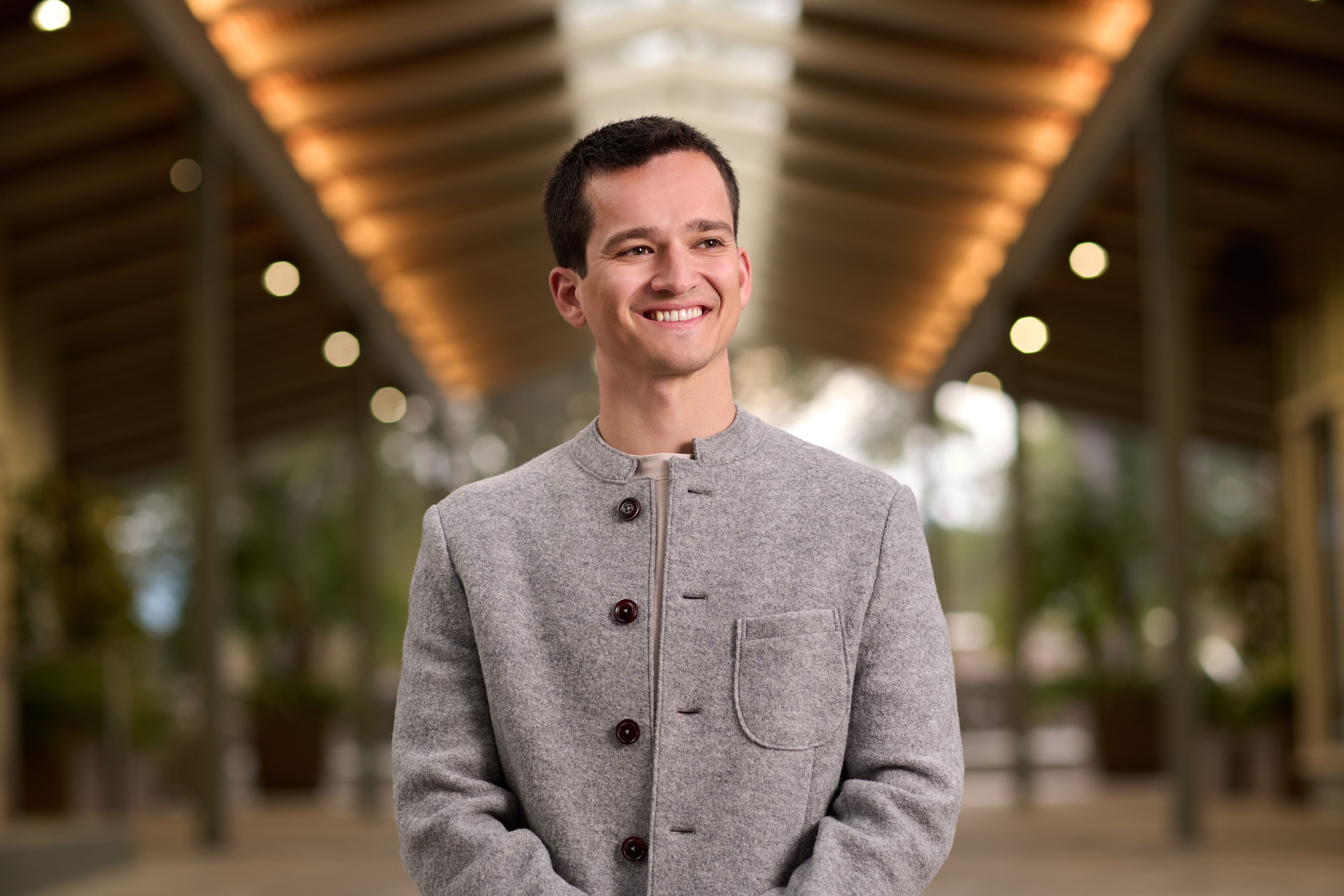
"When thinking was expensive, value accrued to whoever could centralize it. When thinking is cheap, value accrues to the things that can't be scaled: trust, judgment, presence. I'm calling this the Great Splintering."
- James Detweiler on AI and the future of value creation
What makes Detweiler unusual among AI investors isn't just his early positioning - it's the intellectual architecture behind his bets. He came up through Zetta, the first AI-focused fund, at a time when "ML-native" was not a mainstream investment category. He spent years asking the question that most investors weren't asking: what actually differentiates AI companies from traditional software?
The answer he landed on - that the differentiator is in the data feedback loop, in the proprietary intelligence that accumulates with each user interaction - is now conventional wisdom. He was building his thesis when it wasn't.
At Felicis, he applies that same pattern-seeking to the next wave. Robotics foundation models. AI-enabled labor markets. The platforms that don't just automate tasks but restructure entire categories of work. He's not looking for the next app. He's looking for the operating system of a new economic era.