vector-search
(28)
VAST Data wants AI to stop waiting
The company started by making stored data easier to reach. Now it wants storage, search and AI workloads to share the same foundation - and its customers offer a useful lesson in where to begin.

Timescale bet on the database you already knew
The company now called Tiger Data built its business by teaching PostgreSQL to handle relentless streams of data. Its most useful lesson is knowing which parts of a system deserve reinvention.

SingleStore and the business of not making people wait
A database built to handle transactions and analytics together found its opening in the seconds between a question and an answer. Now SingleStore is bringing that same impatience to enterprise AI.
Marqo and the Search Bar That Forgot to Sell
Two former Amazon engineers built a vector search engine. Then they followed the money into the awkward space between what shoppers mean and what a retail catalog says.

The Database That Learned to Remember
A Princeton neuroscience data problem became Deep Lake. Now Activeloop is betting that AI agents need the same thing scientists did: a place to put their work, find it again, and learn from it.
Pinecone Learned That a Smart Agent Still Needs a Good Memory
The company made vector search easy to rent. Then its own support agent showed why finding a document was only the beginning.
Arango and the Missing Relationships in Enterprise AI
A database company built for connected data now wants to supply the context behind enterprise AI. The interesting part is what its customers have stopped stitching together.
The Bank That Bought More Time
Hazelcast sells a peculiar luxury to companies that cannot wait: a few extra milliseconds in which to make a better decision. One bank used that time to run more fraud checks; the larger story is how a Java cache became an operating layer for live data.

Algolia’s First Search Product Flopped. The Pivot Now Handles 1.75 Trillion Queries a Year
A beautiful offline-search engine met a market that would not pay. One customer request later, two French engineers turned the same hard-won speed into an API business used by Under Armour, Lacoste, Slack and thousands more.
MariaDB Almost Ran Out of Cash. Then It Bought Its Way Back Into the Database Race
The open source MySQL fork reached billions of downloads - and still ended up with $1.8 million in cash. A take-private rescue and three acquisitions later, MariaDB is testing a useful idea: one familiar database can do more jobs, if the company stays disciplined about what enterprises will actually pay for.
MongoDB
MongoDB escaped the rows-and-columns era by betting on flexible documents. Nearly two decades later, it is trying to become the memory, search engine and live data layer beneath the next generation of AI applications.
Aerospike
Aerospike built its reputation in the least forgiving corner of software: decisions that must be correct before the next millisecond arrives. Now the database specialist is turning that discipline toward AI, graph workloads and a managed cloud business.
Captain
Captain is a managed retrieval-augmented generation (RAG) platform out of Y Combinator's Winter 2026 batch. It lets developers connect data sources - S3, SharePoint, Google Drive, Slack, Notion and more - with a couple of API calls, then handles the full pipeline behind the scenes: OCR, chunking, embedding, vector storage, hybrid search, and re-ranking. The company claims roughly 95% retrieval accuracy on a published benchmark versus about 78% for hand-built pipelines, and positions itself as 'the Snowflake for unstructured data.' In March 2026 it added Odyssey, a proprietary private-market intelligence dataset queryable through the same API.

Couchbase
Couchbase is an enterprise NoSQL database company whose distributed, document-oriented platform powers low-latency, high-throughput applications for large organizations. Its flagship products - Couchbase Server, the fully managed Capella database-as-a-service, and Couchbase Mobile/Lite for edge and offline use - combine key-value speed, JSON flexibility, SQL-style querying (SQL++/N1QL), full-text and vector search in a single system. Founded in 2009 and long a rival to MongoDB, Couchbase went public on Nasdaq in 2021 and was taken private by Haveli Investments in a $1.5 billion deal in September 2025.

Atolio
Atolio is a private, AI-powered enterprise search platform that runs inside a company's own cloud (AWS, Azure, or GCP) or on-premises. It connects to workplace systems like Slack, Google Workspace, Office 365, Salesforce, and ServiceNow, then indexes them with document-level permissions so employees only see what they are already authorized to view. Founded in 2019 by Splunk and PagerDuty veterans, Atolio pairs hybrid semantic-plus-keyword search with permission-aware retrieval-augmented generation, giving enterprises secure question answering across siloed knowledge without their data ever leaving their environment.
MindsDB
MindsDB is an open-source AI data platform that lets developers connect, unify, and query structured and unstructured data across 200+ sources using SQL and natural language - turning any database into an AI-ready system without moving data.

Superlinked, Inc.
Superlinked is a San Francisco-based infrastructure company building the 'vector computer' - a compute and data engineering framework that turns complex enterprise data into vector embeddings for Search, RAG, Recommendations and Analytics. It now also ships an open-source Inference Engine that lets agent teams self-host every model their agents call, claiming roughly 50x cost savings vs hosted per-token APIs.

Pathway
Pathway builds infrastructure for live AI - systems that think and learn in real time instead of being frozen at training. Its source-available Python framework powers high-throughput, low-latency ETL, stream processing, real-time analytics, and RAG/LLM pipelines that stay continuously in sync with sources like SharePoint, Google Drive, S3, Kafka, and PostgreSQL. The company is also developing BDH (Baby Dragon Hatchling), a post-transformer frontier model aimed at solving continual learning and long-horizon reasoning. Pathway is trusted by organizations including NATO, La Poste, and Formula 1 teams.
Redis
Redis is the company behind the world's most popular in-memory data store, the open-source database that began as a side project by Salvatore Sanfilippo in 2009 and now sits in the stack of most of the internet's largest applications. It sells managed and self-hosted enterprise versions - Redis Cloud and Redis Software - layered on the open-source core, and has pushed hard into real-time AI use cases like vector search and LLM memory. After a turbulent 2024 licensing fight that spawned the AWS-backed Valkey fork, Redis returned to an open-source license (AGPLv3) with Redis 8 in 2025.

TigerGraph
TigerGraph is a Redwood City-based software company building a native, massively parallel graph database and analytics platform designed to find patterns across deeply connected data in real time. Founded in 2012 by Dr. Yu Xu, it powers fraud detection, anti-money laundering, customer 360, recommendation engines and, increasingly, the relationship-intelligence layer behind enterprise AI and GraphRAG. Its cloud-native platform, TigerGraph Savanna, lets organizations query trillions of edges with the GSQL query language across AWS, Azure and Google Cloud.

LanceDB
LanceDB builds the data backbone for multimodal AI. Its open-source Lance columnar format and lakehouse let teams store, search, and train on text, images, video and embeddings in one system - replacing the brittle stack of Parquet files, vector stores and feature pipelines that AI teams usually stitch together. Used by Midjourney, Runway, Character.AI, WeRide and others, LanceDB raised a $30M Series A in 2025, bringing total funding to roughly $41M.

Brian Raymond
Brian Raymond is the Founder and CEO of Unstructured, the leading enterprise ETL platform for making raw, unstructured data LLM-ready. A former CIA intelligence officer and White House National Security Council director, Raymond pivoted from government service through investment banking and AI startup Primer before founding Unstructured in 2022. In just two years, he raised $65 million across three rounds from Menlo Ventures, Databricks, IBM, NVIDIA, and others, building the critical 'first mile of AI' infrastructure that powers enterprise RAG pipelines and GenAI applications globally.

TiDB, powered by PingCAP
PingCAP is the company behind TiDB, an open-source, MySQL-compatible distributed SQL database built for hybrid transactional and analytical workloads. TiDB scales horizontally across cloud and on-prem deployments, and now powers AI agent workloads through TiDB X with built-in vector search.

Unstructured
Unstructured is a San Francisco company building the data layer for generative AI. Its open-source library and enterprise platform ingest PDFs, slide decks, emails, images and 70+ other file types, then transform them into clean, structured data that LLMs and RAG pipelines can actually use.

Exa
Exa is an applied AI lab building a search engine for AIs. Their neural search API lets developers and AI agents retrieve high-quality, factual content from the web using natural-language queries, powering RAG, research agents, and enterprise knowledge workflows.

Tiger Data (creators of TimescaleDB)
Tiger Data - formerly Timescale - is the New York-based company behind TimescaleDB, an open-source PostgreSQL extension that began as a time-series workhorse and has grown into a full operational database platform for transactional, analytical, and agentic workloads. In June 2025 the company rebranded around its long-time tiger mascot and now ships Tiger Cloud, Tiger Postgres, and Agentic Postgres - a Postgres flavor purpose-built for AI agents with zero-copy forks, hybrid storage, BM25 and vector search, and an MCP server.

Daniel Svonava
Daniel Svonava is the Co-Founder and CEO of Superlinked, an ML infrastructure company building self-hosted inference infrastructure for vector search and document processing. A Slovak-born engineer and entrepreneur based in San Francisco, he spent six years as an ML Tech Lead at YouTube building ad performance systems powering over $10B in annual ad revenue before co-founding Superlinked in 2021. Superlinked raised a $9.5M seed round led by Index Ventures in March 2024, and the company is on a mission to make vector-based retrieval accessible and production-ready for enterprises.
ZeroEntropy
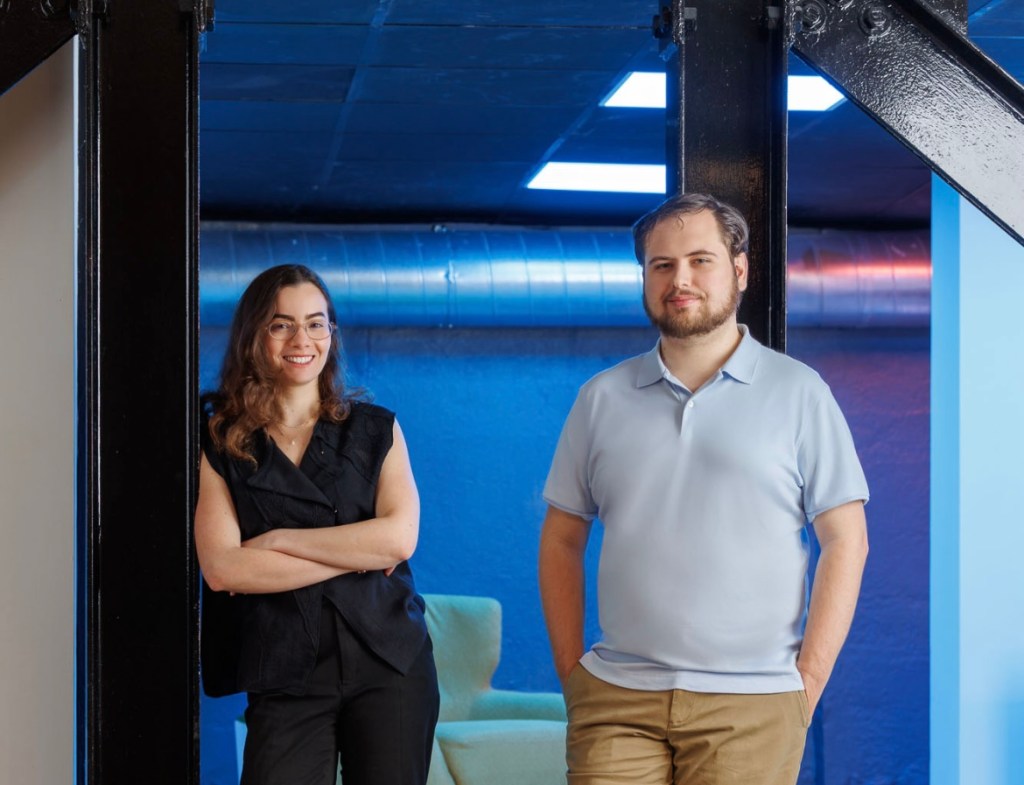
ZeroEntropy is the AI infrastructure company fixing the broken retrieval layer of modern AI applications. Founded in 2024 by Ghita Houir Alami (CEO) and Nicholas Pipitone (CTO), the San Francisco–based startup builds rerankers, embedding models, and end-to-end search infrastructure that outperforms Google, OpenAI, Cohere, and Voyage on public benchmarks. Backed by Y Combinator (W25) and a $4.2M seed round led by Initialized Capital, ZeroEntropy's products — zerank-2, zembed-1, zsearch, and ze-onprem — are used by enterprises including Assembled (serving Stripe, Canva, Robinhood, and Notion). The company's proprietary zELO training methodology, derived from chess Elo ratings and the Thurstone statistical model, produces models with calibrated relevance judgments that binary labels cannot replicate.