metamaterials
(7)
Mike Ellenbogen keeps looking through things
First came airport luggage. Then the crowds at the door. Now the Evolv co-founder is taking his imaging experience to the walls around us - and starting over with another small team.

Bernard Casse and the intelligence in a pair of hands
Before he co-founded RIOS, Bernard Casse worked on lenses small enough to focus light a few micrometers away. His next challenge was considerably less tidy: getting robots to handle the unpredictable objects of an ordinary factory.

Beyond Reach Labs
Beyond Reach Labs is a New York space-hardware startup building ultra-light deployable solar arrays that pack down to the size of a dining table and unfold to the size of a football field in orbit, delivering roughly 10x more usable power per launch without adding mass or volume. Founded by former NASA researcher Mitchell Fogelson and ex-SpaceX parachute lead Pele Collins, the company grew out of NASA-funded research into kilometer-scale space structures and is targeting a 2027 in-space flight demonstration.

Neurophos
Neurophos is an Austin-based photonics startup building an Optical Processing Unit (OPU) that uses light instead of electrons to run AI inference. Spun out of Duke University and the Metacept incubator, the company packs more than a million micron-scale metamaterial optical modulators - roughly 10,000x smaller than conventional photonic elements - onto a single chip to perform the matrix-vector multiplication at the heart of large AI models. It positions the OPU as an energy-efficient, drop-in alternative to GPUs for data-center inference, and raised a $110M Series A led by Gates Frontier in January 2026.

Patrick Bowen
Patrick Bowen is co-founder and CEO of Neurophos, an Austin-based startup building optical AI accelerator chips around metamaterial-based photonic tensor cores. A Duke PhD in electrical engineering and ETH Zurich master's grad, he previously co-founded Metacept with his Duke advisor David Smith. In January 2026 Neurophos closed a $110M Series A led by Gates Frontier with Microsoft's M12, Aramco, Bosch and others.

Jifei Ou
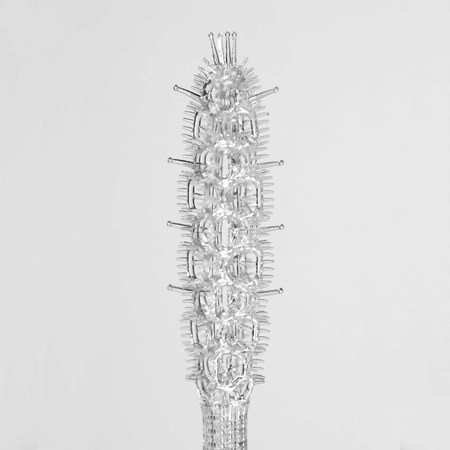
Jifei Ou is the founder and CEO of OPT Industries, a Medford, Massachusetts company that turned a decade of MIT Media Lab research into a new kind of factory. After nearly seven years spent learning to 3D-print fur, hair, and micro-textures no mold could produce, Ou built RAMP, described as the world's first roll-to-roll 3D printing system, which prints intricate microstructures by the mile. Rather than sell machines, OPT sells the products it makes on them - false eyelashes, beauty applicators, and diagnostic swabs that outperformed the gold standard during COVID. Ou raised $15M in Series A funding and is betting that reconnecting design and production can bring precision manufacturing back onshore.
OPT Industries
OPT Industries is an MIT-spun materials foundry in Medford, Massachusetts that built the world's first roll-to-roll 3D printing platform, RAMP. By pairing computational design software with continuous additive manufacturing, OPT prints micron-precise materials at unlimited length and high volume - producing everything from the InstaSwab COVID-19 nasal swab to flockless cosmetic applicators and false eyelashes. The pitch is simple: one process, endless possibilities.