Mike Ellenbogen starts the coffee maker before he gets ready for work. The machine can get on with its job while he gets on with his. He once offered this modest domestic arrangement as an example of how he operates: “I live my life multi-threaded.” It is a rather unglamorous detail for someone whose career includes airport scanners, patents and a public company. It is also useful. Ellenbogen pays attention to the interval between wanting something done and having to stand around while it happens.
That interval has occupied a substantial part of his working life. At Reveal Imaging Technologies, the subject was checked luggage. At Evolv Technology, which he co-founded with Anil Chitkara, it became people entering busy places. His latest venture, Resolv Tools, moves the question inside a building. Before somebody cuts through a wall, could a handheld instrument give them a better look at what is there?
The settings have changed considerably. The recurring interest is easier to spot: equipment that can gather information from something a person cannot simply see. Getting that information into useful form has carried him between laboratories, executive jobs and another early-stage company.
A suitcase-sized lesson
Ellenbogen graduated from Colgate University in 1986 with a degree in physics. From 1994 to 2002, he held responsibility for research and development and business development at PerkinElmer Detection Systems. Those two functions make an instructive pairing. One asks whether a piece of technology can work. The other asks whether someone has a reason to buy it.
In 2002, he founded Reveal Imaging, serving as president and CEO until 2010. The company developed automated explosives-detection equipment for airport baggage. Its CT-80 system was among the baggage-screening products that had completed the Transportation Security Administration’s certification process when SAIC acquired the business in August 2010. The purchase terms were not disclosed.
His account of the original insight is pleasingly practical. Following new airport-screening requirements after September 11, he saw an opportunity to connect smaller, less expensive machines through a network of computers. The economics of the whole installation mattered. A scanner had to earn its place in an operating system, with all the costs and complications that implied.
A suitcase is a compact problem only to the passenger. To the people responsible for processing thousands of them, it belongs to a moving chain of decisions. Reveal put Ellenbogen in that world, where a measurement has to arrive in time for somebody to act on it.
The queue becomes the problem
After selling Reveal, Ellenbogen took time to consider what to do next. By 2018, he was explaining the next problem in terms anybody arriving at a stadium could understand. People wanted safer gathering places. They also wanted to get inside. The patience required at an airport would be a difficult proposition at every entrance in ordinary life.
He and Chitkara had met at General Catalyst. They founded Evolv in July 2013. The Sandy Hook shooting and Boston Marathon bombing had affected people close to them, and gave the work a personal urgency. Ellenbogen’s original CEO tenure ran from August 2013 to January 2020.
Several members of the early team had worked together before. That continuity mattered in a field where understanding the instrument is only part of understanding the problem. A venue brings its own layout, staff, crowd and everyday possessions. The physical world supplies a remarkable number of ways to complicate a tidy engineering plan.
Evolv’s proposition was to combine sensors and software to help identify concealed weapons as visitors walked through. Its Express product launched in September 2019. The ambition was to make screening fit the movement of a crowd, while giving staff the information needed to investigate an alert. Every interruption had consequences for the people behind it.
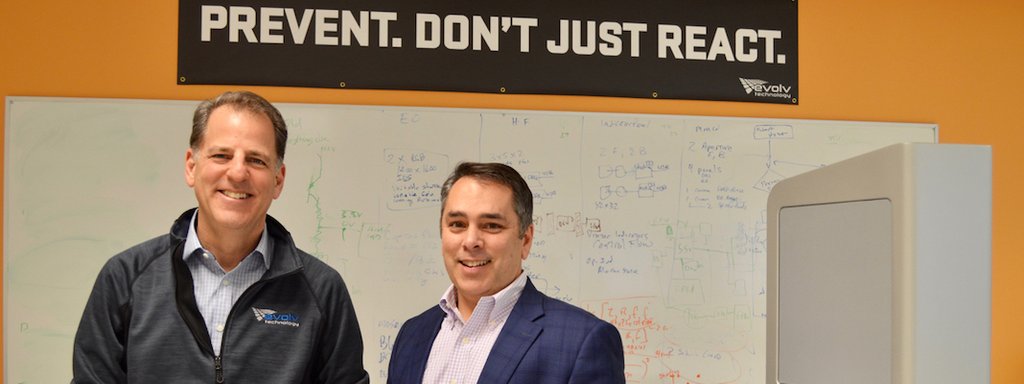
Ellenbogen moved into advanced technology in 2020, then became chief innovation officer and a director of the public company in July 2021. His work continued to involve the people doing the technical work. In a public post about chief scientist Alec Rose, he praised the challenge of starting with detection physics and described their years of collaboration.
When the promise meets the paperwork
A founder’s career is sometimes told as an uninterrupted sequence of inventions. Ellenbogen’s includes a difficult return to the executive chair. On October 30, 2024, Evolv’s board dismissed CEO Peter George without cause and appointed Ellenbogen interim president and CEO. The company was also investigating sales practices and financial reporting.
The board said its succession planning had begun months before the potential reporting problems became known. Those events still converged on an awkward assignment: the co-founder was temporarily running the business while it faced questions about its conduct and prepared to install another leader.
In November 2024, the Federal Trade Commission announced a complaint and proposed settlement over Evolv’s marketing. It alleged misleading claims about weapons detection, harmless items, speed and other performance measures. The settlement imposed restrictions on unsupported claims and provided a cancellation option for certain school customers.
Evolv disputed the allegations, admitted no wrongdoing and said the resolution included no monetary relief. Ellenbogen defended the technology and framed the inquiry as concerning past marketing language. The distinction between the company’s position and the regulator’s allegations matters. So does the underlying practical question: what should a buyer expect a system to do?
For technology sold to screen people, the answer carries considerable weight. A statement about performance helps determine staffing, procedures and purchasing decisions. The promise belongs to the product experience as surely as the equipment does.
Ellenbogen’s interim tenure ended on December 16, 2024, when John Kedzierski became president and CEO. He subsequently left the chief innovation officer position on September 5, 2025. He remained on Evolv’s board. The inventor’s connection continued, with a different set of responsibilities.
The next obstacle is drywall
Resolv, founded in Massachusetts in 2023, takes Ellenbogen’s experience into building work. The team includes co-founders David Smith, Dave Reissfelder and Aaron Diebold. Reissfelder had worked with him at Reveal. Smith, a Duke University professor associated with metamaterials research, brought another longstanding connection through Evolv.
Metamaterials are engineered materials whose electromagnetic properties can differ from those available in nature. Duke’s research provided a foundation for the new venture. Diebold led early validation work in Smith’s lab. The business question concerned the people who must decide where to drill, cut or open a finished surface.
Resolv’s InSite Pro Wall Imager is intended to reveal structural details and building services hidden behind surfaces. Pipes, wires and studs are ordinary objects. They become considerably more interesting when somebody is about to put a tool through the place they occupy.
The company’s proposed workflow is straightforward: move the instrument along a wall or ceiling and look at the resulting image. Resolv also describes an optional app for saving, annotating and sharing scans. A useful record could remain after the immediate job, rather than disappearing with the person who happened to know where the pipe ran.
These are descriptions of a forthcoming product. At the time of this profile, Resolv’s website still displayed a waitlist and “coming soon” language, along with a notice that the device had not received the required FCC authorization. Commercial availability and demonstrated usefulness are the next parts of the story.
The move also changes the person making the decision. An airport or stadium deploys screening as an organized operation. A tradesperson may need information at the exact spot where the work is about to happen. The instrument must fit that moment. Carrying imaging experience into this setting requires learning the habits of a different profession, even when the underlying interest in hidden objects feels familiar.
Back to the small team
The company raised a $5 million seed round in September 2025 and emerged from stealth in March 2026. MetaVC Partners and Undeterred Capital co-led the financing. For Ellenbogen, the new setting also brought back the work of turning early hardware into something people could handle and evaluate.
He has described replacing early 3D-printed housings with machined plastic parts so the team could examine fit, materials and performance in something closer to the intended product. Such details rarely make the headline. They are where an instrument begins to acquire the inconvenient obligations of an actual object.
“I only play golf when I absolutely have to.”
Mike Ellenbogen, on starting another company
His public explanation for beginning again includes a joke about being unable to retire gracefully. More seriously, he describes enjoying the work of a small group solving a difficult problem. The appeal appears to survive changes in company size and customer. He is back with engineers, prototypes and questions that cannot be settled by a presentation.
There is an appealing lack of finality to this stage of his career. The sale of Reveal did not settle what he would do next. A seat on Evolv’s board has not exhausted his interest in making a new object. At Resolv, the immediate evidence of progress can be as tangible as a housing that fits properly. The scale is smaller than a public company’s responsibilities, and the engineering questions remain demanding.
The attraction of Resolv is easy to understand in those terms. A wall presents a deceptively simple surface. The interesting part is concealed. Ellenbogen has spent years building businesses around that arrangement. Now he wants to put another instrument in somebody’s hands, before they switch on the drill.
Keep looking
READ / WATCH / FOLLOW