Rob Fisher left a company-building career measured in clients, candidates and launches with an ambition measured in tons. In September 2023, after a dozen years at Cogo Labs, he announced that his next chapter would involve removing a billion tons of carbon from the atmosphere. It was quite a change of scale for a farewell post. Most people settle for thanking their colleagues and remembering where they left the office keys.
The thank-you was there, too. Fisher looked back on a long stretch of shared work, difficult changes of direction and lessons from other entrepreneurs. The next venture would be Provocative, a company linking atmospheric carbon removal with computing infrastructure. Before that came Datalign Advisory, where he had helped build a service for matching people with financial advisors. A household seeking advice and a building full of computers seem unlikely companions in a career story. Fisher has worked on both.
A useful way to follow that story is to look at the relationships inside the businesses: between a client and an advisor, an executive and a team, a piece of infrastructure and another job it might perform. The objects change. The question of how to make them fit keeps returning.
A farewell with a change of scale
Fisher’s departure from Cogo was personal. He had spent twelve years there, long enough for a workplace to become part of the way a person thinks. He described having learned from people whose skills complemented one another and whose collaboration helped them sustain demanding work. His account allowed room for failures as well as successes. That is a more useful inventory than a cabinet containing only trophies.
“I feel like I grew up there.”
Rob Fisher, reflecting on Cogo Labs
By April 2023, he was signing a public filing as Cogo Labs’ president and chief executive. By September, he was describing his August departure. Those dates matter because his connection to Cogo remains visible across business directories and older profiles. The career has continued moving even where the listings have stayed put.
Leaving after such a stretch involves more than exchanging one title for another. In Fisher’s own reflection, the experience had changed his perspective. The carbon-removal ambition arrived after the gratitude, carrying the energy of someone ready to apply his experience to a different problem. The promised quantity was an aspiration. It gave the next chapter a direction, rather than a result to celebrate.
The education of an operator
Fisher studied economics and applied mathematics at North Carolina State University, then earned a master’s degree in economics at Northeastern. The combination supplies two ways of approaching a decision: an interest in incentives and an interest in what can be described, compared and calculated. Those are useful tools for an operator, even when the answer refuses to behave as neatly as the equation.
His working life crossed several businesses. Alongside Cogo and Datalign, his career includes leadership at SmarterTravel, a board role at wealth-management technology company Vestmark, and advisory work with Social Fulcrum and Highland Math. The list suggests experience with different organizational problems, from consumer services to software and business strategy. Each setting asks something slightly different of the person responsible for helping it work.
Cogo itself was built around launching internet companies using marketing technology, data analysis and business leadership. It belonged to the Link Ventures family. That setting put Fisher among people concerned with turning a promising idea into a functioning company. A product needs users. A team needs enough shared direction to make decisions. An attractive spreadsheet must eventually survive contact with customers. The operating job lives among those requirements, where elegant ideas acquire awkward appointments.
One introduction, fewer wrong turns
Datalign Advisory launched in February 2022 from Cogo Labs, backed by Link Ventures. Fisher was its president and a co-founder. Its original proposition was unusually concrete: connect a prospective client with a single financial advisor, using information about the person’s circumstances and requirements alongside the size of the portfolio.
There is an everyday irritation beneath that business model. Ask for help finding a professional, and the reward can be several professionals asking for your attention. A request for advice becomes a new administrative task. The person still has to decide who understands the problem, while each advisor has to decide whether the introduction is worth pursuing.
Fisher’s launch comments addressed that mismatch. A portfolio figure alone could produce an unsuitable introduction. Datalign gathered other details, including income, required services, time to retirement and previous experience with advisors. The commercial idea was to improve the fit before the first conversation.
“advisors spend less time chasing the wrong prospects.”
Rob Fisher, on Datalign’s approach at launch
That small design choice makes the Datalign chapter revealing. The platform had to consider the experience of both participants. An introduction could look productive to the intermediary and still be inconvenient for everybody receiving it. Building around one match gave the service a defined promise, and gave Fisher a problem in which the quality of the connection was part of the product itself.
Six candidates and a useful admission
The same concern with fit appears in a less glamorous piece of executive work: recruitment. In a public testimonial about recruiter Josh King, Fisher recalled a search for a senior leader. Within three weeks, the team had interviewed six candidates. The process subsequently produced an accepted offer from their preferred person. It is a small anecdote, but a satisfying one for anyone who has watched an unfilled role turn into a permanent item on a meeting agenda.
Another account concerns Social Fulcrum. Andrew Krebs-Smith remembered approaching Fisher while considering a company sale. Fisher acknowledged that he had not previously taken a company through that process, then helped break down the important inputs to examine over time. Krebs-Smith described a colleague who combined analytical thinking with creativity, humility and empathy.
The admission is the memorable part. Advice can become theatrical when the advisor feels obliged to have experienced every possible event. Fisher’s usefulness, in this account, came from helping organize the decision despite the limit of his direct experience. A thoughtful question can do more work than an impressive war story. It also takes considerably less time to tell.
Together, the anecdotes offer something more tangible than a set of leadership adjectives. One concerns selecting a person. The other concerns making a consequential decision. Both show the operating work between an ambition and the next action, where judgment has to become specific enough for somebody else to use.
The room before the leap
On May 11, 2023, Fisher was among the judges at MIT Media Lab’s venture-studio Demo Day. Fourteen student teams presented. Each had three minutes to pitch and two minutes for questions. The format supplies a brisk answer to anyone who thinks a business idea needs forty slides before it becomes intelligible.
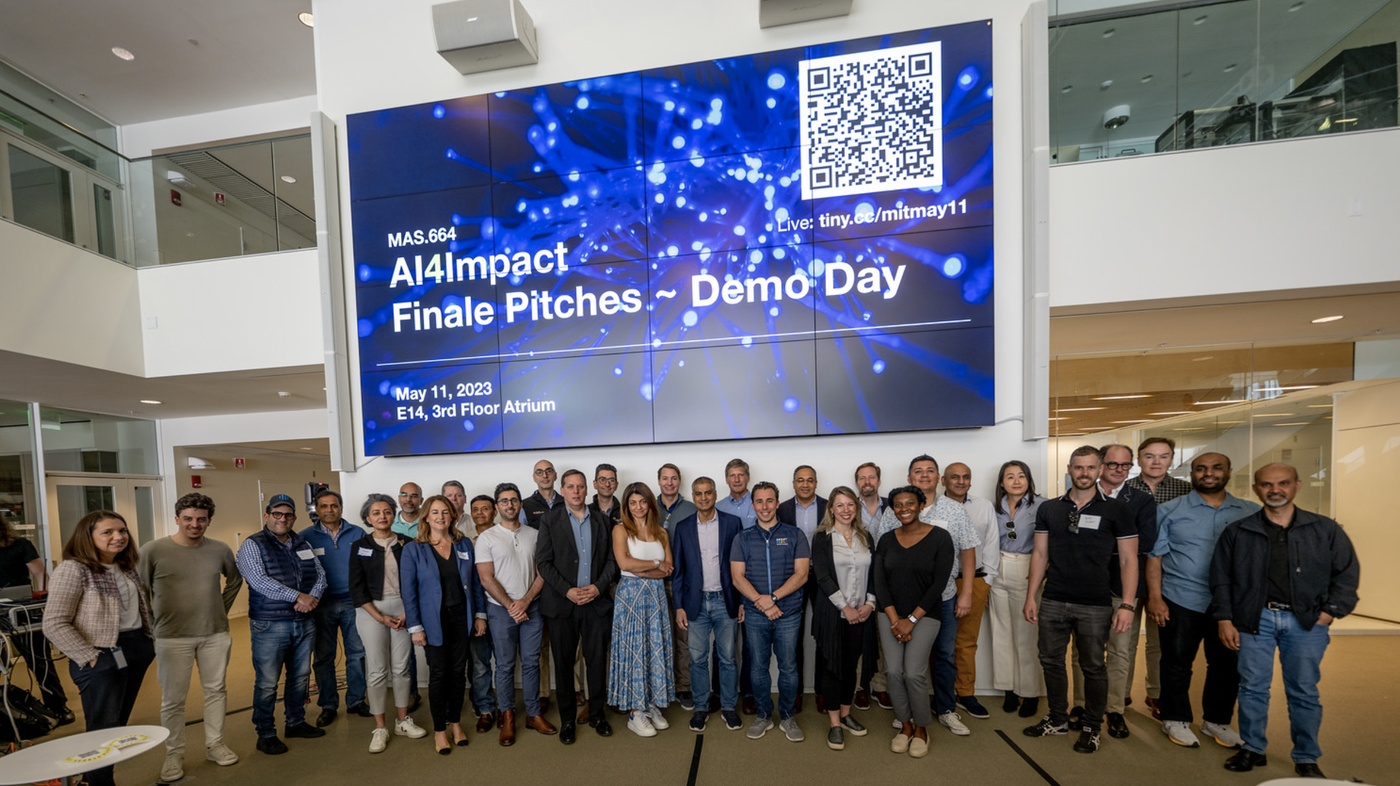
The event placed him in a room concerned with ventures still taking shape. Judging such work requires attention to a proposition before the company has had time to make its case through years of performance. What is being proposed? Who would use it? What must work for the idea to become a business? Those questions belong to the early stages of a venture, when the possibility is easier to describe than the path.
The timing is interesting. Fisher was publicly representing Cogo that spring. A few months later, he would announce a new direction of his own. There is no need to invent a moment of revelation in the atrium. The documented sequence is enough: a company operator assessing young ventures, then moving into another venture himself.
A partner in moving air
Provocative was founded in 2023. Fisher is its president and co-founder, alongside co-founder and CEO Nick Meyer. The company’s focus brings direct air carbon capture into the world of computing infrastructure. In a radio conversation that year with Sorin Grama, Fisher and Meyer discussed the idea of locating capture where substantial quantities of air already move for another purpose.
The appeal is a shared piece of work. If one system already needs airflow, another might be able to use that activity as part of its own process. It is an infrastructure proposition rather than a finished verdict about economics. The relationship has to work in equipment, operating conditions and costs.
A concept diagram of Provocative’s approach. No performance quantities are implied.
Fisher’s earlier matching business offers an interesting comparison, provided the comparison stays modest. At Datalign, the fit depended on information about two people. Here, the fit concerns physical systems. The mechanics are different, but the attraction of designing the relationship deliberately is easy to see. The useful question is what each part can contribute to the other.
The ambition meets a moisture sensor
In December 2025, a carbon-capture patent named Fisher among five inventors, with Nicholas Meyer, Andrew Bouma, Bryan Woodruff and Indrid Xhuti. Assigned to Provocative Science Holdings, the patent describes capture materials, heating, vacuum extraction and compression. One control responds to moisture measurements when regulating heat. The ambition has acquired a very particular vocabulary.
A patent records an invention; it does not measure the amount of carbon a company has removed. Still, it gives Fisher’s newer chapter a technical milestone and a named group of collaborators. It brings the story down from atmospheric quantities to chambers, sensors and controls. Large plans eventually need somebody to decide how hot a component should get.
In March 2026, Northeastern’s blockchain student group announced Fisher as a speaker on the intersection of computing infrastructure and carbon capture. The economics graduate had another reason to return to the university, this time with a business whose questions reach beyond the screen.
The farewell ambition remains large. The details that make Fisher’s story readable are smaller: one advisor introduction, six executive candidates, a candid admission, a tightly timed pitch, a moisture sensor. They show the work at a scale where a decision can be made. Fisher has moved from building connections on the internet to pursuing a connection in the physical world. The next chapter will be written in what that connection can do.