Before Atsushi Nakanishi was asking engineers to build a device, he was asking factories to make jeans. He was in the Philippines, working with local farmers, and the material was Manila hemp. He wanted to help raise their incomes. There was one awkward detail: he did not know how to manufacture a pair of jeans. So he went looking for people who did.
That small episode offers a useful way into the founder of Triple W USA. In his account of the project, factories turned him down. He kept going, learning whom to approach and how to ask. Entrepreneurship, at this stage, involved the unglamorous business of getting somebody to take a request seriously. A good idea could still spend its entire life waiting outside a factory door.
Years later, the setting would be different. He would be building a company around DFree, recruiting specialists, seeking investment, and trying to make a physical product work. The recurring action would be familiar: identify the missing skill, find somebody who has it, make the case for joining in. His career becomes easier to understand when you follow the people he asked for help.
A family business, then a wider world
Nakanishi was born in Hyogo Prefecture in 1983. He graduated from Keio University and went into consulting before serving as a volunteer in the Philippines and studying in California. It is a route with several changes of scenery, and very little resemblance to the straight line usually drawn beneath a chief executive’s photograph.
The desire to start a business preceded those moves. His grandfather ran a business, giving him an example close to home. In primary school, Bill Gates offered another model, considerably farther away. By fourth grade, Nakanishi was already thinking about entrepreneurship. The question he carried forward was when and how he would start.
His Philippine work came through the Japan International Cooperation Agency. Business development there had a concrete purpose: increasing a village’s income. Later, he studied business at the University of California, Berkeley, completing its MBT program. His LinkedIn education record dates the Berkeley period to 2013-2014. The future founder had accumulated experience in advising, volunteering, and studying. Manufacturing was still a subject he would have to learn through other people.
An address book becomes a workshop
When Nakanishi began developing DFree, he had neither an engineering background nor ample financial support. Friends brought skills in mechanical and software engineering. They found the idea interesting enough to start designing and working on it. A prototype followed, and investor support came after that. In this sequence, the first people to help made it possible to show later people something tangible.
The distinction matters for understanding his part in the company. Nakanishi has been direct about being a founder without an engineer’s training. He could bring an idea, organize a team, and seek resources. The technical work required other kinds of knowledge. Calling a friend was an acknowledgement of that boundary, and an attempt to move beyond it.
Several early colleagues were people he knew from school and university. Their shared history supplied a starting point for cooperation, though a history together cannot design a circuit. What it can do is make the first conversation possible. A request from a former classmate arrives with a face attached. Someone still has to decide whether the work deserves the next evening, and then the evening after that.
An editorial view of the collaboration behind the early product.
Thirty minutes in San Francisco
One early connection began at a design-company party in San Francisco in August 2014. Industrial designer Koji Yano was introduced to Nakanishi through WHILL’s Satoshi Sugie. The conversation lasted roughly half an hour. That night, Nakanishi followed up by email, asking for help and explaining that money was scarce. Yano agreed to get involved.
The introduction brought a designer into a project that needed to become an object people could actually use. Around the same period, Nakanishi’s high-school classmate Ryosuke Masamori joined the effort. A founder, an engineer, and a designer could now approach the same problem from different directions.
There is something pleasingly ordinary about the email. No ceremony. No complete company waiting behind it. Just a short meeting followed by a request specific enough to act on. The interesting part is the follow-through: a passing introduction became working time. For a founder whose earlier manufacturing education had involved visiting factories, it was another instance of asking the right person a practical question.
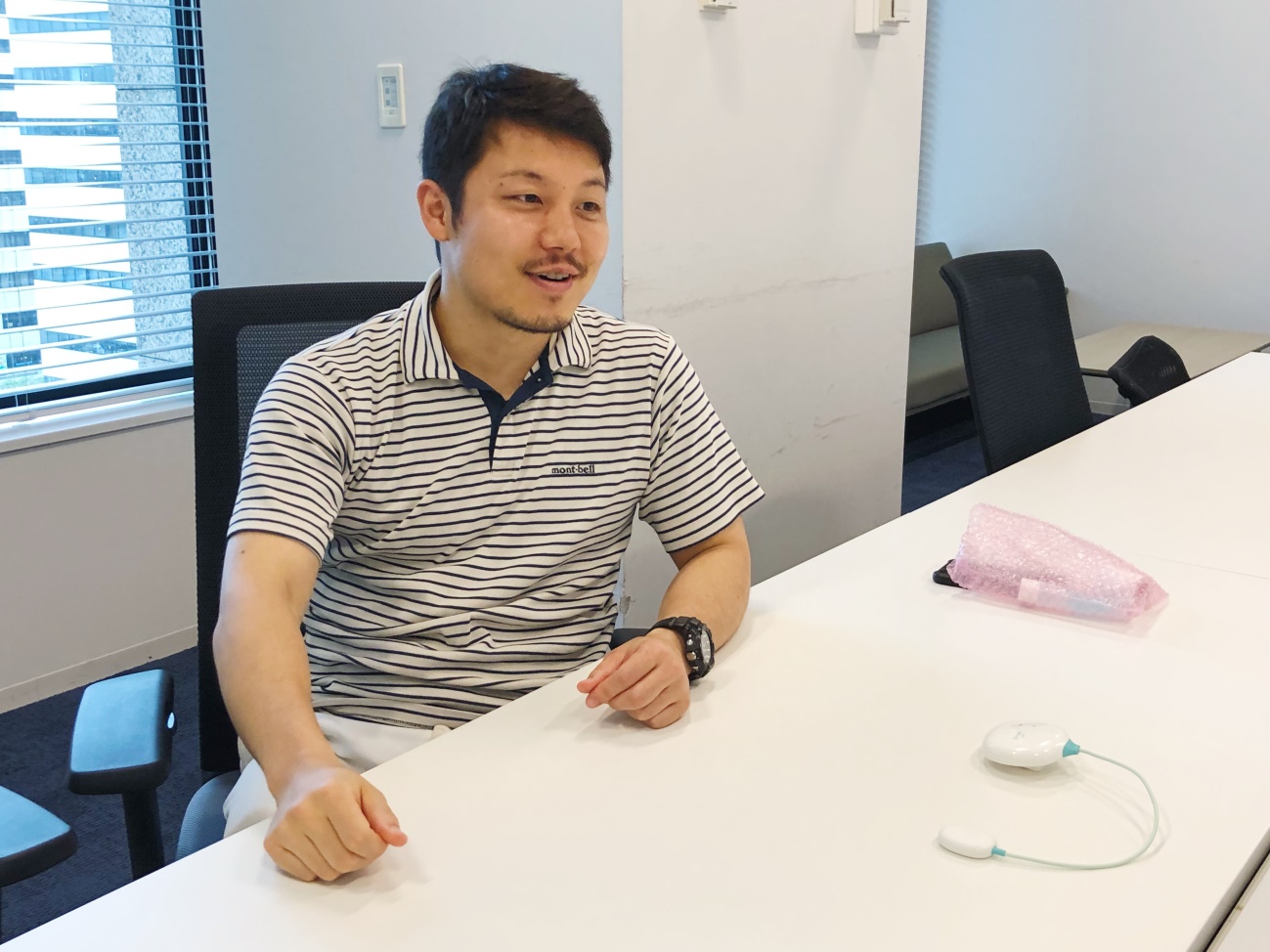
Berkeley for the beginning, Tokyo for the work
Nakanishi established Triple W in the United States in 2014 and the Japanese company in February 2015. The two dates describe separate beginnings in separate countries. Berkeley gave him a place to start; Tokyo became the headquarters. The business would develop across borders from an early stage.
His explanation for choosing Tokyo was practical. He knew capable people there who shared his interest in the project. Engineering talent was available at costs he considered manageable, the first investment came from Tokyo, and Japan was the initial market. These are the details of a location decision made with a product and a budget in mind.
In a 2016 conversation, he described Tokyo as the research and development center and spoke about San Francisco as a future marketing headquarters. His view of geography assigned different jobs to different places. Engineering, financing, and selling do not automatically favor the same address. The useful question for his company was where each piece of work could happen.
He also wanted international standards to make selling across countries simpler. Asked what he would change with a magic wand, he extended the wish to a common currency and a common language. The answer had the cheerful extravagance appropriate to a magic wand. Anyone who has dealt with a cross-border checklist can understand the temptation.
The crowd answers back
Crowdfunding gave Nakanishi more than an opportunity to raise money. It brought messages from people who wanted the proposed product and helped him make the case to skeptical investors. The campaign supplied evidence of interest before the company had completed the long task of commercialization.
That response belongs to the story of his connections. Friends supplied early expertise; prospective customers supplied reasons to persist; investors supplied another kind of support. These groups were answering different questions. Could it be built? Did someone want it? Could the company afford to keep working? A founder needed a useful answer to all three.
In 2016, Nakanishi won GET IN THE RING OSAKA. By the time of a January 2019 interview, the company had received inquiries from more than 40 countries and established bases in the United States and France. The inquiry count described interest, rather than a count of customers. Even so, it gave the team a wider set of conversations to pursue.
Recognition followed in other settings. DFree received four awards around CES 2019. Nakanishi was also selected for the WIRED Audi Innovation Award that year. A stage can introduce a founder to people who would never have received his first email. Once the applause ends, those introductions still need turning into work.
Learning the language, keeping the company
Asked in 2019 what he would tell his younger self, Nakanishi wanted more time spent learning English, Mandarin Chinese, and the cultures around them. He acknowledged the prospect of AI translation, while placing value on expressing an idea himself. For someone whose work repeatedly depended on persuading another person, the distinction had practical weight.
A translated sentence can carry information. Speaking for yourself also lets you shape the pace of a conversation, answer an unexpected question, and hear what someone considers important. Nakanishi’s advice sits naturally beside his earlier factory visits and later requests for engineering help. Each depended on being understood by somebody with knowledge he needed.
His approach to hiring favors people who enjoy challenges, want to learn, and will tackle issues on their own initiative. He has also described learning enough about the technology to set milestones and keep the company moving. Expertise belongs to specialists; a chief executive still has to understand what he is asking them to do.
The social side of working together has a place in his account, too. At the time of one interview, he described twice-monthly Friday gatherings and monthly camping trips that included families. Away from work, his listed interests include running around the Imperial Palace, sauna visits, snack bars, and karaoke. A microphone presents its own opportunities for enthusiasm. Fortunately, it usually requires fewer specialists than a hardware project.
“You never know if you can do something until you try.”
Atsushi Nakanishi
A decade later, still making the next version
The company’s first commercial DFree release arrived in April 2017. Further generations followed. In May 2025, it began selling a fifth generation, thinner and lighter than its predecessor. Those dates stretch the story beyond the first prototype and the first pitch, into the slower business of revising a product that already exists.
There were changes to the company as well. In March 2023, it raised ¥1 billion from Yusaku Maezawa and financial institutions. In April 2024, Triple W Japan changed its name to DFree Inc., aligning the corporate name with the product brand. Nakanishi remained at the head of the Japanese business, alongside his founding role at Triple W USA.
The work continued in 2026. A July announcement invited investors to an online business briefing, with Nakanishi named as the company’s representative. Another announcement that month described a FUNDINNO fundraising campaign intended in part to support increased production. In August, DFree received a Kids Design Award in the childbirth and parenting support category. These were further milestones, each attached to a specific activity rather than a promise about the distant future.
The next chapter will require the same kinds of conversations that filled the earlier ones: somebody explaining what can be made, somebody asking what it will cost, somebody deciding whether to participate. The jeans project remains a useful place to begin this portrait. Nakanishi had a purpose and a material, then went looking for the people who could turn them into a product. Years later, he is still working with others on what comes next.
- 2017First commercial release
- 2023¥1 billion company financing
- 2024Japan business becomes DFree Inc.
- 2025Fifth-generation product released
- 2026FUNDINNO fundraising announced