Maker of DFree — the first wearable ultrasound sensor that tells you it’s time to go, before it’s too late. The name is the whole pitch: diaper-free.
Somewhere in a senior-care facility this morning, a phone buzzes at a nurse’s station. Not an alarm, not a fall, not a code. A small alert: Room 14, bladder at 70 percent. A caregiver glances at it, finishes pouring coffee, and walks down the hall with time to spare. No rush. No accident. No apology owed to anyone.
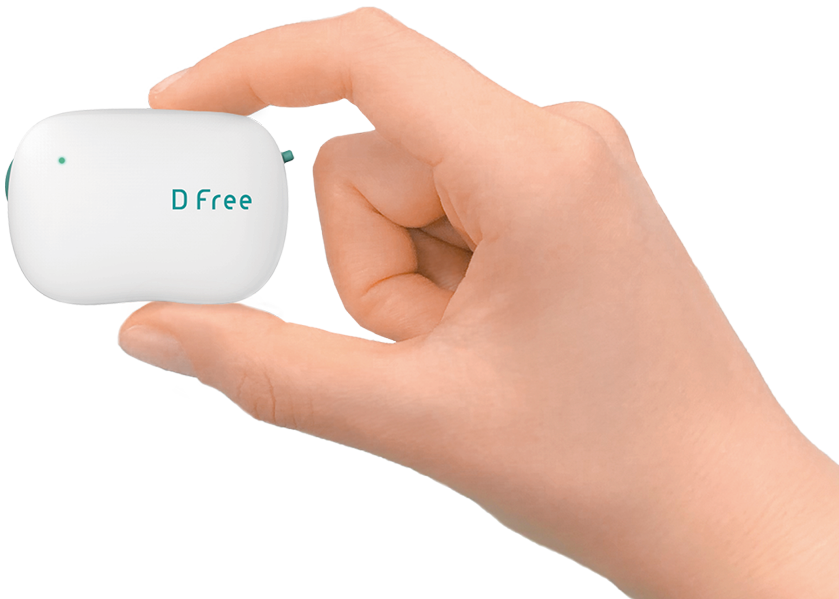
That quiet is the product. The company behind it is Triple W USA, and the device doing the work is DFree, a sensor roughly the size of a matchbox that rides on the lower abdomen and listens to a bladder with ultrasound. It is not glamorous technology. It is, however, technology aimed squarely at one of the least-discussed indignities of getting older or living with a chronic condition: being caught off guard by your own body.
“DFree stands for diaper-free.”
The mission, compressed into one hyphenated wordMillions of people manage urinary incontinence, and most of them manage it in silence. The standard answer for decades has been absorbent products - effective, discreet, and quietly demoralizing. They handle the aftermath. They do nothing about the surprise. And the surprise, it turns out, is most of the cruelty: the cancelled outings, the seat near the exit, the map of every restroom in town.
For caregivers and nursing facilities, the same problem wears a different uniform. Toileting is scheduled by guesswork. Stretch the interval and you risk an accident; shorten it and you burn staff time waking people who didn’t need waking. Either way, someone loses a little dignity.
Triple W’s read on this was almost stubbornly simple. The problem with incontinence, they decided, isn’t only medical. A good part of it is a timing problem - an information problem. And information problems have a habit of yielding to sensors.
Absorbent products treat what already happened. DFree’s bet is on the ten minutes before - the window where a heads-up changes everything and nothing has gone wrong yet.
Atsushi Nakanishi founded Triple W in 2015 with a wager that sounds obvious only in hindsight. Hospitals already use ultrasound to measure how full a bladder is; that part is settled science. The trouble is the machine - bulky, clinical, and operated by a professional once in a while. Nakanishi’s idea was to take that same physics, miniaturize it, and let it run continuously on an ordinary person going about an ordinary day.
It was, in the politest possible terms, an unfashionable thing to build. Wearables in the mid-2010s were busy counting steps and looking good on wrists. Triple W chose the bladder. The company name itself - three W’s, for a private bodily concern - reads like a deliberate refusal to be embarrassed by the category it had picked.
The bet had two halves. First, that the engineering could be done: continuous, non-invasive ultrasound small enough to wear and reliable enough to trust. Second, and harder, that people would actually wear it - that dignity, framed correctly, would outweigh the awkwardness of strapping a sensor to your abdomen.
“Empower people to live life independently without bladder worries.”
Triple W’s stated missionDFree sticks to the lower abdomen and pings the bladder with ultrasound, measuring how full it is in real time. As the level climbs, the companion app on a phone or tablet sends an alert - a heads-up with enough lead time to walk, not sprint. Bluetooth handles the connection; iOS and Android both work. Over days, the app learns a person’s patterns, which is where the device stops being a gadget and starts being a routine.
There are two faces to the same idea. The personal version, around $399, is sold direct to consumers through the website, Amazon, and authorized retailers, with a rental option for the unsure. DFree Pro is built for facilities, adding a web dashboard so a single nurse can watch the bladder patterns of many residents at once and schedule toileting on evidence instead of the clock.
Wearable ultrasound sensor plus mobile app. Tracks fullness, predicts the moment, alerts before the emergency.
The senior-care edition with a web dashboard - many residents, one screen, toileting planned on data.
A positioning pad that keeps the sensor in the right spot, so the ultrasound reading stays honest.
A previewed prototype extending the same predict-don’t-react logic from the bladder to the bowel.
“It doesn’t cure incontinence. It removes the surprise - which is most of the cruelty.”
The design philosophy, stated plainlySkepticism is the correct first response to a device like this, so the receipts matter. DFree carries endorsements from the National Association for Continence, the Spina Bifida Association, and the National Multiple Sclerosis Society - three groups that do not lend their names to novelty. At CES 2019, an event built for flashier things, DFree took Best of CES in the Digital Health category. More than 500 care facilities worldwide have put it to work.
Among the investors: the 2020 fund tied to Foxconn - useful company to keep when the hard part of your business is manufacturing tiny, reliable ultrasound hardware at scale.
Strip away the ultrasound and the app, and Triple W is making an argument about independence. The company spans two continents - research rooted in Tokyo, commercial headquarters in San Diego - but its premise stays constant: that a person should get to decide where they go and how they live, and that a bladder shouldn’t hold the veto.
That framing explains the otherwise unfashionable choices. A device about the most private of needs entered the most public of arenas and won. A name that could have been clinical chose, instead, to say the quiet part out loud. Triple W decided early that the way to beat the stigma was not to tiptoe around it.
“A device about the most private of needs won one of the most public awards in tech.”
On choosing not to be embarrassedThe demographics are unsubtle. Populations across the developed world are getting older, care staff are stretched thinner, and the pressure to keep people living independently for longer is only climbing. Remote monitoring stops being a luxury and starts being infrastructure. A sensor that turns a private emergency into a manageable schedule fits that future a little too neatly to ignore.
Triple W still has the ordinary work ahead - proving the device at scale, convincing more people to wear it, extending the same predict-don’t-react logic to the bowel and beyond. None of that is guaranteed. But the core idea has aged well, which is more than most wearables from 2015 can say.
So return to that hallway. The phone buzzes. Room 14, bladder at 70 percent. A few years ago that buzz didn’t exist, and the moment it now prevents would have ended with someone quietly mortified and someone else changing sheets. The technology didn’t cure anything. It just moved the event ten minutes earlier, into the window where nothing has gone wrong yet. For the person in Room 14, those ten minutes are the entire difference - and the whole company fits in the palm of a hand.