Tagged: berkeley
30 results
Khachik Sahakyan
Khachik Sahakyan is the co-founder and CEO of Grovf, a deep-tech hardware company building AI back-end fabric IP, chiplets and 400/800 Gbps SmartNICs that move data between AI accelerators with sub-2 microsecond RDMA latency. A microwave engineer and former Yerevan State University lecturer turned founder, he splits Grovf between Newark, California and Yerevan, Armenia, and has spent the last several years convincing data-center buyers that the path to scale is in silicon, not software.

Kimia Therapeutics
Kimia Therapeutics is a Berkeley-based biotech building ATLAS, a drug-discovery platform that pairs nanoliter-scale high-throughput precision chemistry with machine learning and genome editing to map the druggable space at single-atom resolution. Spun out of Carmot Therapeutics in 2023 and backed by $55M in Series A funding, Kimia is using its chemical atlas to advance therapeutic programs in cancer and immunology.

MeltPlan
MeltPlan is a Berkeley-based AI-native planning engine for the construction industry. It moves critical decisions upstream into preconstruction - automating quantity takeoffs, checking building-code compliance, and leveling bids - so that architects, contractors and owners can stress-test plans before a shovel hits the ground. Founded in 2025 by Kanav Hasija (ex-Innovaccer) and Tanmaya Kala (ex-DPR), the company raised $14M led by Bessemer Venture Partners and is already deployed with DPR Construction and Innovo Group.

Terranova
Terranova is a Berkeley-born climate-tech and robotics startup building car-sized autonomous robots that inject a wood-waste slurry deep underground to lift flood-prone land out of harm's way - no seawalls, no surface disruption. A single 'mothership' coordinating three injection rovers can raise about one acre by one foot per day, while the buried biomass becomes a durable carbon sink that can be sold as carbon credits. Founded by UC Berkeley mechanical engineer Laurence Allen to save his hometown of San Rafael, California, the company raised a $7M seed round in November 2025 and plans its first San Rafael pilots in 2026.

Allie Janoch
Allie Janoch is the CEO and co-founder of Mapistry, a Berkeley-born software company that turns the soul-crushing paperwork of environmental compliance into maps, mobile inspections and automated alerts for industrial and manufacturing companies. A computer-vision engineer by training - MIT Lincoln Labs, IQ Engines, Yahoo's Flickr - she walked out of a comfortable Silicon Valley job in 2013 to build software for stormwater permits, of all things, alongside her husband and environmental-engineer co-founder Ryan Janoch. The bet: regulations don't have to be the enemy of either the economy or clean water.

Luke Groesbeck
Luke Groesbeck is the co-founder and CEO of Foundation, the buyer experience platform that drags homebuilding - one of the last big offline industries - online. After two decades building and scaling Silicon Valley startups including the now-public Opendoor and Eventbrite, he teamed up with two Opendoor colleagues to build what they call 'Shopify for homebuilders': white-labeled apps that carry a buyer from first tour through closing and into the warranty years. Backed by Y Combinator's Summer 2023 batch, Foundation grew 5x in 2025 and now powers the homeowner apps of more than 40% of the top-200 U.S. builders.

Matthew Brown
Matthew Brown is the founder and CEO of ThoughtForge AI, a Berkeley robotics company building a cloud-based control platform that gives existing industrial robots real-time adaptivity and human-level dexterity using Active Inference, a biologically-inspired approach drawn from neuroscience. Over more than two decades in AI, he wrote combat logic for the Aegis system at Lockheed Martin, built the enemy intelligence behind game franchises like Halo, Bioshock, and Splinter Cell, and was the first engineer at Bonsai AI, where he helped ship one of the world's first production deep reinforcement learning platforms before Microsoft acquired it in 2018. He now teaches and sits on the board of the Active Institute while ThoughtForge works with manufacturers like bp, Siemens, and members of the ARM Institute to bring common sense to the factory floor.

Sudip Mukhopadhyay
Sudip Mukhopadhyay is the CEO and co-founder of AirMyne, a Berkeley-based climate-tech company building liquid-solvent Direct Air Capture (DAC) machines that pull carbon dioxide straight out of the sky. A chemist and engineer with more than two decades in industrial R&D, he co-invented the low-global-warming car refrigerant 1234yf during a 16-year run at Honeywell, where he rose from engineer to corporate fellow and director of innovation. He launched AirMyne in 2022 with co-founder Mark Cyffka through Y Combinator, raising $6.9M in seed funding and a strategic investment from Japanese energy giant ENEOS, with the bet that cheap low-temperature heat (including geothermal) can make carbon removal affordable at industrial scale.

Tomohiro Takano
Tomohiro Takano is the co-founder and CEO of Genomelink (operated by AWAKENS, Inc.), a Berkeley-based consumer genomics company building what he calls a 'DNA App Store.' The platform lets people who have taken tests from services like 23andMe or AncestryDNA upload their raw DNA data to unlock ancestry breakdowns, ancient-DNA comparisons, hundreds of trait analyses, and DNA matching. Takano started the company in 2016 as a weekend project in Japan with co-founders he met at university, moved to the Bay Area with no visa and little funding, and won a spot at Berkeley SkyDeck one day before the team was set to fly home and shut down. He frames himself as a 'risk manager' rather than a risk taker, and credits a liberal arts education for teaching him to ask the right questions.

Zaijun Chen
Zaijun Chen is a physicist-turned-founder building light-powered computers for artificial intelligence. As co-founder and CEO of Opticore, he is developing photonic optical processing units (OPUs) that the company says are up to 100x more energy efficient and 25x denser than leading GPUs. Trained at the Max Planck Institute of Quantum Optics and MIT, and now director of the Laboratory of Intelligent and Quantum Photonics at USC, Chen turned a decade of precision-optics research into a venture-backed bet that the future of AI compute runs on photons instead of electrons.

AT Nakanishi
AT Nakanishi (Atsushi Nakanishi) is the founder and CEO of Triple W, the company behind DFree, the world's first personal wearable ultrasound sensor that predicts toilet timing. He launched the company in 2015 with high school and college friends, took it from Tokyo to Berkeley, and steered it to a Best of CES award and Series D funding. A self-described non-engineer who built a hardware company from zero, Nakanishi blends business pragmatism with a stubborn focus on solving an unglamorous, very human problem.

Kevin Stein
Kevin Stein is the CEO and cofounder of Delos Insurance Solutions, a San Francisco insurtech MGA that writes homeowners insurance for wildfire-exposed California properties that mainstream carriers refuse. A Bay Area native and aerospace engineer who once sold satellites at SSL/Maxar, Stein co-founded Delos in 2017 with Shanna McIntyre to apply satellite imagery, geospatial AI, and wildfire science to a problem the rest of the market treats as uninsurable. Delos accepts roughly two-thirds of the homes the standard market declines, and Stein reports it has never insured a home that later burned. He moonlights as a bassist and songwriter.
LifeLong Medical Care
LifeLong Medical Care is a Berkeley-based nonprofit Federally Qualified Health Center that has delivered medical, dental, and social services to underserved people of all ages across California's East Bay since 1976. Born from the Gray Panthers' Over 60 Health Center, it now runs a network of primary care clinics, dental centers, school-based health sites, urgent care, and supportive housing programs, serving more than 66,000 patients a year regardless of income or insurance status.
Karl Strovink
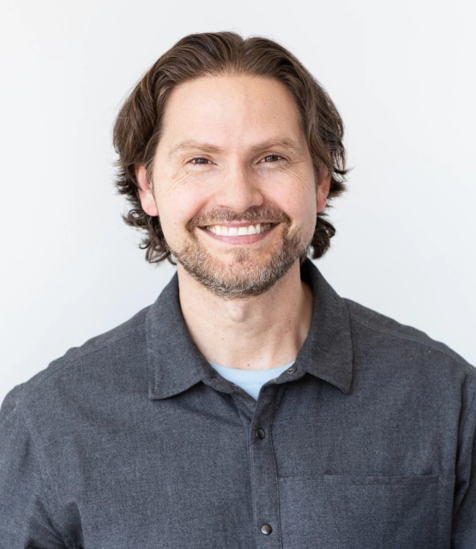
Karl Strovink is the CEO of Blue Bottle Coffee, the Oakland-born specialty roaster now owned by Nestlé. A Berkeley native with an MBA from MIT Sloan, he arrived in 2019 from a twelve-year run at Converse and has spent his tenure pushing Blue Bottle toward oat milk by default, instant espresso, zero-waste cafés, and aggressive expansion across Asia, all while protecting the brand's small-batch identity inside a thirty-billion-dollar coffee parent.

Marty Lynch
Marty Lynch, PhD, MPA, is CEO Emeritus of LifeLong Medical Care, the Berkeley-based federally qualified health center he led for nearly four decades. He grew a small Over 60 Health Center into a 16-clinic network covering Alameda, Contra Costa, and Marin counties, and now lectures at UC Berkeley while serving on California's Master Plan for Aging Advisory Committee.
Richard Westin
Richard Westin is the co-founder of Agemark Senior Living, an Omaha-based operator of 28 communities across six states. The first American to work full-time for Club Med, he imported a resort-style hospitality ethos into a category usually defined by clinical efficiency. He led Agemark as CEO from 1987 until 2022 and now sits as a principal as his son Forrest steps into co-CEO.

Domestika
Domestika is a global learning platform for creatives - illustrators, designers, photographers, animators, writers - built around professionally produced video courses and an enormous community of working professionals. Founded in Spain in 2002 as a forum, it became a unicorn in 2022 and now hosts millions of students taking courses in more than 10 languages.

Andy Ruff
Andy Ruff is the co-founder and Chief Product & Tech officer at Numa, an AI communication platform purpose-built for automotive dealerships. A lifelong product builder who started writing software at 13, Ruff led the 100-person team that created the first Microsoft Outlook for Mac client, then scaled Location Labs to over 3 million monthly subscribers before its $220M acquisition. At Numa, he is building the AI stack that converts missed dealership calls into revenue - helping the $1.2 trillion retail automotive sector catch up to the digital age.

Daniel Villegas
Daniel Villegas is Co-Founder and COO of Domestika, the world's fastest-growing online learning community for creative professionals. Starting from a scrappy Spanish-language forum in 2002, Daniel helped steer Domestika into a $1.3 billion unicorn with over 10 million members worldwide. Based in New York, he brings over two decades of experience across e-commerce, digital marketing, SEO, and startup operations — including earlier ventures as co-founder of Webpop and founder of Infohostal.com — making him one of the key architects of a platform that has trained millions of designers, illustrators, photographers, and creators globally.

Ryan Pandya
Ryan Pandya co-founded Perfect Day in 2014 with the audacious goal of making dairy without cows. Using precision fermentation, the Berkeley-based biotech raised nearly $800 million, built partnerships with Fortune 500 food companies, and proved that animal-free whey protein could reach global markets across dozens of product categories. After a decade at the helm, Pandya stepped down as CEO at the end of 2023 to pursue future ventures, leaving behind a company that had fundamentally shifted the conversation around sustainable dairy.

Perfect Day
Perfect Day is a Berkeley-based food-tech company that brews real dairy whey protein with microbes instead of cows. Using precision fermentation in steel tanks, it produces ProFerm - a beta-lactoglobulin identical to the protein in milk - and sells it as a B2B ingredient to food brands building animal-free ice cream, cream cheese, protein powders and beverages.

Terabase Energy
Terabase Energy is a Berkeley, California company building the digital and automation backbone for utility-scale solar construction. Its flagship Terafab automated field factory and Construct software platform are designed to slash the cost and time of building solar power plants at terawatt scale.

Soups Ranjan
Soups Ranjan is the co-founder and CEO of Sardine, an agentic AI platform for financial crime prevention and AML compliance headquartered in San Francisco. With a PhD in Electrical and Computer Engineering from Rice University and career stints at Coinbase (as Head of Risk) and Revolut (Head of Financial Crime), he channeled over 15 years of fraud-fighting expertise into Sardine, which has raised $145.6M and grown to 300+ enterprise customers. Sardine's behavioral biometrics and device intelligence platform now profiles 2.2+ billion devices, making it one of the most comprehensive financial crime databases in existence.

ARRIS Composites
ARRIS Composites is a Berkeley-based advanced manufacturing company that invented Additive Molding, a patented process for mass-producing continuous-fiber thermoplastic composite parts. The technology lets brands replace metal and plastic with lighter, stronger, more sustainable parts - and do it at consumer-electronics volumes.
Calyx
Calyx (formerly BioInspira) is a Berkeley-based agtech company that combines AI-powered computer vision with proprietary phage-based biosensors to help poultry farmers monitor flock weight, environmental conditions, and gas levels in real time. Founded in 2014 by UC Berkeley bioengineering alumni, the company's platform integrates overhead cameras, multi-gas sensors, and cloud analytics to give broiler producers continuous, data-driven visibility into flock health and harvest timing — with 98.4% accuracy in predicting chicken weight across more than 17 million validated birds.

Intertrust
Intertrust is a Berkeley-based trusted computing pioneer that builds the cryptographic plumbing for connected devices, media, and energy systems. Founded in 1990 as the inventor of DRM, it now sells PKI, identity, and data-governance tools to clients like Sony, Philips, LG, and a growing roster of utilities and virtual power plant operators.

Kiwibot
Kiwibot builds small four-wheeled sidewalk robots that handle last-mile delivery on university campuses and inside cities. Founded in 2017 by three Colombian engineers and incubated at UC Berkeley's SkyDeck, the company now operates more than 1,200 Level 4 autonomous robots across 30-plus campuses, completing hundreds of thousands of deliveries with partners like Sodexo, Shopify, Chick-fil-A and the City of San Jose. In 2025 the parent entity began doing business as Robot.com, broadening from food delivery into advertising, logistics and inspection.
Jay Dang
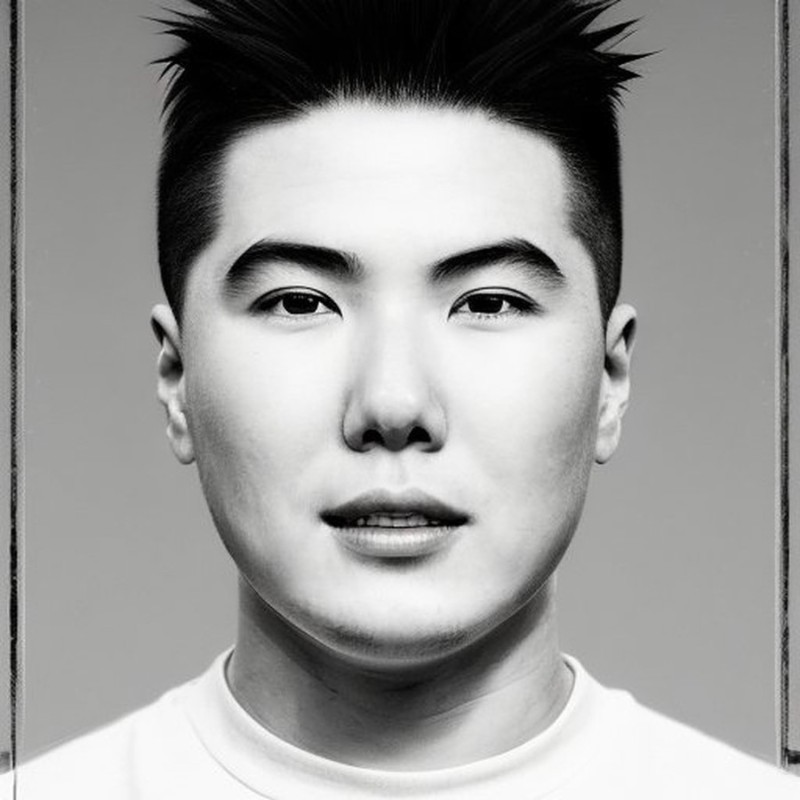
Jay Dang (Jiacheng Dang) is the co-founder and CEO of Kaon (formerly FlowGPT), an AI-native content platform he launched in January 2023 just two days after founding the company - at age 20 during his freshman year at UC Berkeley. He subsequently dropped out to lead FlowGPT full-time, growing the platform to 3+ million monthly active users and 100,000+ AI applications across 110 countries before raising a $10M pre-Series A round in February 2024 led by Goodwater Capital and DCM Ventures. Under his leadership, the company rebranded to Kaon and launched Emochi, an AI storytelling app that reached #12 globally with 12.3M monthly active users by April 2026.

Matt Rappaport
Matt Rappaport is General Partner at Future Frontier Capital, a pre-seed frontier technology VC fund based in Berkeley, California. A former professional musician who studied West African Sabar drumming in Senegal, Rappaport brings an unconventional lens to deep tech investing - 20+ years of IP strategy expertise, a faculty role at UC Berkeley's Fung Institute, and a data-driven methodology using patent landscape analytics to identify emerging sectors before mainstream adoption. He co-founded FFC with longtime partner Mark Garner in late 2023, building a portfolio of 100+ early-stage startups across AI, biotech, robotics, climate, and advanced materials - achieving nearly 11X TVPI on previous investments.

Brendan Madden
Brendan Madden is the founder and CEO of Tom Sawyer Software, a Berkeley-based pioneer in graph visualization and analysis technology that he has led since 1992. With four decades of experience in the graph field - starting at IBM's Thomas J. Watson Research Center - Madden built one of the world's foremost graph visualization platforms, serving industries from finance and government to manufacturing and cybersecurity. Under his leadership, Tom Sawyer Software has become a go-to platform for building scalable graph-powered applications, digital twins, and systems modeling tools, with the company's latest push into AI-powered graph technologies and SysML v2 viewer capabilities.