The Cheapest Way to Beat the Ocean Is to Stop Fighting It
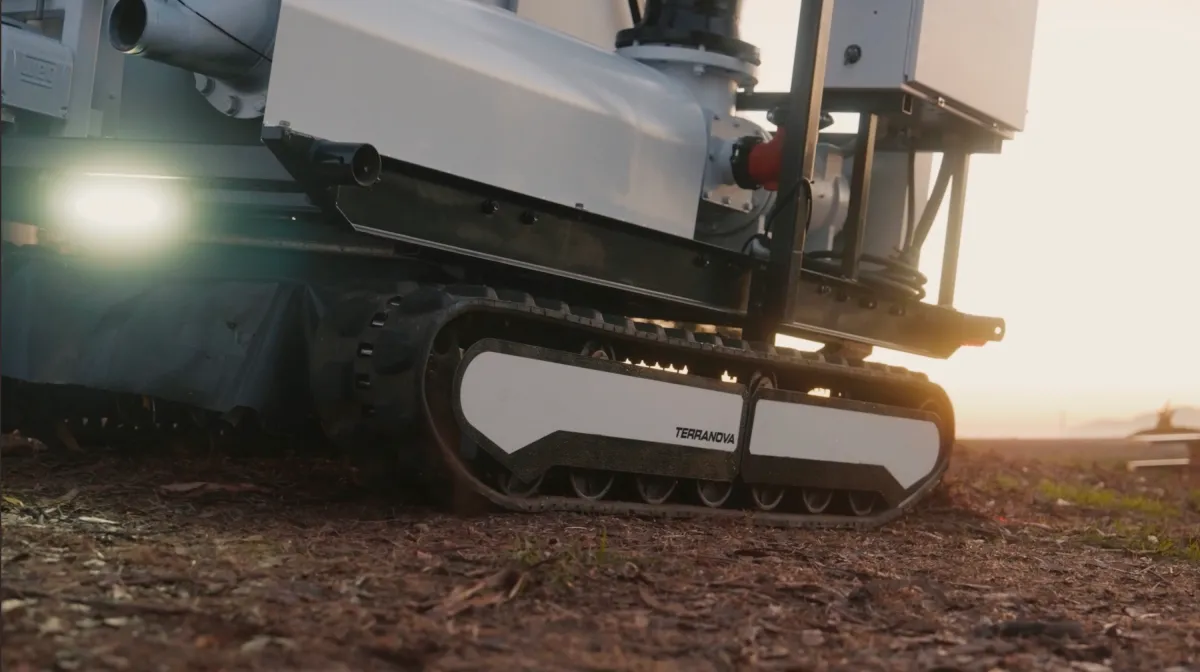
Terranova is pitching a counterintuitive answer to coastal flooding: instead of walling the water out, raise the ground up. Its $92 million quote to lift an entire low-lying district four feet above the floodplain undercuts the $500-900 million price tag of a conventional concrete seawall by roughly an order of magnitude. This story breaks down the math behind that claim, tests it against the only city that ever actually did it at scale — Galveston, Texas, which jacked up 2,146 buildings after the 1900 hurricane for the inflation-adjusted equivalent of about $94 million — and weighs the hidden costs, disruption, and engineering risk that a sticker price alone never shows.
People
On the Terranova team
Latest
LiveCompany Facts
At a glanceUpdates
Recent updatesTimeline
Company historyLaurence Allen began developing the underground wood-slurry injection concept as an undergraduate, incubated with SCET, Berkeley SkyDeck and Bakar Labs support.
Allen earns his UC Berkeley mechanical engineering degree and later leaves a Stanford master's program to build the company full-time.
The rebranded company announced a seed round that closed three times oversubscribed, led by Outlander and Congruent Ventures, at a $25.1M valuation.
Allen makes Forbes 30 Under 30 in Energy & Green Tech as Terranova targets its first San Rafael field pilots, timed to a local dredging project.
Product History
What shipped, and whenTerraforming Robot Fleet
Car-sized autonomous tracked rovers that drill wells and inject a wood-waste slurry 40-60 feet underground to lift land without disturbing the surface. A 'mothership' coordinates three injection rovers, raising roughly one acre by one foot per day.
AI Site Planning System
GIS and genetic-algorithm software (a 'SimCity-like' planning tool) that analyzes soil composition, flood risk and target elevation to design closed-loop injection campaigns.
Carbon Sequestration / Credits
Because the injected slurry is made from waste biomass that stays buried, each project creates a durable carbon sink that can be sold as carbon credits, offsetting project cost.
Land-Raising for Development
Elevating sites before housing, commercial, industrial, infrastructure, wetland-restoration and defense projects, with consolidation in hours rather than years.
FAQs
Frequently askedWhat does Terranova actually do?
It builds car-sized autonomous robots that drill 40-60 feet down and inject a wood-waste slurry underground, physically lifting flood-prone land by up to a foot per acre per day without disturbing the surface.
How is this cheaper than a seawall?
Terranova quoted about $92M to lift 240 acres of San Rafael by four feet, versus $500-900M for conventional seawalls, because waste wood is cheap and abundant and robots sharply cut labor costs.
How does it also sequester carbon?
The injected biomass stays buried and doesn't rot into the atmosphere, so each project creates a durable underground carbon sink that can be sold as carbon credits to offset project cost.
Who founded Terranova and where is it based?
It was founded by UC Berkeley mechanical engineer Laurence Allen (CEO), with Trip Allen as co-founder and chairman, and is based in the Berkeley / San Francisco area of California. It was originally named Levitree.
How much has Terranova raised and what's next?
Terranova raised a $7M seed round in November 2025 at a $25.1M valuation and plans its first San Rafael field pilots in 2026, timed to a local dredging project.