Breaking
TERRANOVA quotes $92M to lift a district four feet — vs. a $500M–$900M seawall GALVESTON 1903: 2,146 buildings raised by hand on jackscrews CHARLESTON: 8-mile seawall estimated near $2 BILLION MIAMI-DADE: one mile of barrier penciled at $4.6 BILLION “A seawall is a promise to lose slowly”
Terranova · Coastal Economics

The Cheapest Way to Beat the Ocean Is to Stop Fighting It

Terranova's $92M quote to raise a city four feet undercuts a conventional seawall by an order of magnitude. The catch isn't in the price — it's in the dirt.

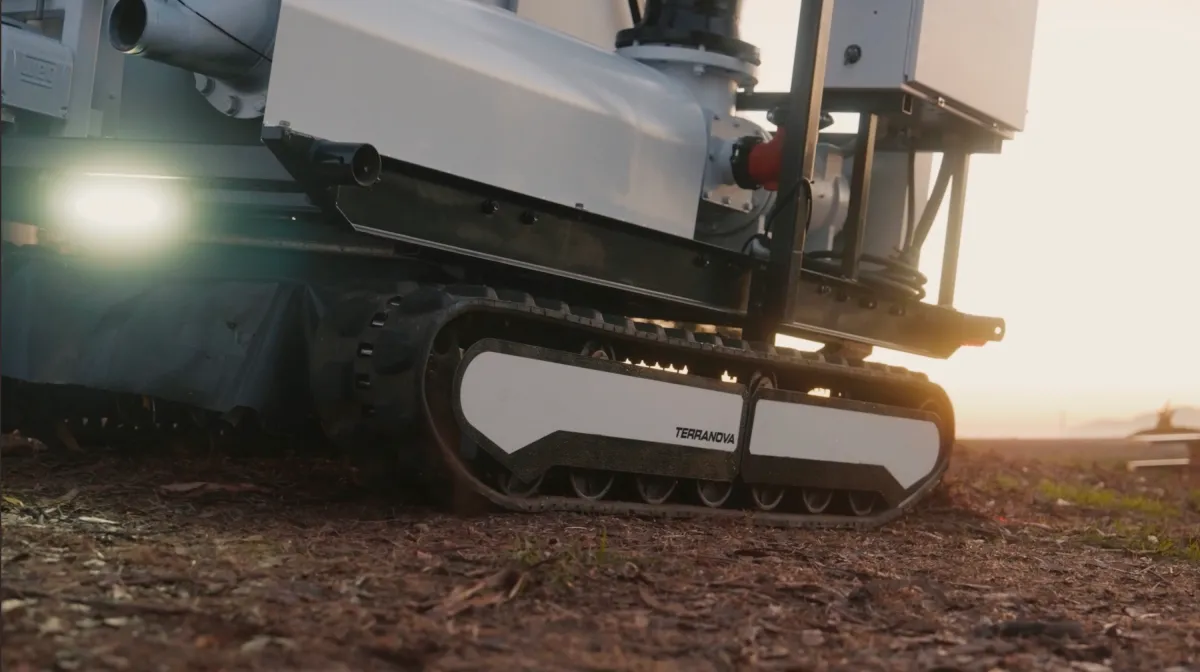
Terranova Rover. Terranova Rover
$92M
Land-lift quote
$500–900M
Seawall bid
4ft
The rise
2,146
Galveston buildings lifted

Ninety-two million dollars to lift a city four feet. Seven hundred million to wall it. The math nobody on the council wants to look at.

01 / The QuoteThe number that makes an engineer read it twice

Terranova's number is the kind that makes a city engineer read it twice. Ninety-two million dollars to lift an entire flood-prone district four feet — not to hold the water back, but to put the streets, the homes, the gas lines and the storm drains permanently above where the water reaches.

The competing bid on the table, a conventional reinforced-concrete seawall, came in between $500 million and $900 million. Same neighborhood. Same threat. Roughly a tenth of the price. The first instinct of every official who sees those two numbers side by side is the same: what's the catch?

It is the right instinct. A tenfold price gap is not a discount; it is a different theory of the problem. The seawall and the land-lift are not two brands of the same product. They are two opposite bets about what you are actually buying when you spend public money on the coast — a barrier between the city and the water, or a city that no longer needs one.

02 / The LogicA wall fights forever. Dirt only has to win once.

A seawall is a promise to lose slowly. It is a structure that must hold back a force that never tires, never sleeps, and is — measurably — getting stronger every decade.

Raising the land flips the equation. You move the dirt once. Gravity, which was the enemy of the wall, becomes your enforcement mechanism. There is no pump to fail, no joint to crack, no gate someone forgot to close before the storm.

That difference compounds. A wall has a design life, and the day it is built is the day it begins aging against a load that only grows. Raised earth has no design life in the same sense — compacted, graded, and planted, it simply becomes the ground. The most expensive thing about a seawall is not the concrete. It is the calendar.

Option A · The Wall
$500–900M
+ perpetual maintenance annuity
  • Holds water back — forever
  • Maintenance bill starts on ribbon-cutting day
  • Pumps, joints, gates: every part can fail
  • Feels like protection for everyone at once
VS
Option B · The Lift
$92M
one-time, then zero
  • Puts the ground above the water
  • Move the dirt once; gravity does the rest
  • Nothing to maintain, nothing to forget
  • Protects what you raised — not the lot next door
A wall fights the ocean forever. Dirt only has to win once.

What a mile of protection costs

Sources: FloodList / Sea Level Rise / ASCE · figures rounded, log-scale impressions

Terranova land-lift (district, 4 ft)~$92M total
Conventional seawall (this district)$500–900M
Charleston seawall (8 miles)~$2B
Miami-Dade barrier (1 mile studied)$4.6B

Modern seawalls run $600–$2,000 per linear foot — roughly $3M to $11M per mile in the easy cases. The hard cases are an order of magnitude worse.

03 / The PrecedentIt has been done — once, by hand, with jackscrews

The reason Terranova can quote this with a straight face is that the experiment already ran, a hundred and twenty years ago, in the worst possible conditions. After the 1900 hurricane killed an estimated 8,000 people in Galveston, the city did something that sounds impossible: it raised itself.

Crews lifted 2,146 buildings — homes, churches, a 3,000-ton cathedral — on hand-cranked jackscrews while families lived inside them, then pumped sand dredged from the Gulf underneath. No hydraulics. No GPS. Not a single excavator.

They worked in quarter-mile squares, walling each section into a temporary dike, lifting every structure and every utility line within it, and flooding the gap with slurry until the new grade set hard. People crossed their own front yards on raised wooden catwalks for months. Gas, water, sewer, streetcar track, telephone poles — all of it came up together. The American Society of Civil Engineers now lists the project as a National Historic Civil Engineering Landmark, which is the profession's way of admitting it still cannot quite believe it worked.

What Galveston bought with that misery was permanence. The grade it raised in 1910 is the grade the city stands on today. No annual inspection saved it. No bond issue renewed it. It is simply higher than it used to be, and it has stayed that way through every storm since.
1900
Hurricane kills ~8,000 — still the deadliest natural disaster in U.S. history.
1903
Grade raise begins. The city is diked into quarter-mile squares and lifted, block by block.
17ft
Some sections rise as much as seventeen feet on hand-turned jackscrews.
1910
Finished. Final bill: $3.5M then — about $94M today.

Terranova's $92M quote isn't a fantasy. It's a discount on a project that already succeeded.

04 / The MoneyWhere the $92 million actually goes

The land-lift cost structure is almost the inverse of a wall. The dominant expense isn't the fill — sand and engineered aggregate are cheap and local. It's the lifting and the relinking: jacking structures, splicing every utility, regrading streets, and managing the choreography of a neighborhood that stays occupied while the ground rises beneath it.

Four feet is, conveniently, the easy regime. Galveston's seventeen-foot heave required dikes, dredges, and years; a four-foot rise is closer to a deep regrade than a resurrection. Slab homes get jacked and re-bedded; streets are milled, built up, and repaved; storm drains and sewer inverts are reset to fall the right way once the new surface is in. The engineering is not exotic — contractors lift houses every day. What's hard is doing it to all of them at once, in sequence, without leaving anyone marooned below grade. That orchestration, not the dirt, is what the $92 million mostly buys.

Terranova's model front-loads disruption and back-loads zero. A seawall front-loads concrete and back-loads a maintenance annuity that runs for as long as the city exists. Over fifty years, the gap widens rather than closes — because the wall's bill keeps coming and the dirt's does not.

This is why the sticker-price comparison flatters the wall. A $700 million seawall is not a $700 million decision; it is a $700 million down payment on a structure that will demand re-pointing, pump replacement, and eventual heightening as the water it holds back keeps climbing. Run the two options as cash flows instead of headlines and the land-lift doesn't just win on day one. It wins by more every year it stands.

05 / The CatchThe line nobody prints on the quote

Lifting a city is not free of pain — it's just front-loaded and visible instead of deferred and hidden. Residents live on a construction site for months. A four-foot rise can strand a neighbor who didn't sign up, turning their lot into the bottom of a new bowl. Historic structures and heavy slab foundations resist the jack.

And a land-lift protects only the ground you raised. It does nothing for the property line next door — which is exactly why walls, for all their cost, are easier to fund. A wall looks like it protects everyone at once.

That last point is political, not technical, and it is the one that actually decides these projects. A seawall is a single photogenic object a mayor can stand in front of. A land-lift is ten thousand small negotiations with ten thousand homeowners about whose driveway gets raised, whose doesn't, and who pays for the regrade in between. The cheaper option is also the harder one to sell — not because the engineering fails, but because the consent does.

The honest comparison isn't $92M versus $700M. It's a one-time fix versus a perpetual one.

06 / The CoastWhy this argument is coming for everyone

Sea level isn't negotiating. Every city on a low coast is being quietly handed the same two bids Terranova just laid on the table, whether or not anyone has written them down yet.

The seawall is the answer that feels like control — tall, concrete, visible, fundable. The land-lift is the answer that feels like surrender until you read the invoice. Galveston proved a city can pick itself up off the floodplain and stand higher than the storm. The only thing that's changed in 120 years is that now we can do it with hydraulics instead of hand-cranks — and that the water is rising faster than the engineers of 1903 ever had to plan for.

There is a deeper reason the choice keeps landing on the wall, and it has nothing to do with cost. A wall is an act of defiance you can point to. Raising the ground is an admission — that the water is going to come, that the old elevation was always temporary, that the only winning move is to get out of the way and up. Defiance is easier to vote for than humility. But the ocean does not read budgets, and it does not respect symbolism. It respects elevation.

Terranova's whole proposition rests on that single, unglamorous fact. You cannot out-build the sea forever, but you can out-climb it once. Every coastal city will eventually be handed the same two envelopes — the expensive promise to keep fighting, and the cheaper, harder offer to simply stand higher. The price tags are already on the table. The only question left is which kind of courage a city is willing to pay for.

By the numbersThe receipts

The Quote$92M to lift an entire district four feet above the floodplain.
The Alternative$500M–$900M for a seawall protecting the same area — 6 to 10× more.
Going RateModern seawalls cost $600–$2,000 per linear foot, or $3M–$11M per mile.
The Big BillsCharleston: ~$2B for 8 miles. Miami-Dade: $4.6B for a single studied mile.
The ProofGalveston raised 2,146 buildings between 1903 and 1910 — some by 17 feet.
The MethodHand-cranked jackscrews; Gulf sand pumped underneath; families lived inside.
In Today's MoneyGalveston's grade raise cost $3.5M in 1910 — about $94M now.
The StakesThe 1900 hurricane killed ~8,000 — the deadliest natural disaster in U.S. history.

Pass the receipts along

SHARE THE LAND-LIFT FILES

Sources & Further Reading