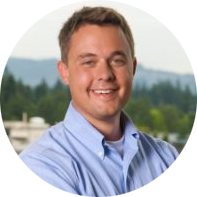
Silicon Valley celebrates the first exit. It rarely revisits what happens next - when someone who has already made it walks back into the arena, not because they have to, but because there is a problem still worth solving.
Andy Ruff's second act is deliberately less glamorous than his first. Car dealerships are not the sexiest market in tech. There are no consumer virality curves, no social mechanics, no teenage users to grow. There are service advisors, repair orders, and phone queues that stretch past closing time. The customer journey begins when a car breaks down and ends when someone calls the dealership back at a reasonable hour.
The choice reveals something about how Ruff thinks. He is not chasing narrative. He is finding problems where real money is lost, where the infrastructure gap is genuine, and where technology can close it. At Location Labs, that gap was mobile family safety at the beginning of the smartphone era. At Numa, it is the communication layer that connects a $1.2 trillion industry to its own customers.
The team factor matters, too. Roumeliotis, Grossman, and Ruff have now built two companies together. They know how each other makes decisions under pressure, who takes which meeting, who holds the product line and who holds the room. That institutional knowledge - the kind that cannot be hired or board-approved into existence - compounds in ways that show up in a 2,248% growth rate.
At Numa, Ruff's title is Chief Product & Tech. In practice, that means he is the person who decides what gets built and what does not. He is responsible for the voice AI agents that answer calls on behalf of dealerships, the sentiment models that detect a frustrated customer before the service advisor does, and the integrations that tie Numa to the legacy DMS platforms that dealerships built their operations around decades ago. None of this is easy. The DMS integration alone is a graveyard of failed startups. Ruff is operating in that space successfully, at scale, with 1,200 active dealerships.
The Inc. 5000 ranking in 2024 was not a vanity milestone. It represented three years of compounding revenue in an industry that does not adopt new technology quickly. Automotive dealers are notoriously skeptical of outside tech vendors. The fact that 1,200 of them are running Numa - and that the platform has handled 150 million customer interactions - means the product works in the room where it has to work: the service lane on a Tuesday morning when three advisors are out sick and 40 cars are waiting.
76% of Americans distrust car dealerships. That statistic is Numa's business case. Every percentage point of trust rebuilt - every call answered, appointment kept, repair order status communicated proactively - is revenue retained and a customer who comes back. Ruff is not just building software. He is building the relationship layer between dealerships and the customers they keep losing to the competition down the street.