He missed one tuition deadline as an undergrad and got locked out of registration. He has spent the years since making sure the next student doesn't.
Walk into most college business offices and the technology feels like a time capsule: paper-era logic, a portal that fights you, a balance-due email written in the warmest tones of a parking ticket. Alfredo Brillembourg looked at that and saw software waiting to be written. Meadow, the company he cofounded in 2021 and runs as CEO, now sits inside the billing experience of more than 170 colleges and universities - quietly, the way good plumbing works.
The wager is specific. Brillembourg argues that what keeps students from finishing a degree isn't only the price. It's the fog around the price. Hidden fees, mystery deadlines, a number on a brochure that has almost nothing to do with what a family will actually pay. Meadow's job, as he puts it, is to hide the complexity and hand the student back some control. Three products carry the load: Price, an advanced net price calculator; Pay, a mobile-first billing and payments layer; and Pre, which helps schools recover unpaid balances without the punitive playbook.
In April 2025 the company raised a $14M Series A led by Matrix Partners, with Susa Ventures, Giant Ventures, Treble Capital, and GoGlobal Ventures along for the round - pushing total funding past $20M. The headline numbers are real, but the more telling stat is smaller and stranger: Meadow's calculator has returned nearly a million estimates, and the true cost of college came back, on average, more than 40% below the sticker. The fog, it turns out, was hiding good news as often as bad.
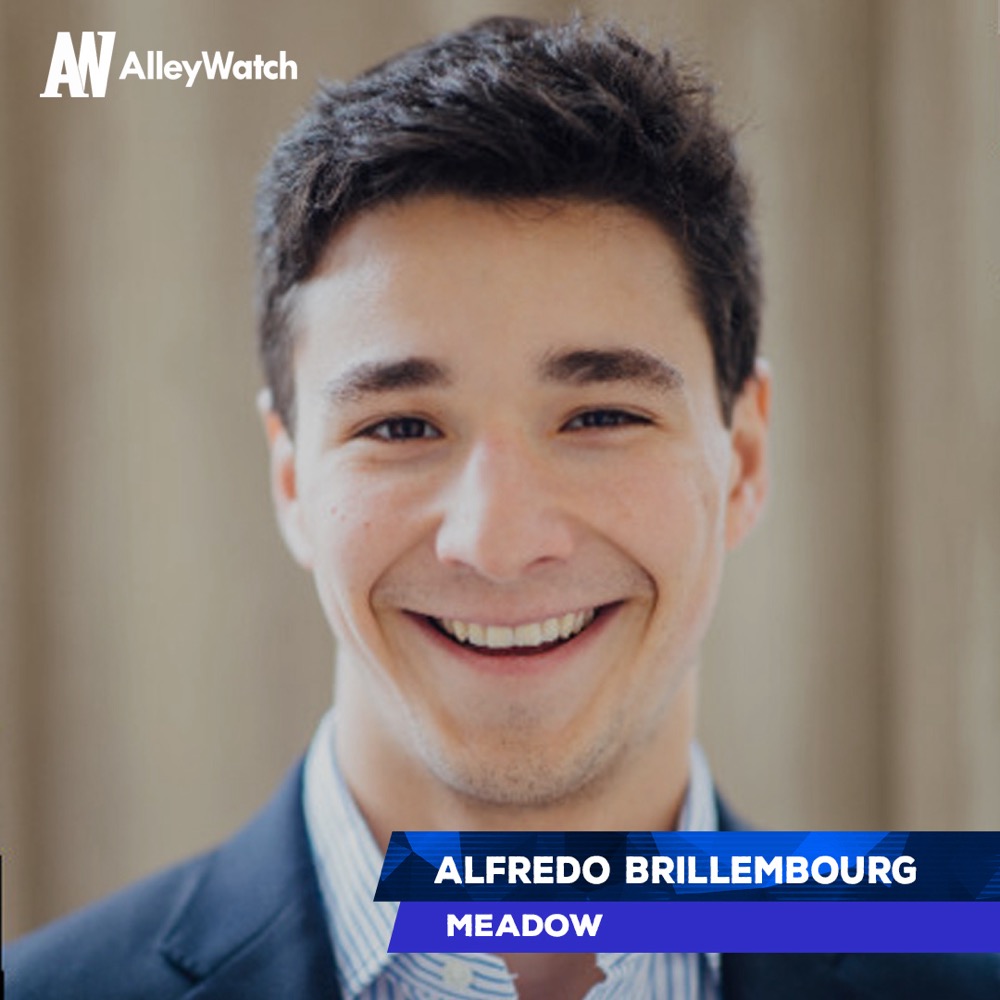
Meadow hides the complexity of student billing and makes it as easy as it should be to give students greater control over their financial destiny.
The founding story isn't a whiteboard. It's a registration screen. As a student, Brillembourg missed a payment deadline and found himself shut out of course registration until the balance was resolved. He calls it an incredibly stressful moment - the kind that doesn't stay personal once you start asking how many other people it happens to.
The answer was: a lot. By his telling, roughly half of students pay tuition late at least once, and around 60% have considered dropping out under financial pressure. Those aren't edge cases. They're the design working as built. Meadow is the argument that it could be built differently.
I once missed a deadline and was locked out of registration until I could resolve my balance.
Three products that trace the full arc of a student's money, from the first guess at what college will cost to the last unpaid balance. Named with the kind of restraint that suggests someone who would rather the software disappear than announce itself.
An advanced net price calculator that turns a scary sticker into a personal, after-aid number. It has delivered close to a million estimates and keeps revealing that college costs far less than the brochure threatened.
Mobile-first billing and payments: clear digital bills, personalized nudges, flexible plans. More on-time payments for the student, steadier cash flow for the institution, less dread in the inbox.
Helps schools recover unpaid balances and keep students enrolled - without punitive measures, extra IT lift, or new burden on already stretched financial-aid teams.
Before the calculators and the cap table, there was a kitchen. The early line on Brillembourg's record reads waiter and kitchen assistant at the Helvetia Hotel - a long way from the rooms he'd later sit in at Goldman Sachs and New Enterprise Associates. He ran Columbia's student investment group, cut his teeth analyzing venture deals at Bowery Capital, then joined the early business-development push at Coursedog, the higher-ed software startup backed by Y Combinator, Coatue, and First Round.
Coursedog was the tell. It put him inside the strange, underbuilt world of campus software and showed him how much of higher education still ran on tools nobody loved. He did a turn on strategy and operations at Block Renovation, passed through NEA as a venture fellow, and then stopped studying the problem and started owning it. Meadow followed in 2021.
Meadow's cofounder is Amy Jenkins, who carries the sales, success, marketing, and operations side. She brings a Dartmouth AB and a Harvard MBA, and ran Schools and Businesses at Outschool during its fast-growth years before that. The rest of the team is a deliberate mix - parents, recent grads, and second-time founders who've passed through Amazon, Amex, Klarna, and Coursedog. The common thread isn't a résumé. It's people who have personal scar tissue from the system they're now rebuilding.
It's worth a small disambiguation: there is a celebrated Venezuelan-American architect who shares this exact name. Different person, different field. This Alfredo Brillembourg builds in software, not concrete - though both, in their way, are in the business of making structures people can actually use.
There are founders who chase the loudest market in the room. Brillembourg picked one almost engineered to be ignored: campus billing. It has no glamour, no demo-day applause line, and a buyer - the university business office - that has heard every pitch and trusts almost none of them. Which is exactly why it was open. The money was already moving; roughly $500 billion flows through US higher-education payments every year. It was simply moving through systems that nobody had bothered to modernize, because the pain landed on students who had no say in which software their school bought.
That gap is the whole thesis. The student feels the friction. The institution picks the vendor. Meadow's bet is that you can serve both at once - give the student a bill that finally reads like a human wrote it, and give the school higher on-time payments and steadier cash flow as the reward. When those two interests stop fighting, the late-payment spiral that pushes people out of school starts to unwind. Brillembourg's phrasing for the mission is deliberately unsentimental: empower students financially and strengthen economic mobility through higher education. Not slogans. Outcomes you can count in enrollment, retention, and dollars collected on time.
It helps that he has stood on both sides of the table. He has been the analyst evaluating which companies deserve capital, and the operator inside an early-stage edtech team learning how slowly campuses move and how much that slowness costs the people stuck inside it. Meadow is what happens when someone who knows the finance and knows the sector decides the interesting work is the unglamorous middle - the bill, the deadline, the portal - rather than the parts that photograph well.
The burden is real, and it's systemic.
The customer list reads like a tour of American higher education at every scale - Gonzaga University, UC San Diego, the University of Wisconsin-Madison, Penn State, the University of Texas at Austin, alongside community colleges that run on a fraction of the budget. Meadow works with institutions large and small precisely because the problem doesn't discriminate by endowment. A confusing bill is confusing whether it comes from a flagship research university or a two-year college down the road.
What's notable is how little noise accompanies the growth. The company literally describes itself as the team quietly fixing the broken business of college tuition, and Brillembourg seems comfortable with that register. No manifesto, no founder mythology - just product shipped into one financial-aid office after another, the kind of expansion that compounds in the background until one day it's 170 campuses and most students have used it without ever learning the name. For a category as fraught as paying for college, the absence of theater is itself a kind of statement.
Where it goes next is the obvious question for a company with fresh Series A capital and a market measured in hundreds of billions. The pattern so far suggests more depth than spectacle: more institutions, more of the money journey covered end to end, the same insistence that the software should feel like relief rather than another hurdle. The ambition is large. The volume is low. That contrast is the most reliable thing to know about how Alfredo Brillembourg builds.
The team quietly fixing the broken business of college tuition.
These aren't isolated experiences, they're symptoms of a system that isn't working.