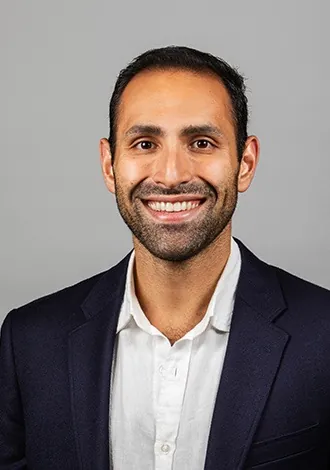
The SetupWhat he is actually building
Most CEOs sell software. Sabeti sells the smell of the office at 12:43 p.m. - the moment a roasted-vegetable bowl, a chili-crisp tofu, three biryanis and a hand-pressed flatbread land on the same long table and people start standing closer than they have all morning.
Zerocater is not a catering company that pretended to be tech. It is closer to the inverse. The company runs two service models - Cloud Cafe (pre-ordered boxed meals chosen by individual employees) and Managed Cafe (full buffet operations) - plus hybrid programs and event catering, all stitched together by a software backbone called FoodIQ that personalizes menus from each employee's order history and tracks supplier inventory in something approaching real time.
The network behind it is the trick. Four hundred and fifty plus food providers. Catering operators, commercial kitchens, ghost kitchens. Ten different cuisines on a typical week, seventy-plus dishes rotating through. The customer is HR's secret weapon, IT's quiet headache, and the office manager's reason to come in. Sabeti's job is to make all three feel like the same person ordered it.
The Long ArcFrom bean-counter to lunch baron
The detail that explains Sabeti the operator is the one he rarely volunteers: he started in public accounting. Grant Thornton, CFO services, business advisory. The kind of first job that teaches you, very early, that businesses live and die by the part of the spreadsheet nobody wants to read. He carried that lens into Salesforce during its most explosive decade - a company that grew from five thousand to thirty thousand employees in his time there. He worked in marketing, in product, in corporate finance. He ended up running marketing for Canada and Latin America. He saw, from the inside, what happens when a company learns to operationalize itself faster than it can hire.
That is the spine of how he runs Zerocater. The company was founded in 2009 by his brother Arram. Ali joined and stayed and eventually took the CEO seat. The fingerprints of his Salesforce years are visible everywhere - the obsession with performance culture, the comfort with B2B sales motions, the willingness to treat a catering order as a customer-success problem rather than a logistics one. The fingerprints of Grant Thornton are quieter and probably more important. They show up in the part where Zerocater survives.
March 2020 ended the corporate-catering industry the way a power outage ends a dinner party. Offices emptied. Buffets became biohazards. Zerocater watched ninety-eight cents of every dollar walk out the door inside a fortnight. "We still had a little business," Sabeti recalled later, "but it was just biotech companies, those working on COVID testing and essential workers." A line delivered with the calm of a man who has clearly worked the numbers and is no longer rattled by them.
What happens next is the part of the story that interests him most, and the part most people skip. Zerocater did not freeze. It re-architected. The pure marketplace became a productized service. Cloud Cafe arrived - boxed, individually-ordered, contact-light - precisely calibrated to the hybrid office that was about to become permanent. Managed Cafe sharpened up for the companies trying to recreate the pre-pandemic ritual. FoodIQ, the data layer, became the moat. By early 2023 revenue had tripled in twelve months. Cleveland Avenue led a $15 million Series C, Remus Capital came in, and the press release read, with characteristic Sabeti understatement, "We're excited to bring our solutions to even more companies, solving the problems traditional cafeteria and catering providers can't."
The ThesisWhy the cafeteria is a hiring weapon
Read it twice. The phrasing is unusually specific. Not "what will employees tolerate." Not "what will the office manager approve." What will resonate. What will get them excited. The implied baseline is the kitchen at home, and the kitchen at home is where every white-collar worker now has the option to be by default. Sabeti has decided that office food, to justify itself, must beat your own cooking. That is a brutal bar. It is also, if you take it seriously, a real strategy for retention.
The ReceiptsCareer timeline
The NotebookThings he has actually said
"We are building better workplaces through food."
Y Combinator Q&A. Shortest possible thesis statement.
"There is no better place to create and grow than a startup."
Advice to early-career operators: take the equity.
"We still had a little business, but it was just biotech."
How he describes losing 98% of revenue. Calmly.
"What will get them excited to come back into the office?"
The question every Zerocater menu is built to answer.
"Our goal is to be the #1 food company serving the workforce."
No qualifiers, no hedging. Eleven words.
"What determines your success is your ability to overcome challenges."
The line he uses with founders who ask him for advice.
The MarginsFive things worth knowing
Summa cum laude, UC Irvine
Accounting and economics. California native, never really left.
Two-brother company
Founded by Arram Sabeti in 2009. Ali built the version that scaled.
FoodIQ runs the menus
An internal AI/analytics platform that personalizes weekly offerings from employee order history.
Cleveland Avenue led the C
The investment firm started by former McDonald's CEO Don Thompson. Strategic capital, not just check.
Napa, on weekends
Tasting menus and vineyards with his family. The R&D never really stops.
Ten cities, growing
San Francisco, New York, Austin, Boston, LA, Chicago, DC, Seattle, Denver, Dallas, Atlanta, Philadelphia.