Microsoft is a global technology company founded in 1975 that builds software, cloud services, devices and gaming platforms used by billions of people and organizations. Best known for Windows and the Office/Microsoft 365 productivity suite, it now anchors its future on the Azure cloud and Copilot AI, positioning itself as core infrastructure for enterprise computing and the generative-AI era.

This documentary-style video traces how artificial intelligence went from a cheap labor-replacing miracle to a runaway cost center. After ChatGPT's 2022 launch, companies raced to adopt AI and cut tens of thousands of jobs across tech and fast food. But forced internal adoption, token-based performance metrics, and a status-driven culture of 'token maxing' inflated demand far beyond real need. Combined with data-center component shortages and canceled construction projects, token prices more than doubled between late 2025 and mid-2026. Giants like Microsoft, Meta, Uber and Nvidia are now confronting AI bills that rival or exceed the human labor they replaced, and with Anthropic and OpenAI expected to go public and raise prices, enterprises are being forced into an unprecedented choice: tokens or humans.
InfoBeans is a publicly listed (NSE/BSE) digital transformation and product engineering company founded in Indore, India in 2000. With roughly 1,600 employees across India, the USA, Germany and the UAE, it designs, builds and manages enterprise-grade software and increasingly focuses on 'last-mile' AI delivery. It is a Salesforce Summit Partner and a ServiceNow partner recognized as APAC Transformation Partner of the Year, and reports that a large and growing share of its revenue now comes from AI-augmented software.

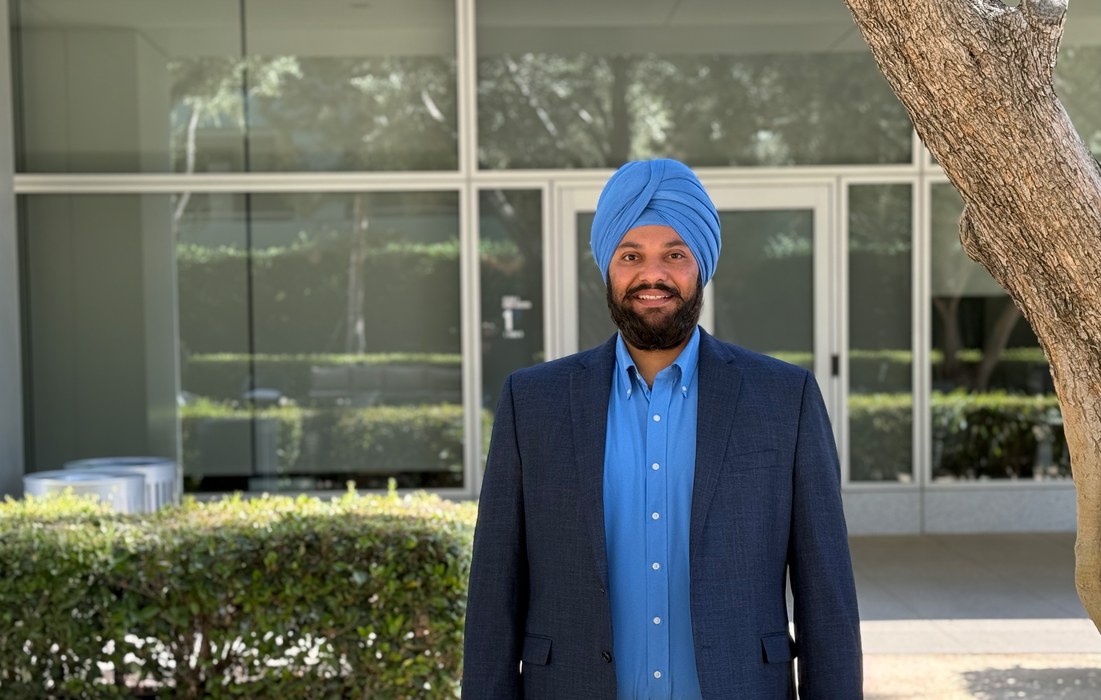
Anuj Jalan is the Vice President of Sales Marketing at Microsoft, based in Chandigarh, India. He has built his career across major technology and services firms, moving from process development at Genpact and customer support at Dell to senior sales and marketing leadership at one of the world's largest technology companies. With an MBA from Symbiosis Institute of Management Studies and a background spanning recruitment, operations, and client engagement, Jalan represents the archetype of a career professional who climbed the ranks through diverse industry exposure in India's booming tech sector.

Emily Brittain is a Senior Communications Manager at Microsoft, working within the Office of the Americas Markets & Industries President. Based in Nashville, Tennessee, she crafts the stories that shape how Microsoft's largest regional business - spanning Canada, the United States, and Latin America - communicates its vision internally and externally. A Northwestern University-trained journalist with over 11 years at Microsoft, she brought a multimedia storyteller's instincts to one of the world's most consequential technology companies, producing town halls, executive narratives, and brand messaging at scale.
Roni Fuchs is the co-founder and CEO of Legit Security, an application security posture management (ASPM) company protecting software supply chains for customers including Google, NYSE, Kraft Heinz and Palo Alto Networks. A Unit 8200 veteran who grew up in Jaffa, he founded Legit in 2020 with two IDF comrades after stints at Microsoft (via Aorato) and Checkmarx (via his prior startup Lumobit). Legit has raised roughly $80.5M through Series B.
Sukhmeet Toor is an engineering leader in San Francisco who works in the leadership office at ID.me, the digital-identity company that verifies who you are for the IRS, state unemployment agencies, and retailers. Before identity, he was in the business of matchmaking: he co-founded Dil Mil, a dating app for South Asians that produced roughly a wedding a day, and then, spotting the same family-and-community values in another group, he and his co-founder built Shalom, a Jewish dating app. A Microsoft Outlook-for-Mac engineering manager turned serial builder, Toor has since worked at Meta and Pencil Spaces and is involved with Actual AI, which builds tools for managers whose teams now mix humans and AI agents.
Yoni Shtein is the CEO and co-founder of Laguna Health, a New York and Tel Aviv company building conversational AI copilots for payer care teams. Born in Chisinau and raised across continents, he moved from an elite Israeli Air Force unit to writing code at Microsoft, then to running more than half a billion dollars of investments before turning entrepreneur. Laguna landed on TIME's Best Inventions of 2024. Shtein pairs an investor's skepticism with a runner's stamina and an immigrant's comfort with the unfamiliar.

Gavin King is VP of Portfolio Marketing at ServiceNow, where he connects the platform's sprawling product launches, AI vision, and strategic narrative into one coherent story. After 25 years at Microsoft - including a stint as Chief of Staff to CEO Satya Nadella - he brings a rare combination of brand-scaling experience, executive proximity, and B2B marketing depth to one of enterprise tech's most ambitious growth stories.
Bruno Lecoq is the French-born co-founder, CEO and Chief Information Security Officer of BEMO, a Redmond, Washington cybersecurity and compliance company built for small and mid-sized businesses living inside the Microsoft cloud. After roughly two decades at Microsoft - working across MS-DOS, Windows, Exchange, Office and the hardware supply chain before becoming a director of business processes - he left to fix a gap he kept seeing: real, affordable security for companies too small for an enterprise security team. Since 2010 BEMO has grown into a Microsoft Direct CSP and US Partner of the Year, a back-to-back Inc 5000 honoree, and the maker of a SaaS platform that automates Microsoft 365 security and compliance for over a thousand businesses.
David Feinleib is a serial entrepreneur, former venture capitalist, and author who is now Founder and CEO of It'sRapid.ai, a Palo Alto AI platform that turns product data and existing assets into finished commerce content for major brands. He has founded multiple companies acquired by EMC, HP, and Keynote Systems, sold Content Analytics to Syndigo in 2019, invested as a General Partner at Mohr Davidow Ventures, and written four books including 'Why Startups Fail' and 'Big Data Bootcamp.'
Enlai Chu is the founder and CEO of Productive.ai (Phoneic, Inc.), an AI call assistant that turns ordinary mobile phone calls into transcribed, summarized, CRM-logged records of work. A telecom builder with 25-plus years across messaging, voice and video, he co-founded the early group-texting startup 3jam (acquired by Skype in 2011), then held product roles at Skype and Microsoft before returning to founder life. His through-line: phone calls are where business actually happens, yet the moment you hang up the value vanishes.
Manny Medina is the co-founder and CEO of Paid, a London-based platform that lets companies bill for AI agents based on the value they deliver instead of per-seat fees. Before Paid he built Outreach, the sales engagement company he grew from a near-dead recruiting marketplace into a business worth $4.4 billion with roughly $250 million in recurring revenue. An Ecuadorian computer engineer who was an early employee on what became AWS and spent six years at Microsoft, Medina is now betting that the seat-based SaaS pricing model is obsolete and that the agent economy needs a way to get paid.
Matthew Brown is the founder and CEO of ThoughtForge AI, a Berkeley robotics company building a cloud-based control platform that gives existing industrial robots real-time adaptivity and human-level dexterity using Active Inference, a biologically-inspired approach drawn from neuroscience. Over more than two decades in AI, he wrote combat logic for the Aegis system at Lockheed Martin, built the enemy intelligence behind game franchises like Halo, Bioshock, and Splinter Cell, and was the first engineer at Bonsai AI, where he helped ship one of the world's first production deep reinforcement learning platforms before Microsoft acquired it in 2018. He now teaches and sits on the board of the Active Institute while ThoughtForge works with manufacturers like bp, Siemens, and members of the ARM Institute to bring common sense to the factory floor.
Sung Rhee is the founder and CEO of Optimal, a Kirkland, Washington company behind data-driven college ranking and review sites like OnlineU and GradReports. A former Microsoft general manager who helped build Outlook Express and MSN Mobile, he started the business in 2004 as SR Education Group, then pivoted it away from for-profit-college lead generation toward putting students first - even when that cost the company accounts. He calls himself a reluctant entrepreneur, plays point guard, and collects Gundam figurines.
Tript Singh Lamba is the founder and CEO of ProductNow, an AI-native operating system for product teams that he built largely as a solo developer (with one intern) before raising a $6M seed round led by Sierra Ventures in July 2025. Over two decades he built flagship platforms at Microsoft, Google, and Expedia - helping launch Bing and the early core of Microsoft Messenger and Azure, co-founding Google's Ads AI personalization team, leading YouTube Ads through hypergrowth, and serving as SVP of Consumer Product at Expedia. His thesis: with AI accelerating engineering, the real bottleneck is no longer code but turning strategy into execution.
Victor Cho is a three-time tech CEO and the founder and CEO of Emovid, an AI-powered asynchronous video messaging platform built to keep business communication human as AI floods the inbox. Before Emovid he ran Evite for seven years, turned around Kodak Gallery, scaled Intuit's web channel from $300M to $1.3B+, and spent seven years at Microsoft launching early internet commerce. A vocal champion of the 'fourth stakeholder' - society - he pairs operator pragmatism with a philosophy that puts trust, empathy, and human presence at the center of technology.

Ross Kennedy is the Global Vice President of AI Startups & Emerging Growth at Microsoft, based in New York. With two decades of experience scaling technology organizations from startup to hyperscale, he leads Microsoft's efforts to help AI startups innovate, grow, and become market makers. Before Microsoft, he was a key force behind Google Cloud's expansion from $5.8B to over $30B in revenue, leading the global Strategic Deal Pursuit division for four years. Earlier, he scaled Liferay's international operations from 200 to 900 employees across 30+ countries. His guiding philosophy: culture beats strategy.
Chris Parsonson is the co-founder and CEO of Solve Intelligence, an AI platform for patent professionals that he started in 2023 after finishing a machine learning PhD at UCL. He built the company alongside his brother Angus and fellow UCL researcher Sanj Ahilan, ran it profitably to $10M+ in revenue with a single salesperson, and raised over $55M from Thomson Reuters, Microsoft, Y Combinator and 20VC. His work turns deep optimisation research into software that drafts and analyses patents for 400+ IP teams across six continents.
David Siegel is the co-founder and CEO of Glide, the no-code platform that turns spreadsheets into working apps and, more recently, the first AI app generator. A designer and engineer who spent his early career building developer tools at Canonical, Xamarin, and Microsoft, he coined the term 'papercut' for small overlooked bugs in Ubuntu and created quicktype, one of the most widely used code generators before GitHub Copilot. He founded Glide in 2018 with three Xamarin colleagues after a stint at Microsoft, went through Y Combinator's Winter 2019 batch, and has raised roughly $23.7M to make building software as easy as editing a spreadsheet.

Kari Perez is Vice President of Gaming Communications at Microsoft, where she leads global PR and communications strategy for Xbox. She joined the Xbox team in March 2021 after a distinguished career spanning gaming, streaming, and entertainment — including VP-level roles at Netflix Latin America and corporate affairs at HBO Latin America. Multilingual and internationally experienced, Perez has become one of the most prominent communications voices in the gaming industry, issuing statements on major Xbox announcements ranging from Game Pass price changes to leadership speculation.
Max Nova is the co-founder of NCX (Natural Capital Exchange), a San Francisco climate-tech company that counts every tree in America with satellites and machine learning, then pays forest owners to keep them standing. A Louisville-born, Yale-trained computer scientist who once planned to be a radiologist, he started the company as SilviaTerra in 2010 with forester Zack Parisa, built the first high-resolution forest inventory of the entire United States with Microsoft, and turned that data into a marketplace for carbon, wildlife habitat, and fire risk. NCX has raised about $74 million, including a $50M Series B backed by Salesforce's Marc Benioff.

Dawn Klinghoffer is Vice President of HR Business Insights at Microsoft, where she leads people analytics for one of the world's largest technology companies. A mathematics major from Bucknell University who started as an actuary in Hartford, Connecticut, she joined Microsoft's fledgling people analytics team in 2003 and spent over 25 years turning HR data into strategic decisions. Her most recognized contribution: replacing the industry's standard 'employee engagement' metric with 'employee thriving' - a framework adopted by Microsoft in 2022 that has influenced HR practices globally and was published in Harvard Business Review.

Avital Cohen is Vice President of Marketing at Microsoft, based in Beverly Hills, California. With a legal education from Cardozo School of Law and prior experience as a Marketing Manager at Facebook, she has built a career at the intersection of technology and strategic brand communication. At Microsoft - a company generating over $281 billion in annual revenue and employing 228,000 people globally - she drives marketing strategy across one of the world's most influential technology portfolios, spanning cloud computing, AI, productivity software, and enterprise solutions.

Allison Romano is Vice President of Xbox Digital Marketing and Media at Microsoft, based in New York. With over 15 years leading high-impact marketing and product teams across Microsoft, Google, American Express, and CLEAR, she has shaped how some of the world's biggest brands reach digital audiences. At Xbox, she oversees digital marketing and media strategy for one of the most recognized gaming brands on the planet, blending B2B and B2C expertise to drive growth at scale.
Amanda Richman is VP of Global Media Sales at Microsoft Advertising, leading a 700+ person omnichannel sales team from New York. A 30-year veteran of media and advertising, she has run agencies including Wavemaker US and Mindshare North America, winning Adweek's U.S. Media Agency of the Year at Wavemaker in 2020. She joined Microsoft in March 2024 to help brands navigate the convergence of generative AI, search, and connected TV advertising.
Andrew Conway is Vice President of Security Marketing at Microsoft, where he has spent over 20 years driving the go-to-market strategy for one of the world's largest security businesses. A prolific author on the Microsoft Security Blog and a regular media voice on cybersecurity workforce challenges and AI-powered defense, Conway has shepherded Microsoft's security marketing from the Enterprise Mobility + Security era through to today's AI-native Security Copilot and Defender Experts Suite. He is the senior-most marketing executive dedicated to Microsoft's $20B+ security business and an outspoken advocate for using AI as a force multiplier for overwhelmed security defenders.