A grocery basket is an unforgiving place to put a grand idea. The customer can count the savings. The seller must count the cost of getting it to the door. Vineet Rao built DealShare around that narrow space between the two, starting with something considerably less glamorous than a billion-dollar valuation: everyday goods, local suppliers and a message passed between friends.
In September 2018, Rao and his co-founders began in Jaipur. Their intended shoppers were middle- and lower-income households, particularly outside the metros. These were people for whom buying online could be unfamiliar, while a good price on a familiar product required very little explanation. The company’s invitation was practical. Here is something you use. Here is a deal. Tell someone you know.
The resulting business would become a unicorn in January 2022. Rao would step down as chief executive in July 2023, and his departure from the company would be reported that November. Both chapters belong in his story. The grocery basket supplied the opening question; expansion made the answer much more complicated.
From Seattle’s databases to Jaipur’s shopping lists
Rao studied computer science and engineering at IIT Bombay, completing his B.Tech in 2000. His public professional profile dates his undergraduate years to 1996-2000. Long before DealShare, he was working on the software beneath other people’s businesses. He spent more than a decade at Microsoft in Seattle, building enterprise database and cloud products.
There is a small, telling piece of that career in his publication history. He is credited among the authors of “Using CLR Integration in SQL Server 2005,” a technical article published through MSDN. It is a useful counterweight to the later funding headlines. The founder selling household essentials had already worked in a world of databases, integration and systems that other people depended on.
His earlier ventures and roles included founding ShopWest and serving as managing director for India at SilkCloud, which his public startup profile describes as acquired by Unity. DealShare therefore came after both a large software company and earlier entrepreneurial experience. The transition was substantial: from building tools for enterprises to persuading households to try a new way of buying groceries.
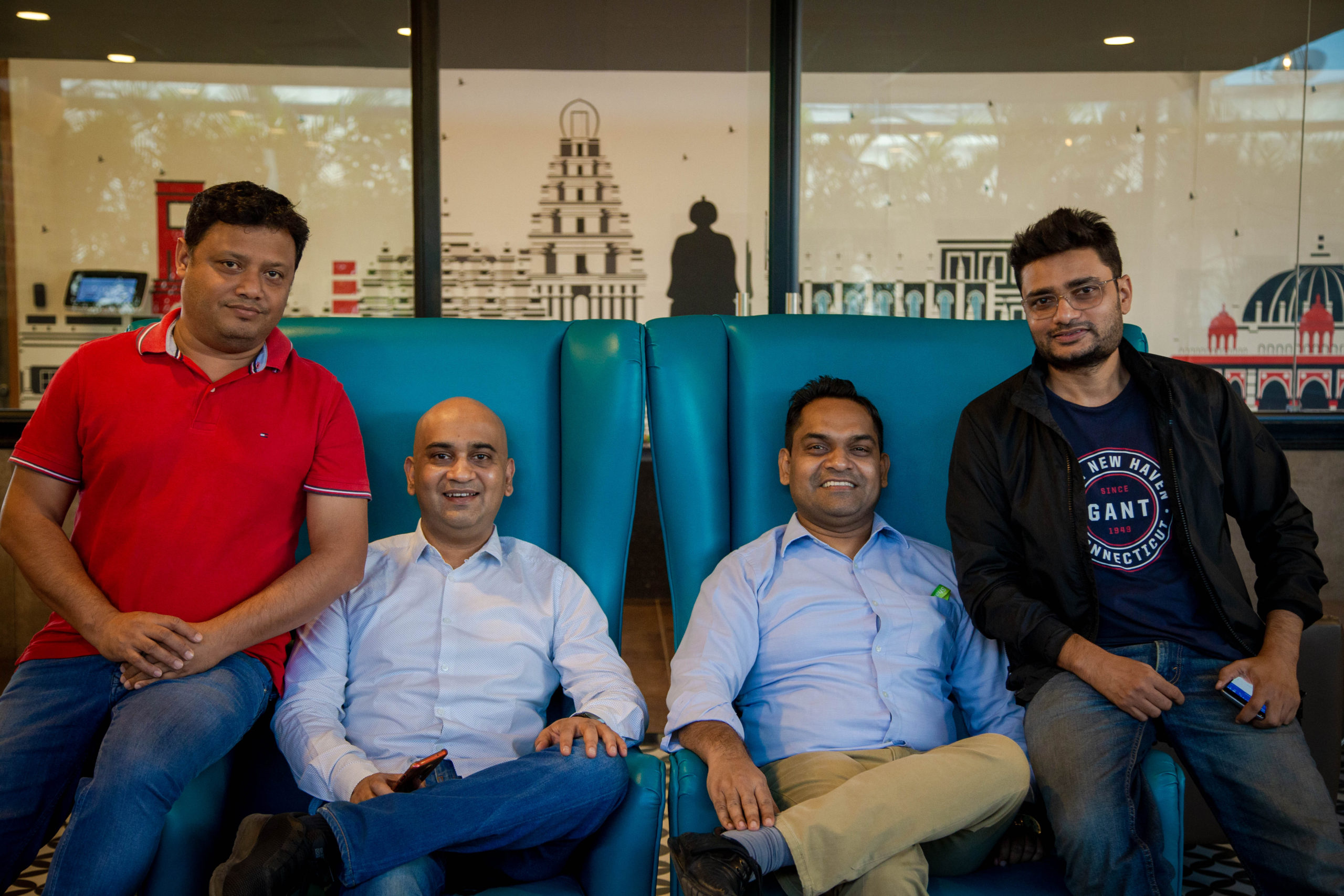
That background explains the technology in his story. His co-founder Sourjyendu Medda brought experience from retail, including Metro Cash & Carry. Sankar Bora and Rajat Shikhar completed the four-person founding team identified in later interviews and company announcements. This was a business requiring software and merchandising, purchasing and delivery. A clever interface still needed something worth putting in the basket.
The first checkout was a conversation
The friends studied developments in retail elsewhere, including China, and experimented with social commerce. Their early model joined local supply to shoppers willing to pass on a deal. They had to learn consumer behaviour, assemble manufacturers and win customers through one-to-one selling. “Social” sounds effortless in a pitch. Getting the first person to buy was work.
WhatsApp gave the experiment a familiar setting. In his August 2021 interview, Rao recalled testing the idea there for three months and reaching 200 orders a day during that phase. The significance of the number is its modesty. It describes an experiment being tried by real customers, before the vocabulary of scale arrived.
Moving those customers into a dedicated app created another problem. Being comfortable with messages did not automatically make someone comfortable with an online checkout. The team revised the app repeatedly, added local languages and retained WhatsApp sharing. A shopping product had to meet the habits people already possessed, then ask for one additional habit.
The business also allowed individual purchases. Group buying earned incentives, but shoppers did not have to organise a group before buying for themselves. Community leaders helped explain collective orders. For a company inviting first-time online buyers, this mattered: the first transaction should not require the customer to become a part-time sales manager.
“We were doing 200 orders a day.”Vineet Rao, recalling the early WhatsApp test in 2021
A smaller shelf, a different calculation
In September 2019, DealShare reported an average assortment of roughly 550 stock keeping units across its categories. Its app was available in English, Hindi and Gujarati. Around 150 manufacturers and suppliers served the business, with 70 percent described as regional or local. These details show how deliberately the early operation differed from a sprawling online catalogue.
The small shelf was part of the economics. Concentrating demand on fewer products could increase the volume purchased for each one. Direct sourcing from local factories could reduce the number of intermediaries. Sharing deals among customers supplied a route to finding more buyers. These mechanisms were meant to work together; a discount by itself was only the beginning.
Rao’s explanation in 2020 was that a business did not need millions of different items to meet its customers’ demand. The observation is almost offensively sensible. A household shopping list has limits, even when an investor presentation does not. A tight assortment made the proposition easier to understand and gave the company fewer products around which to organise purchasing.
He also described an experience built around regional languages, sharing and playful engagement. The customer could encounter an offer rather than arrive with a search already in mind. That distinction shaped the product: a deal had to be relevant enough to buy and useful enough to send to a friend. The message carried both the merchandise and the recommendation.
An explanation of the founding model, rather than a claim about current operations.
At eight o’clock, the piano
One glimpse of Rao’s working life in 2020 provides a quieter scale. He described beginning the day with reports about performance and the previous day’s difficulties. Calls with leaders and teams followed, along with problem-solving, warehouse and office visits, and checks on progress. The routine moved between numbers on a screen and the places where orders were handled.
At 8 p.m., he made a video call to his family. His children were learning the piano, and he enjoyed hearing their new tunes. Later, he returned to discussions with his co-founders and core team about strategy and changes in plans. He described days that could finish at one or two in the morning.
It is a useful human detail without pretending to explain his entire personality. The executive checking yesterday’s reports also made time to listen to a child’s music. There is no need to turn the piano into a management principle. Sometimes a piano is simply the pleasant part of a very long day.
The valuation rose faster than the questions disappeared
January 2022 brought a $165 million Series E fundraise and a valuation above $1.6 billion. New investors included Dragoneer Investment Group, Kora Capital and Unilever Ventures, alongside existing backers including Tiger Global and Alpha Wave Global. Avendus Capital advised on the transaction. The WhatsApp trial had become a business attracting institutional capital.
The money was intended for technology, data science, logistics and geographic expansion. An offline store franchise network was also part of the plan. The ambition extended beyond winning an order on a phone: DealShare wanted a larger role in how household products reached its customers, including those buying through physical shops.
In February 2022, Rao described a company present in more than 130 cities and towns across ten states. He spoke of building leadership capacity and expanding through greater density within markets. A further $45 million investment from an Abu Dhabi Investment Authority subsidiary took the Series E total to $210 million and the reported valuation to $1.7 billion.
2018Founded in Jaipur
$1.6bn+Company valuation, January 2022
July 2023Rao steps down as CEO
Those figures measure investment and reach. They do not settle the cost of serving a basket. Rao’s ambitions in that period included strengthening supply and technology, and giving customers access to lower-priced products across online and offline channels. Achieving those aims meant building a retail operation alongside the consumer app.
The grocery business gets a second draft
As DealShare expanded, its operating model came under pressure. Medda later described operational inefficiencies, low retention and customers moving too slowly into higher-margin products. These are less theatrical problems than a funding announcement, but they speak directly to the original bargain. Acquiring a customer and keeping a customer involve different arithmetic.
In July 2023, DealShare announced that Rao would step down as CEO as it moved toward a hybrid online and offline model. The company said he would help the board identify a successor and advise on the new leadership. That announcement marked a change in responsibility, rather than a fresh chapter of uninterrupted founder-led expansion.
By November, his exit from the company, alongside Bora’s, had been reported. DealShare was restructuring and had shut its business-to-business operation. In January 2024, Kamaldeep Singh took over as CEO. The company Rao helped create continued, with a different operating direction and different leadership.
Another part of his public life points back to where his career began. At IIT Bombay’s Alumination 2022, Rao returned for CEO Connect, discussing his entrepreneurial journey with students. He later shared the conversation on LinkedIn. The engineer who had spent years building software could now discuss the difficult business of getting people to buy the things they needed.
His story leaves a precise question worth carrying forward. How do you make online grocery shopping useful to a household that judges value one purchase at a time? Rao and his co-founders answered with local products, familiar messages, fewer choices and shared discounts. Expansion tested that answer. The customer’s shopping list, meanwhile, remained wonderfully unimpressed by the valuation.