On New Year’s Day 2025, Dibyendu Panda had a shop opening to talk about. Wakefit had reached its hundredth store, in Kirtinagar, Delhi. A hundred is a pleasingly round number. It fits neatly into a congratulatory post and suggests that somebody, somewhere, has been very busy with floor plans. Panda supplied the larger picture: more than 65 stores opened in the preceding year, a presence in 40 cities and over 340,000 square feet of retail space.
Then he looked backwards. When he joined in September 2023, the retail team had been small. He singled out Lokesh Gupta, who had been juggling responsibilities and managing a few stores. The celebration widened to include founders Ankit Garg and Chaitanya Ramalingegowda, a list of colleagues and younger members of the team. The hundredth door had plenty of people behind it.
That is a useful entrance to Panda’s career. His work has travelled through electronics, telecom, luggage, jewellery and furniture. Today, based in Bengaluru, he is Chief Business Officer at Wooden Street. The title arrives with business strategy, revenue growth and retail expansion attached. But one of the most revealing details in his record happens before anybody stands behind a showroom counter: sending new recruits to a factory to learn what they will eventually sell.
The hundredth door
Panda joined Wakefit on September 4, 2023. His retail responsibilities would include sales, operations and expansion, alongside merchandising and learning and development. Those last two functions matter to the shape of the story. They put the arrangement of products and the preparation of people inside the same brief as the growing store network.
His hundred-store announcement carried another measure: more than 300,000 customers served through the offline business in the period he described. It was a company milestone, achieved by a team. Panda’s own telling made that collective effort explicit. He thanked colleagues including Suman Chattopadhyay, Mohit Goyal, Prathiroop S, Neha Rao, Aditi Panda, Ambarish Varadan and Aveenash Jayaraman.
Company figures reported at the milestone. The work of a retail team.
There is a difference between counting shops and reading an account of their construction. Panda’s post lets the reader do both. The figures establish the scale. His recollection of Gupta and the earlier team gives the operation a before-picture. He also acknowledged the founders’ trust, guidance and challenges. For a corporate milestone, it contained a fair amount of memory.
The opening was in Delhi; the network extended across India. A national map can make a hundred locations look like a collection of dots. Each dot, however, represents a place where a person will ask a question and expect an answer. The next detail in Panda’s career brings that question down to the shop floor.
A factory before a sales floor
In May 2024, while Wakefit was building its physical presence, Panda described how it recruited newcomers. Around 70 percent of recruitment followed a train-and-hire model. Freshers underwent training and evaluation in the company’s factories, acquiring product knowledge and certifications before starting work in stores. The route into retail passed through the place where products were made.
“We’re actively hiring freshers, with around 70% of our recruitment following a ‘train and hire’ model,” he said.
It is a specific, practical answer to a problem that store counts can hide. An additional outlet needs staff who can explain its products. The company was looking to train people in product lifecycles, visual merchandising, retail planning and general management. Panda also discussed appointments for regional leadership, learning and development, business development and business management. Expansion had an organisational shape as well as a geographical one.
A diagram of Wakefit’s reported train-and-hire approach, not a measure of training outcomes.
A showroom is a slightly peculiar classroom. The questions arrive from strangers, the syllabus changes with the person asking, and a confident answer can be tested immediately against the item on display. Factory-based preparation gives that conversation a material starting point. Before explaining a product, a recruit has had an opportunity to learn about it beyond the price label.
Read alongside his formal responsibilities, the recruitment detail gives Panda’s Wakefit chapter a coherent centre: retail growth accompanied by merchandising and staff preparation. It keeps the story close to identifiable work. There are openings to organise, people to recruit and knowledge to pass on. The ribbons are the photogenic part.
Different aisles, related work
Before Wakefit, Panda worked at BlueStone as a sales director, VIP Industries as a regional manager, Sony India as retail development incharge, Vodafone India as a zonal retail lead and Reliance Industries as an assistant manager. The products changed markedly across those businesses. The roles kept him in sales, retail development and operations.
That range is distinctive. A piece of jewellery, a television, a suitcase and a sofa enter a customer’s life for different reasons. Their prices, practical questions and occasions differ. Panda’s career places experience across those categories beside his later furniture work. It is a more informative description than simply calling him an experienced executive.
His education adds another, less obvious detail. He holds a bachelor of engineering degree in information technology from Biju Patnaik University of Technology and a postgraduate diploma in management from All India Management Association. He completed an advanced strategic management program at the Indian Institute of Management, Kozhikode. His LinkedIn profile also lists the Indian Institute of Management, Calcutta in 2025.
Engineering appears early in an educational record that leads into retail management. Later study sits beside a working career rather than supplying a single origin scene. The combination is enough to complicate the familiar picture of a retail leader learning only by moving from one shop to another. Panda’s documented path contains formal study as well as the successive responsibilities of commercial work.
Wooden Street’s welcome described a background spanning FMCG, consumer electronics, telecom, luggage, home and jewellery, with experience in customer service, retail planning, franchise management and omnichannel operations. Taken together, those are the moving parts of a business that has to coordinate what customers encounter across different places to shop.
Eleven days, a wider brief
Panda’s departure from Wakefit took effect at the close of business on April 10, 2026. On April 21, Wooden Street’s appointment of him as Chief Business Officer was publicly reported. Eleven days separate the two public milestones. The new role broadened the frame from a retail function to overall business strategy and revenue growth, while retaining store expansion and the connection between online and physical retail.
His explanation of the move concentrated on work he wanted to do. He described strengthening existing revenue streams and developing new channels and categories. He also discussed shaping the in-store experience and expanding the retail footprint thoughtfully. These were stated ambitions for the new role; their interest lies in how clearly they connect with his earlier responsibilities.
“The opportunity to shape the in-store experience”
Dibyendu Panda, on joining Wooden Street, April 2026
Lokendra Ranawat, Wooden Street’s founder and CEO, welcomed Panda’s combination of retail experience and execution. The appointment placed a leader with experience across several consumer categories inside a furniture and home décor business expanding its digital and physical presence. His Wakefit chapter supplied relevant experience in building an offline network.
The word “thoughtfully” in Panda’s appointment statement deserves its place beside expansion. It sets a stated intention without offering a numerical promise. A new Chief Business Officer has several ways to pursue growth: an existing revenue stream, another category, a different channel, another shop. His statement named those possibilities and brought them back to the experience inside the store.
- 04 Sep 2023Joins Wakefit
- 01 Jan 2025Announces 100 stores
- 10 Apr 2026Leaves Wakefit
- 21 Apr 2026Wooden Street appointment reported
The question that still makes him pause
In June 2026, Panda shared a different kind of retail moment. He had recorded a conversation with Harshini Ravikumar for Zoho’s The CRM Show. After roughly two decades in the business, he wrote that some unexpected questions had made him pause. He thanked Ravikumar for follow-ups that made the exchange feel like a real conversation.
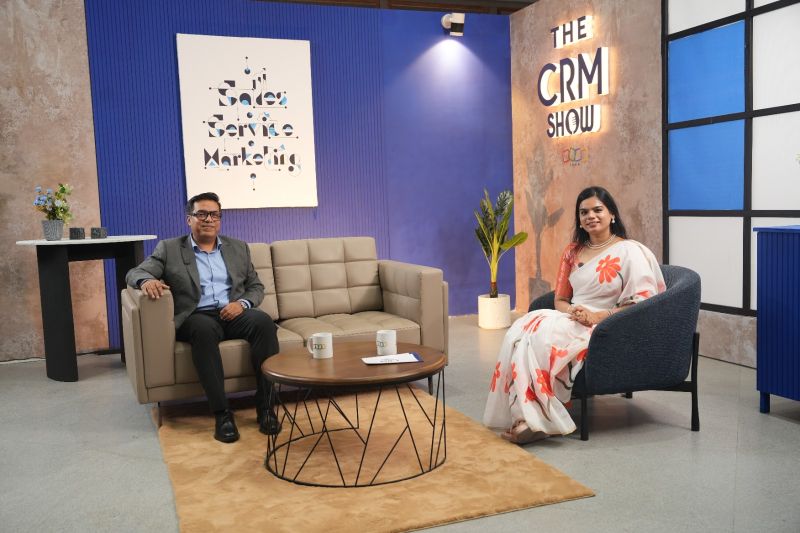
“Twenty years in retail teaches you a lot of things,” he wrote. He described responding from experience rather than theory, and finding himself thinking harder than expected. The account gives this career a human interruption. Experience was present in the room, along with the possibility of a question it had not already neatly answered.
The episode was published on July 29, 2026. Its subjects include premium selling, customer experience, retail conversion and the human connection in sales. The premise asks what a salesperson contributes when a customer arrives equipped with reviews, comparisons and AI recommendations. It is a fitting conversation for someone whose responsibilities have included both expanding stores and preparing the people inside them.

A hundred shops make a visible milestone. The factory training, merchandising remit and unexpected interview question supply the smaller details that help explain the career around it. Panda now carries that experience into Wooden Street, where his stated brief returns to the customer, the store and the next stage of expansion. The title has changed. The work still involves somebody walking through a door with something to ask.