Buying a sofa can require a tape measure, a patient partner and an argument about fabric. Paying for it should be the easy part. At Furniture Village, checkout once took 20–30 minutes. A December 2021 report on its work with Red Ant put the new figure at five. For a retail technology company, that is a pleasingly concrete introduction: fewer minutes standing between a decision and a receipt.
Red Ant builds RetailOS, a platform that puts customer information, product details and selling tools into the hands of store associates. Its territory is the awkward space between a retailer’s website and its physical shops. A shopper may browse online, ask questions in person and pay later at home. Red Ant wants the employee helping that shopper to follow the whole journey.
The proposition has attracted Furniture Village, Charlotte Tilbury, Chalhoub Group and other retailers whose products invite conversation. Choosing a foundation shade or a sofa is easier when someone can answer questions. RetailOS gives that person a better chance of having the answer.
Twenty minutes is a long goodbye
Furniture Village’s project joined online activity to the consultant’s view of the customer. The same 2021 report said the solution delivered return on investment within six months while covering just 50% of the product range. Those figures describe one deployment, rather than a promised result for every retailer. Still, they offer a useful starting point for judging the work: time saved and investment recovered.
Bar scale: 30 minutes. The shaded segment marks the reported 20–30 minute range. Customer case reported December 2021.
Furniture Village subsequently described the partnership in its own public post as enabling customers to shop anywhere and substantially shortening sale processing. Consultant Transform UK, reporting on the retailer’s conference presentation, highlighted the ability to work around its legacy platform. The attraction was practical: keep useful systems working while connecting them more effectively.
The first problem here was a broken handoff. Information available in one part of the business did not automatically make the next interaction easy. Red Ant’s work addresses that gap. A retailer considering a similar project can copy the discipline: choose a specific customer journey, establish its current performance and measure the change before expanding.
The sale should remember who helped
Clienteling is the retail term for building a continuing relationship with individual shoppers. RetailOS provides profiles that can hold purchase history, preferences, wish lists and previous communications. An associate can use that context to prepare an appointment, make a recommendation or follow up with something more useful than a generic promotion.
The detail with organisational consequences is attribution. Red Ant’s assisted sales tools let associates order unavailable store items through the website and credit the transaction to the store and employee. Its clienteling software also supports remote sales credited to the person who recommended the products. The customer gets flexibility; the employee’s contribution remains visible.
That matters because a flexible shopping journey asks staff to help a sale move between channels. If the transaction disappears from their record when the customer switches to a laptop, the system rewards a narrower behaviour. Red Ant’s design offers a way to align the recorded sale with the work that produced it. Whether a retailer’s incentives follow is a management decision.
Illustrative workflow based on published RetailOS capabilities.
The rest of the toolkit supports that continuity. Endless aisle access exposes the broader catalogue. Mobile checkout takes payment away from the fixed till. A stockroom Runner app sends product requests behind the scenes so an associate can stay with the customer. Click-and-collect tools organise picking and collection. These are separate jobs, connected by the same ambition to keep a shopping trip moving.
A beauty counter with a longer reach
Charlotte Tilbury offers a different demonstration. Red Ant’s virtual consultation work takes the interaction between a beauty adviser and a customer into the home. The adviser can access customer information and product content, hold a video conversation and help assemble a basket. Remote payment gives the consultation a route to a completed purchase.
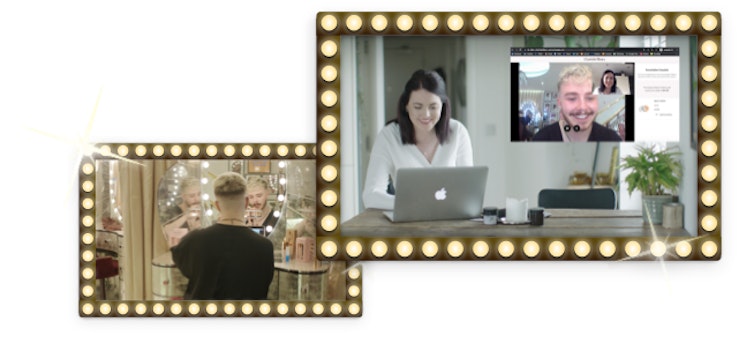
It is a useful distinction for any business selling expertise alongside merchandise. Video supplies the conversation; the surrounding product and payment tools make it shoppable. The customer should be able to act on the advice without reconstructing the shopping list elsewhere. Red Ant’s published workflow also includes follow-up communications to arrange another consultation.
In March 2021, Frasers Group announced a partnership with Red Ant for FLANNELS, bringing together in-store clienteling, remote sales and virtual consultations booked through Appointedd. A Frasers spokesperson put the operational pressure simply: “In modern retail we need to move fast”. The project made appointment booking part of the service, alongside the ability to advise and sell remotely.
“In modern retail we need to move fast”Frasers Group spokesperson · partnership announcement, March 2021
The little fixes tell the story
Some of Red Ant’s most revealing work sounds almost comically modest. Its December 2024 review listed faster PIN access, QR code self-registration, multi messaging and content filters. Those improvements came from workshops involving Coty, Charlotte Tilbury and Chalhoub Group. The work concentrates on the repeated actions that determine whether software feels helpful during a busy shift.
That is the documented change of direction worth watching: customer conversations translated into shared product improvements. The company described content quality in frequent customer messages as a long-running problem. QR registration lets customers enter their own details; quicker access reduces the effort of getting into the tool. These changes expose ordinary friction more clearly than a sweeping innovation slogan could.
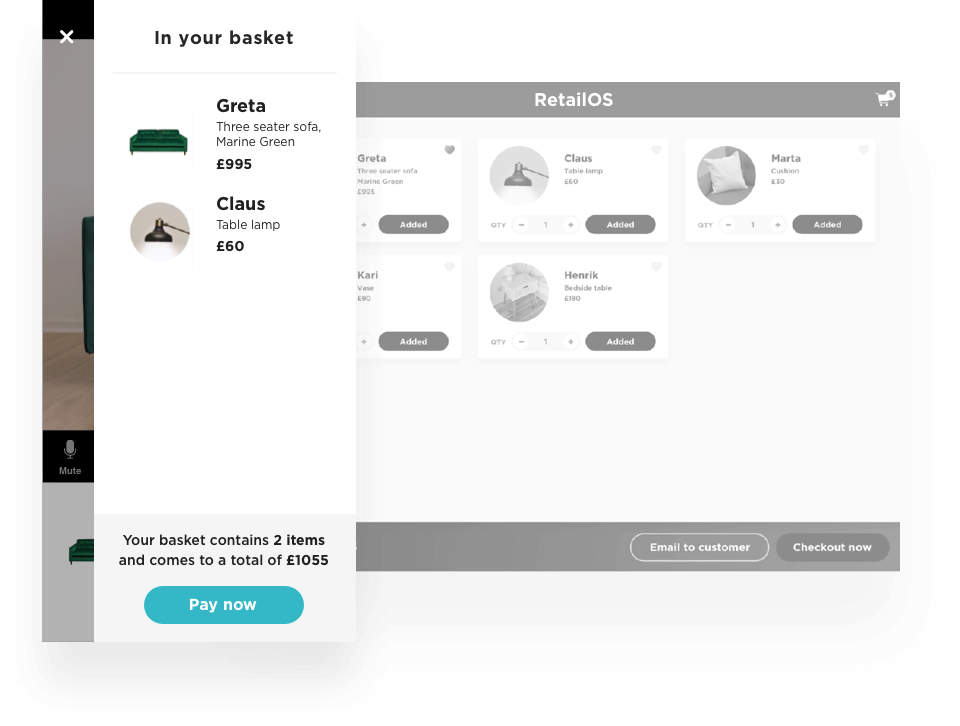
Barcode scanning receives similar attention. Red Ant’s January 2024 Scandit announcement describes an integrated scanning kit that handles difficult lighting, damaged codes and consecutive scans. Starting from the basket, an associate can scan multiple items without restarting the process for each one. Scandit charges within RetailOS depend on the number of devices using it. Even the camera has a commercial detail.
A platform, plus the plumbing
Red Ant occupies the meeting point of enterprise retail software and systems integration. RetailOS is cloud based and brings existing tools into a common interface, with support for different devices, roles and authentication systems. The company advertises pre-integrations with more than 60 partners across areas including commerce, customer management, payments and analytics.
There is also a question of who sees what. RetailOS describes role-based access, shared-device PIN switching and a single sign-on option connected to existing employee systems. Those details matter in a shop where a tablet may pass between colleagues. The platform also lets retailers track tool use, test changes with selected groups and collect feedback inside the app. Deployment can become an ongoing conversation with the people expected to use it.
Its delivery process begins with an audit of the retailer’s technology and a business case. Implementation is followed by measurement, testing and further development. That makes the commercial relationship broader than downloading an app: customers buy software alongside the expertise needed to connect it to their business.
There are public price markers for separate parts of Red Ant’s work. Its UK G-Cloud listing prices Cloud Software at £30,000 per instance, while Cloud Support is listed at £1,100 per unit per day. Those services cover data orchestration and applications including pharmacovigilance. They describe that procurement scope, not the cost of Furniture Village’s project or a complete RetailOS installation.
For retail buyers, the useful comparison is total project economics: software, implementation, devices, integrations and the time staff need to learn the workflow. The Furniture Village payback report gives one outcome to investigate. A business case still needs its own assumptions about adoption, transaction volume and the value of time recovered.
The shop assistant is the point
Red Ant has been developing since 1999, when founder Dan Mortimer started the business. Its legal entity began as Red Ant Design Limited before taking its digital name in 2010. The company’s public leadership page identifies Sarah Friswell as CEO. Its stated purpose centres on better service, stronger sales and more effective operations.

The human emphasis extends to its own workplace. Red Ant calls employees “Ants” and gives each person three paid volunteering days annually. That is a specific cultural commitment, easier to understand than the familiar language of workplace values. On the product side, its 2026 exhibition listings continue to foreground associate tasks: clienteling, assisted sales, analytics and task management.
This is a competitive market. Tulip offers customer profiles, outreach and follow-up tools; NewStore also connects associate messaging, shopping carts and payments. Red Ant’s particular pitch combines those frontline jobs with integration into existing retail systems and continuing customer-led development. Buyers should test that combination against their own stores, rather than treat a feature list as proof of fit.
The approach makes the most sense where personal advice and repeat relationships can repay the effort. As an operational inference, thin customer data, unreliable stock information or insufficient time for follow-ups will limit its usefulness. Red Ant’s SellSmart machine learning tools can suggest relevant actions, but the associate still needs information worth trusting and a customer willing to engage.
For a buyer, the comparison should include an ordinary busy shift. Can a new colleague find the right record? Does a customer who declines a purchase remain easy to help later? These are suggested evaluation questions, not reported customer findings. They bring the buying decision back to the actual work and make it harder for an attractive demonstration to conceal an awkward daily routine.
A sensible demonstration therefore follows a real sale all the way through: find the item, check availability, save the basket, take payment elsewhere and inspect who gets credit. Then ask a store colleague to repeat it. The five-minute checkout is an appealing headline. The test is whether the next customer can get one too.