At Tom Ford Fashion, nine salespeople could find themselves competing for one shipping-and-receiving computer. A customer wanted a style, a size, an answer. The associate needed the laptop. In KWI’s account of the retailer’s operations, this ordinary bottleneck explains the attraction of mobile point of sale rather better than a brochure could. Luxury service had acquired a waiting room.
- KWI connects checkout, stock, orders and customer records for specialty retailers.
- Its Apple-native POS puts those tools in associates’ hands.
- The useful test: can staff finish the interaction without leaving the customer?
KWI moved those tasks onto iPads. Inventory checks, purchase history and payment could happen beside the shopper. The company’s case study describes a relationship spanning 14 years and 15 North American stores. The interesting unit of improvement is smaller than a store, though. It is the interruption removed from a conversation.
01 The queue came first
That concern runs back to the beginning. In KWI’s telling, founder Sam Kliger was 19 when he saw long lines at Benetton in 1985 and spent months writing software to shorten them. He left school and built the business around serving retailers. The origin has an appealing specificity: a queue, some code, a customer who would rather be somewhere else.
Today, the company sells a cloud retail platform for businesses where the assortment makes selling complicated: apparel, footwear, jewelry, beauty and other specialty categories. A shoe has sizes. A cosmetic has shades. A charm may be too small for a convenient barcode. Recognizing the thing in front of you is only the beginning of the job.
02 One shopper, several systems
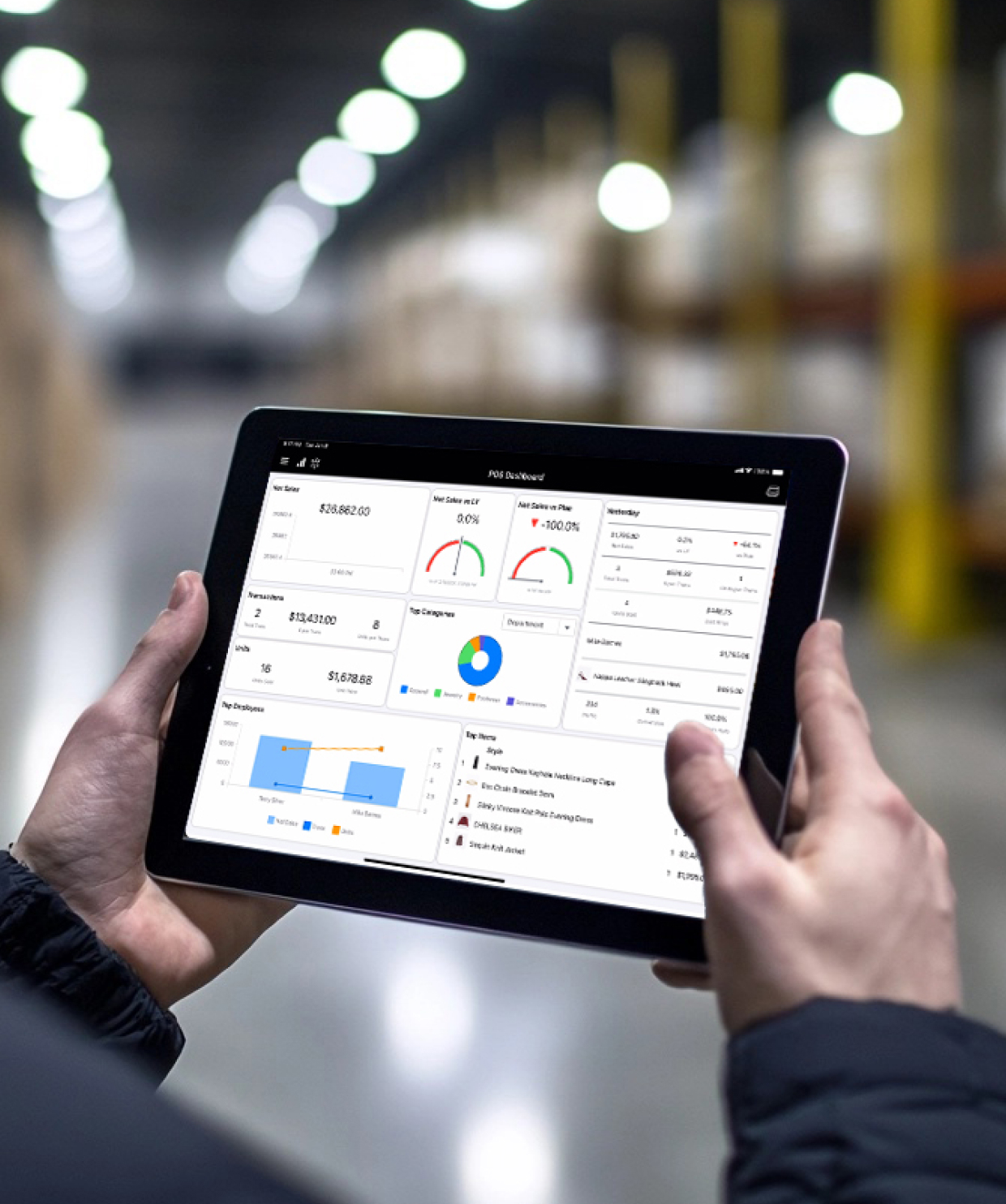
Consider the machinery behind a simple request for another size. Merchandising determines what was bought, where it belongs and how it is priced. Order management finds stock across stores and warehouses and decides how to fulfill the purchase. Customer relationship tools supply history and preferences. Loyalty supplies rewards. Checkout has to bring the answers together.
KWI supplies these functions within its platform. Its merchandising tools cover purchasing, allocation, replenishment and promotions; its order management supports shopping across inventory locations. That matters when the item missing from one shelf is sitting in another store. The associate needs a route to completing the sale, with enough confidence to promise delivery.
One interaction. Several jobs that have to agree.
The market offers other routes. Shopify POS synchronizes store sales with its online commerce administration. Oracle’s Xstore handles transactions and daily store operations across several device types. KWI’s pitch centers on specialty retail workflows and service from implementation onward. Its Apple-native approach also makes hardware preferences part of the buying decision.
Unification does not mean every application must come from KWI. Its Shopify Connect links Shopify storefronts with the retail platform. The Klaviyo Connector moves customer and purchase data into marketing. Those connections acknowledge a practical reality: retailers have useful systems already, and a new store platform must work with them.
03 A photograph beats a SKU book
Pandora supplies a particularly good example of what KWI adds to the sales floor. An associate confronting an unfamiliar charm previously had to search reference material or product lists. KWI’s AI Product Image Search lets the associate photograph it and choose from ranked catalog matches inside the POS, with price and add-to-cart options close at hand.
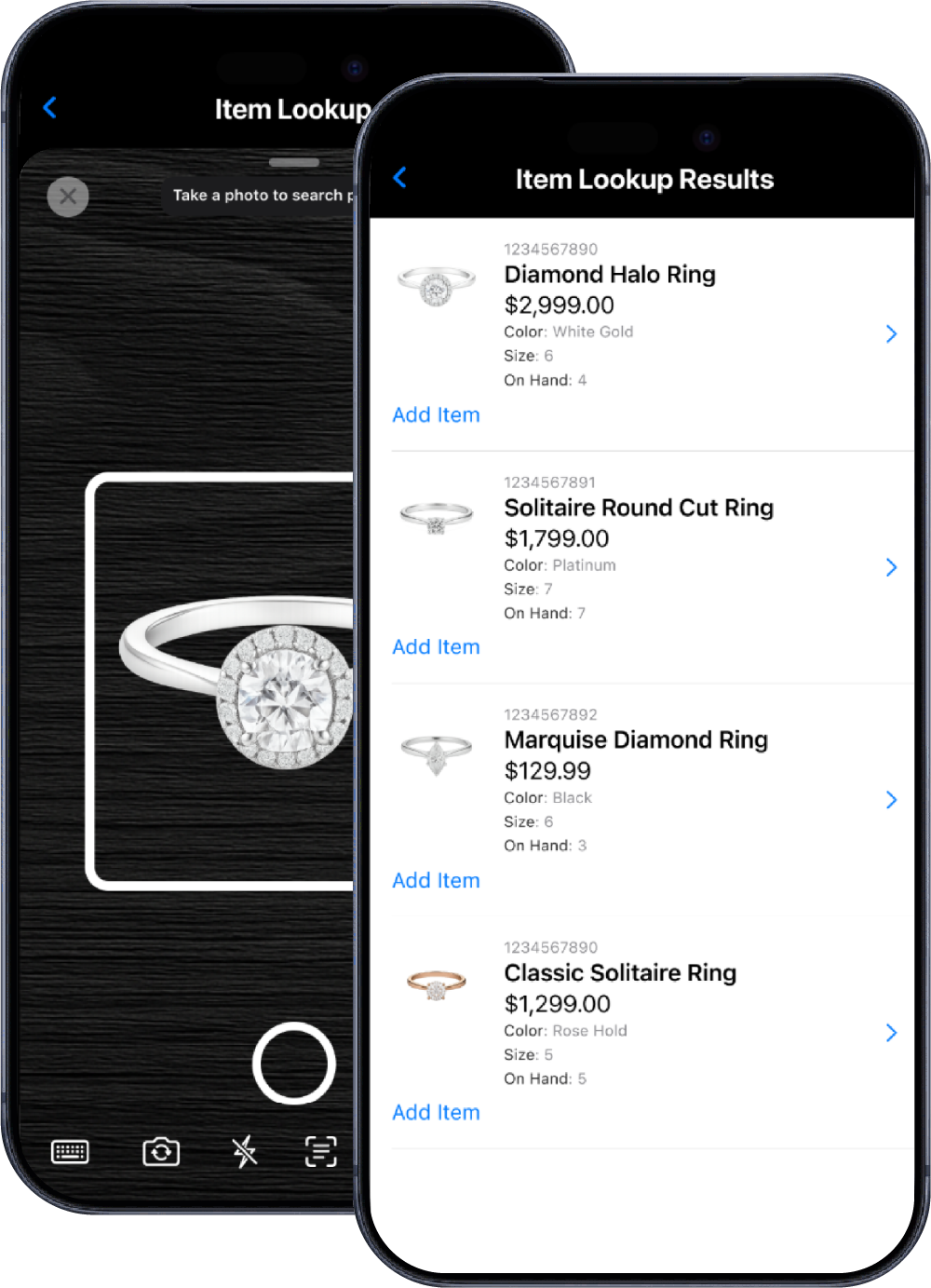
Developed with Emmet, the feature tackles a narrow, recognizable problem. KWI reports a 66% reduction in product lookup time in production with Pandora US. That is a lookup metric, rather than a claim about total store sales. The distinction matters: a faster search earns its place by improving a task staff perform repeatedly.
The idea travels beyond jewelry: start with the repeated interruption, then choose the technology. Visual search is useful when products are visually identifiable and the catalog supplies reliable matches. Associates still choose the correct result. A tool built around catalog recognition needs that catalog maintained as products arrive and change.
04 The sweater knew its audience
At John Varvatos, the problem was excess inventory in larger-size Henley sweaters. The team used the KWI-Klaviyo connection to identify people whose purchase histories suggested interest in similar products, then timed an email campaign around an incoming holiday storm weekend. KWI’s case study reports a 23% increase in sales of that sweater style without broad discounting.
The useful lesson is the sequence: identify a specific inventory problem, find a relevant audience, choose a credible moment. The reported result belongs to that campaign. Repeating it requires usable customer history, permission to reach those customers and merchandise they want. Connecting databases cannot supply those ingredients by itself.
“Price value relationship was a big factor in why we signed with KWI.”
Rene Tan, Hurley’s Director of Retail, in KWI’s managed-services materials
05 The service is part of the software
Hurley tested another part of the proposition. As a standalone brand, it needed a replacement platform operating across dozens of stores in under three weeks. KWI describes migrating the business while supplying training and support. Hurley’s old reporting arrived in overnight batches; the replacement gave management access to current business data. Speed mattered both during implementation and afterward.
KWI sells business software as a service alongside implementation, integration and managed support. Its offering includes configured hardware, managed upgrades, a customer success manager and an in-house US helpdesk available around the clock. Buyers should price the whole operating arrangement: software, devices, migration, integrations and payment processing. A subscription alone cannot describe the commitment.

There is a useful practical test before signing. Ask the vendor to demonstrate an awkward real transaction: a web return, an item from another store, a loyalty reward and one payment. Then test degraded connectivity. KWI’s offline technology checks network health at login and can switch modes before a connection fails completely; permitted transactions still depend on configuration.
KWI’s contribution is easiest to judge at that scale. Can a new associate identify the charm? Can a manager act on today’s sales? Can the customer buy the size sitting elsewhere? Each answer describes a piece of work completed. Together, they explain why the customer might never notice the software at all.