A sofa is an awkward thing to sell through a screen. You can photograph the fabric, describe the frame and give its dimensions. You cannot let the buyer sit down. Lokendra Ranawat’s career has become a long negotiation with that inconvenience. He helped start WoodenStreet online in 2015, then built a business that also needed workshops, warehouses, delivery teams and places where a customer could try the furniture. The internet brought people to the door. Someone still had to get the sofa through it.
His route into the business began with a journey in the other direction. Ranawat returned from London to Udaipur, his hometown, drawn by a wish to come back to his roots. There was no family enterprise waiting for him to take over. He looked for an opportunity in Rajasthan and found it among the people making things with wood.
The homecoming matters because it explains a choice that otherwise looks inconvenient. A founder could have chosen a larger city, closer to investors and the usual startup gatherings. Ranawat wanted to be near the furniture makers. The business would have to reach customers elsewhere; the founder did not have to abandon the place where its products began.
A return ticket to Rajasthan
Ranawat trained as an engineer, earning a degree in electronics and communication at GSET in Jaipur. His early professional life took him through IT services, with work at Axis IT&T and Birlasoft UK. Those jobs gave him experience with clients and business relationships across countries. Furniture was a later destination, reached through software services and digital marketing rather than a design-school portfolio.
He co-founded Cognus Technology in London before WoodenStreet. Digital marketing gave him a practical acquaintance with finding customers online. An attractive product still needed someone to see it, understand it and trust the business selling it. The furniture venture would require that knowledge, with an additional complication: the purchase eventually became a large physical object in someone else’s home.
Rajasthan offered a place to start. Jaipur and Jodhpur had artisans and furniture makers whom he could meet. Udaipur gave him a base near that work. His interest in local production also appears in his public writing, where he has discussed artisans, technology and the economies of smaller towns. These concerns were close enough to become part of an operating business.
“It helped being close to my artisans, who were creating all this furniture.”
Lokendra Ranawat, 2020
There is a useful lack of glamour in this explanation. Proximity makes it possible to look at the thing being made. A beautifully written specification may still invite a conversation. A sample can settle it. For a founder moving from services into products, being near production was a way to shorten the distance between an idea and its consequences.
Four people around the table
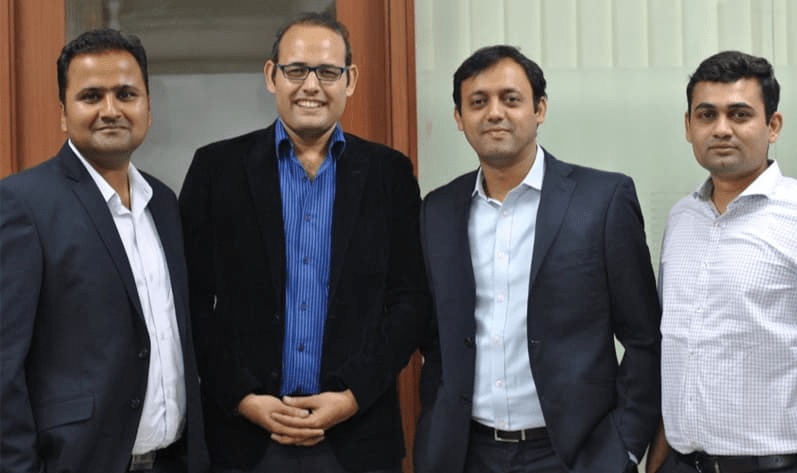
WoodenStreet began with four co-founders: Lokendra Ranawat, Virendra Ranawat, Dinesh Pratap Singh and Vikas Baheti. Virendra is Lokendra’s brother; Dinesh is his cousin. Before the furniture business, Lokendra and Virendra had co-founded Shilpa Mantra, an online portal for traditional Indian handicrafts. Their interest in bringing local making to an online audience had an earlier outing.
The group brought different kinds of experience. Dinesh had studied at NIT Jaipur and IIM Kozhikode and worked at P&G and CSC. Virendra combined engineering with management training and experience at TATA and Energo. Baheti brought a finance background and experience in furniture sourcing and manufacturing. Lokendra’s sales and marketing history belonged alongside those skills.
The early proposition included furniture that could do more than one job. A study table could incorporate a bookshelf. Space was a constraint worth designing around. Customization offered another route: help a buyer choose something that suited the home, rather than hope the home would accommodate whatever happened to be available.
A small detail from Ranawat’s 2016 podcast appearance gives that thinking some personality. His favorite piece of furniture was a dining table that turned into a pool table. Dinner, then a different kind of table manners. The choice makes sense for someone interested in design that earns its space twice.
The chair has to arrive
The founders’ idea came with an unromantic obligation. A furniture order has to become a finished piece, then travel to the customer. Ranawat has described supply-chain management as an early barrier. Working with outside delivery services created problems of reliability and dependence. WoodenStreet began developing its own logistics arrangements, including delivery to the buyer and installation.
That decision extends the founder’s responsibility beyond the catalogue. The transaction includes what happens after payment. A customer’s confidence in the design must survive the wait and the arrival. Installation belongs to the experience too. The company may speak in terms of orders and networks; the household receives a piece of furniture and judges the whole operation through it.
The manufacturing story had its own constraint. Dinesh later recalled vendors asking for payment upfront, rather than waiting for an eventual sale. The team established a small manufacturing and warehousing unit in Jodhpur. Product images helped attract orders online; production and dispatch followed. The founders were learning how to connect demand to making without allowing either end to drift away.
By 2024, Ranawat described a much larger production operation, with roughly 80 percent of the brand’s products made in-house. The attraction of that arrangement is understandable: more of the process sits within the same business. It also means more of the process has to be managed. A workshop does not become simpler because the customer found it through an app.
A simplified view of the responsibilities Ranawat describes.
A website with somewhere to sit
WoodenStreet opened its first experience store in Bengaluru in 2016. That was early in the life of an online venture, and it addressed the difficulty sitting at the center of furniture shopping. A customer could discover something on a website, then visit a place where the object had actual depth, texture and a seat.
Ranawat’s explanation is practical. Buyers want to touch and feel what they are considering. A sofa can be convincing in a photograph while leaving an important question unanswered. Shops gave WoodenStreet a way to answer it. Digital tools, including visualization and virtual tours, could help customers understand a product before a visit or an order.
In April 2024, he said around 85 percent of customers discovered the brand online before visiting a store; roughly 15 percent came directly to stores. The distinction reveals the job of each channel. Discovery and inspection can happen in different places. Calling the business online says little about the full route a buyer takes.
More stores bring more decisions about what to show. A catalogue can hold many products; a floor has walls. The business has to give a visitor enough to judge while keeping the wider range accessible. An experience store is therefore an edited version of the company’s offer, with staff helping connect the room in front of the customer to the room at home.
Capital comes with a floor plan
The financing arrived in stages. WoodenStreet raised $1 million from Rajasthan Venture Capital Fund in 2018, followed by a $3 million Series A round in 2020. WestBridge Capital led a $30 million Series B in 2022. In December 2024, the company announced a $43 million Series C round led by Premji Invest.
- 2018$1m RVCF
- 2020$3m IAN Fund + RVCF
- 2022$30m WestBridge Capital
- 2024$43m Premji Invest
Reported company funding rounds. Amounts are in US dollars.
The announced uses of the new money were physical as well as digital: experience stores, manufacturing capacity, product expansion and supply-chain improvements. Funding a furniture company entails decisions about where things are made, held and displayed. An investment announcement can fit in a paragraph. The operation it finances occupies considerably more room.
In July 2025, WoodenStreet had 104 stores across India. Ranawat discussed plans to triple the store count within 18 to 24 months and reach ₹1,000 crore in revenue, alongside profitability, over three years. He also raised the possibility of a public listing. Those were ambitions with a timetable, a useful distinction when reading a founder’s account of the future.
“The target is to make it a sustainable and long-term independent brand.”
Lokendra Ranawat, July 2025
Independence gives the expansion a stated purpose beyond opening the next shop. It also leaves plenty to prove. More locations need a supply chain capable of serving them. More categories need the same care as the original ones. The confidence of a buyer placing a first order has to be earned again as the business changes around that buyer.
More of the home, under one roof
By April 2026, Ranawat was describing a wider ambition: a business that helped customers bring together furniture, interiors and décor. He discussed collections with different design ideas, including an Udaipur collection drawing on Indian heritage and a Veda collection emphasizing minimalism and balance. The place he returned to had become part of the design conversation too.
There is a continuity between that direction and the original offer. The early question was how to make a piece fit a customer’s preferences. The newer question concerns how several pieces, and the space around them, can fit together. That enlarges the promise. It also enlarges the amount of work required to keep it.
Outside work, Ranawat has said he likes spending time with family. That modest preference sits comfortably beside a career built around homes, though it need not be turned into a business theory. A founder is allowed to enjoy a room without treating it as a market. Some things can simply be pleasant.
His story remains rooted in a concrete decision: come back, meet the makers, and try to sell their work to people farther away. Eleven years after WoodenStreet began, the business has more capital, more shops and a broader ambition. The original test persists. Somewhere, a customer is choosing furniture. Eventually, that customer will sit down.
Continue the conversation
- WoodenStreet website
- Ranawat on LinkedIn
- London to Udaipur: the 2020 interview
- The four founders: the 2015 story
- Growth and listing plans: July 2025
- Complete home solutions: April 2026
- 2016 Indian Startup Show conversation
- Watch: NewsX startup panel with Ranawat
- Ranawat’s articles at Indian Retailer
- WoodenStreet on Instagram
- WoodenStreet on YouTube
- WoodenStreet on Facebook
- WoodenStreet on X
- WoodenStreet on LinkedIn