The plan was to build a humanoid robot. Then came an inconvenient discovery: before a humanoid could exist, someone had to build its arm. Before the arm could exist, someone had to make its joints. At Gati Robotics, a pre-venture supported by ARTPARK, the grand ambition contracted into a component. This was progress, though it would make a less glamorous photograph.
- ARTPARK turns research into ventures, with IISc as its scientific anchor.
- Shared workshops and early capital tackle the costs before commercial readiness.
- Project Vaani makes Indian speech data available for others to build on.
- The output can be a company, a nonprofit initiative or a public good.
The humanoid that became an arm
That small detour explains a great deal about ARTPARK, the AI & Robotics Technology Park established at the Indian Institute of Science in 2020. The organisation works where research encounters its practical dependencies: parts, people, testing space, patient money and somebody willing to try the result. The missing joint is a useful place to begin understanding it.
Founding accounts name Umakant Soni, Bharadwaj Amrutur and Subhashis Banerjee. Today, Amrutur is executive director and chief technologist; Raghu Dharmaraju is CEO. Their institution occupies the space between a university laboratory and a business that can stand on its own. Its expertise joins robotics, AI, autonomous systems and the difficult craft of translating research into products.
An actuator, the device that produces controlled movement, sounds like a footnote until your robot needs one. Developing it draws on mechanics, electronics, controls and embedded software. Gati’s experience made the dependency visible. Another early effort, the Asha robotic nurse avatar, helped prompt work on teleoperation and telepresence. The practical discoveries shaped the next projects.
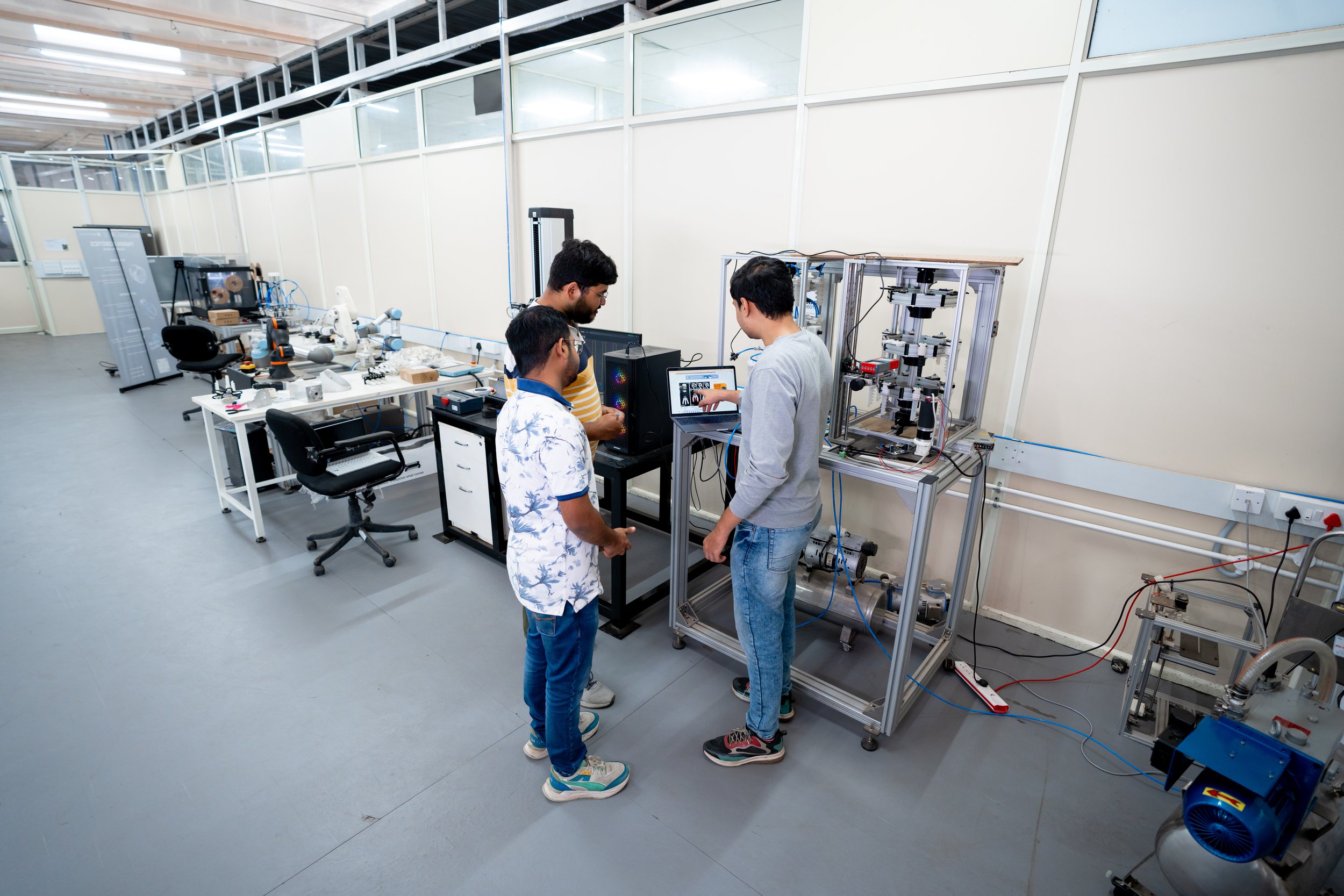
“Gati is all about making the building blocks for robotics from the ground up.”Kaushik Sampath, Gati pre-venture lead, 2023
Paying for the awkward middle
A paper can establish that something is possible. A customer needs something that works repeatedly, in conditions the researcher does not control. Between those achievements sit fabrication, revisions, demonstrations and field trials. ARTPARK supplies infrastructure and support for that passage. Dharmaraju described projects moving from experimental proof towards prototypes demonstrated in relevant operating environments.
The bill is substantial. At its March 2022 public launch, ARTPARK’s seed backing was reported as ₹230 crore: ₹170 crore from the central government and ₹60 crore from Karnataka. These were government allocations for the institution. The distinction matters when a research venture builder is discussed in the same breath as venture funds and startup valuations.
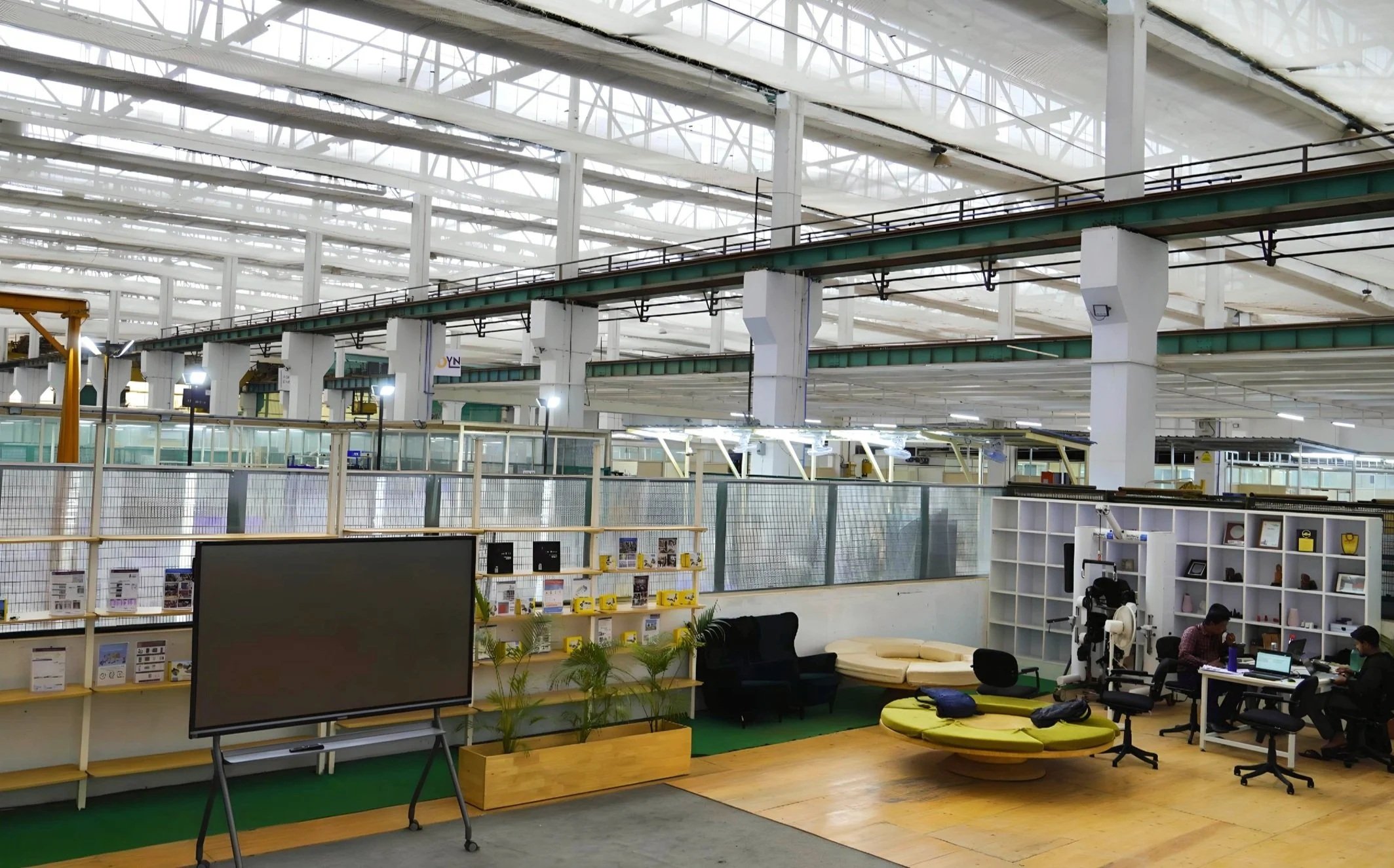
ARTGarage gives that support a physical address. Its 75,000 square feet include fabrication equipment, robot-testing areas, GPU compute and a live 5G test lab. A founder can work with shared capacity rather than assemble every expensive facility independently. The organisation also arranges collaborations with prospective customers. Access to a machine shop and access to a buyer solve different problems; a young hardware team needs both.
The 2026 Venture Incubation Programme made the offer concrete: up to ₹2 crore in direct equity investment and 12-18 months of support for incorporated deep-tech startups. Its published goal runs from demonstrated technology towards field deployment with paying customers. The Technology Innovators in Residence route addresses an earlier question: which product should this lab-proven technology become?
A country cannot be reduced to 22 buttons
Robotics is only half the story. Consider the voice interface on a phone. Selecting a language does little good if the system struggles with the accent, dialect or mixture of languages its owner actually uses. ARTPARK’s language work attacks this problem before the application is built: at the level of training data.
Project Vaani, developed with IISc and funded by Google, collects speech geographically. Districts are the organising unit because linguistic life spills across tidy labels. Speakers choose how they speak. The resulting corpus can support speech recognition, translation and language understanding. Its published licence is CC-BY-4.0, making reuse possible with attribution.
ARTPARK reports 31,200 hours across 109 languages and 165 districts. The usefulness is refreshingly direct: developers can obtain data without first constructing a nationwide collection operation. RESPIN works on recognition and SYSPIN on synthesis. For a reader building a voice service, these programmes offer material to investigate and test against the speech of intended users.
Let the beneficiary choose the business
ARTPARK is a nonprofit, but it supports commercial companies. It also builds nonprofit initiatives and digital public goods. Its published approach chooses the form according to the beneficiary and the market. A defensible invention with customers willing to pay can become a startup. Infrastructure that helps an entire sector may be more useful when openly available.
XraySetu illustrates the attention to existing habits. Developed with IISc and Niramai, it delivered AI-assisted chest X-ray interpretation through WhatsApp. In 2021, the Department of Science & Technology reported a pilot involving more than 300 rural doctors. The interface met clinicians on a familiar tool. It was a screening and interpretation aid, with doctors central to its use.
The wider health programme includes disease surveillance, heat-risk forecasting and tools for frontline workers. The users therefore range from startup founders and industrial partners to public agencies, developers and health professionals. Their needs differ. Selling a robot and maintaining an open dataset require different economic arrangements, even when both draw on the same research community.
A workshop, not a shortcut
Other university incubators, technology innovation hubs and private investors offer overlapping routes. ARTPARK’s particular combination is early venture formation, IISc expertise, physical infrastructure and room for public-purpose work. Its dashboard describes a nine-acre BRAINz campus and a ₹1,000 crore fund being built. Both remain plans in that account, an important boundary around the ambition.
The lesson founders can copy is the sequence: find the missing dependency, borrow capacity where possible, and involve a deployment partner early. This approach suits difficult research translation. It depends on differentiated technology, sustained support and real operating environments. Open data still needs evaluation; shared tools still need skilled hands. The humanoid will not build itself. But someone can finally start on the joint.
Visit the workshop. Explore the data.
Explore ARTPARK, startup programmes and Project Vaani. Follow LinkedIn, X, Instagram and Facebook, or explore the SAHAI group’s GitHub.
Watch ARTPARK’s videos the 5G drone corridor demo, 5G test lab tour and 5G Essentials tutorials. Browse project stories and news coverage.