Sierra Ventures Has Been Early for Forty Years. The Secret Is a Room Full of CXOs.
Since 1982, the San Mateo firm has quietly written first checks into enterprise software - from Intuit to quantum computing - while a standing network of Fortune 1000 executives does the vetting.
Most venture firms are named for something aspirational - a summit, an arc, a horizon. Sierra Ventures took the mountains literally, and then spent four decades climbing the least glamorous slope in technology: the software that runs inside other companies. Founded in 1982, the San Mateo firm is one of the oldest continuously operating venture outfits in Silicon Valley, and it has stayed in business the way old climbers do - by being early, being careful, and knowing exactly which handhold comes next.
The pitch has barely changed since Ronald Reagan's first term. Sierra writes the first institutional check into business-to-business and enterprise technology companies, backing founders from inception through Series A. What has changed is the terrain. In the 1980s and 1990s that meant networking gear and desktop finance software. Today it means AI infrastructure, cybersecurity, digital health, and the strange frontier where quantum control software and warehouse robots start to look like reasonable bets.
01 / The ThesisConviction before consensus
The firm's operating phrase - "conviction before consensus" - is the kind of line that sounds like a poster until you watch how it behaves. In practice it means writing a check before the herd arrives, and it explains why Sierra's portfolio reads like an archaeology of enterprise computing. It was an early backer of Intuit and the networking company StrataCom, of the health-data pioneer Healtheon, of the systems-management firm Micromuse, and later of the web-server company NGINX. None of those were consensus picks at the moment the check cleared. That is the point.
There is a track record underneath the slogan. Across its history Sierra has backed more than 237 companies and produced 35 IPOs, plus hundreds of quieter exits through acquisition. Those numbers accumulate slowly - a firm cannot manufacture four decades of results, which is part of why they are hard for a younger competitor to answer. Each cycle added a different vintage of winners, from enterprise networking in the 1990s to systems management and web infrastructure in the 2000s. The constant was the stage: someone had to be willing to write the first serious check, and Sierra kept volunteering.
The discipline shows up in fund size. In an era when venture capital drifted toward multibillion-dollar megafunds, Sierra kept its vehicles small on purpose. Fund XIII, the firm's thirteenth, closed at $265 million in September 2023 - roughly 20 percent larger than its predecessor, and above target, but still a rounding error next to the giants. A right-sized fund forces a right-sized posture: you cannot spray capital across a hundred companies when you have chosen to be the first and most involved investor in each of a smaller set.
02 / The MoatA rolodex you cannot buy
If the funds are small, the network is not. Sierra's genuinely unusual asset is its CXO Advisory Board - a standing group of more than 75 senior technology executives from Fortune 1000 companies. Now in its eighteenth year, the board is older than most of the startups Sierra funds. It does two things a check cannot. It vets: when a founder pitches a product meant for large enterprises, Sierra can walk the idea past the exact people who would have to buy it. And it opens doors: a warm introduction to a chief information officer is worth more to an early B2B company than another pitch deck template.
This is the part competitors find hard to copy. Capital is a commodity - any founder with a decent deck can raise it in a good market. A room full of enterprise buyers who will take your call is not a commodity. Sierra also runs an annual CXO Summit that gathers those executives with portfolio founders around technology trends and go-to-market strategy, turning the network from a static list into a recurring event.
03 / The PeopleFour partners, one fifth decade
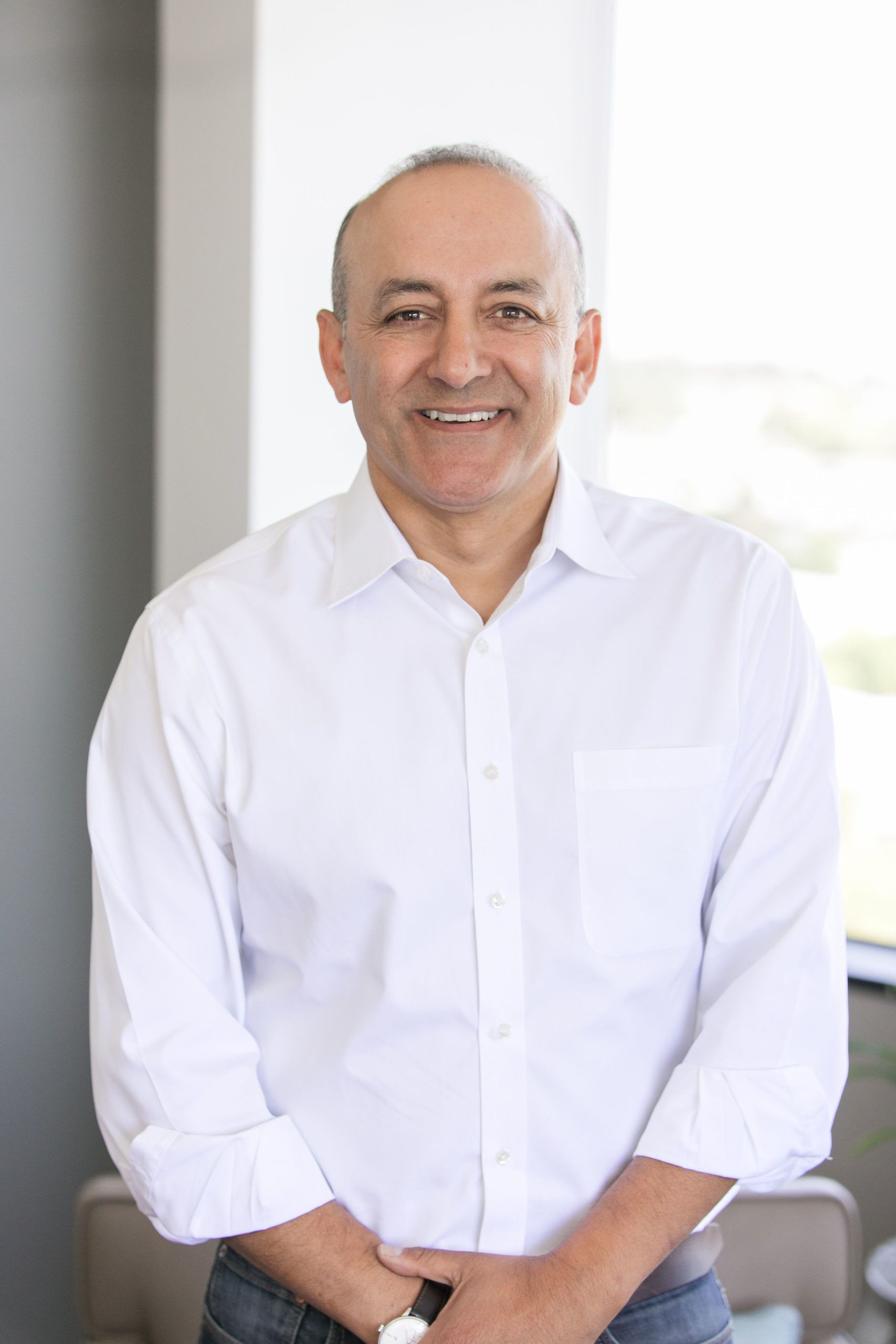
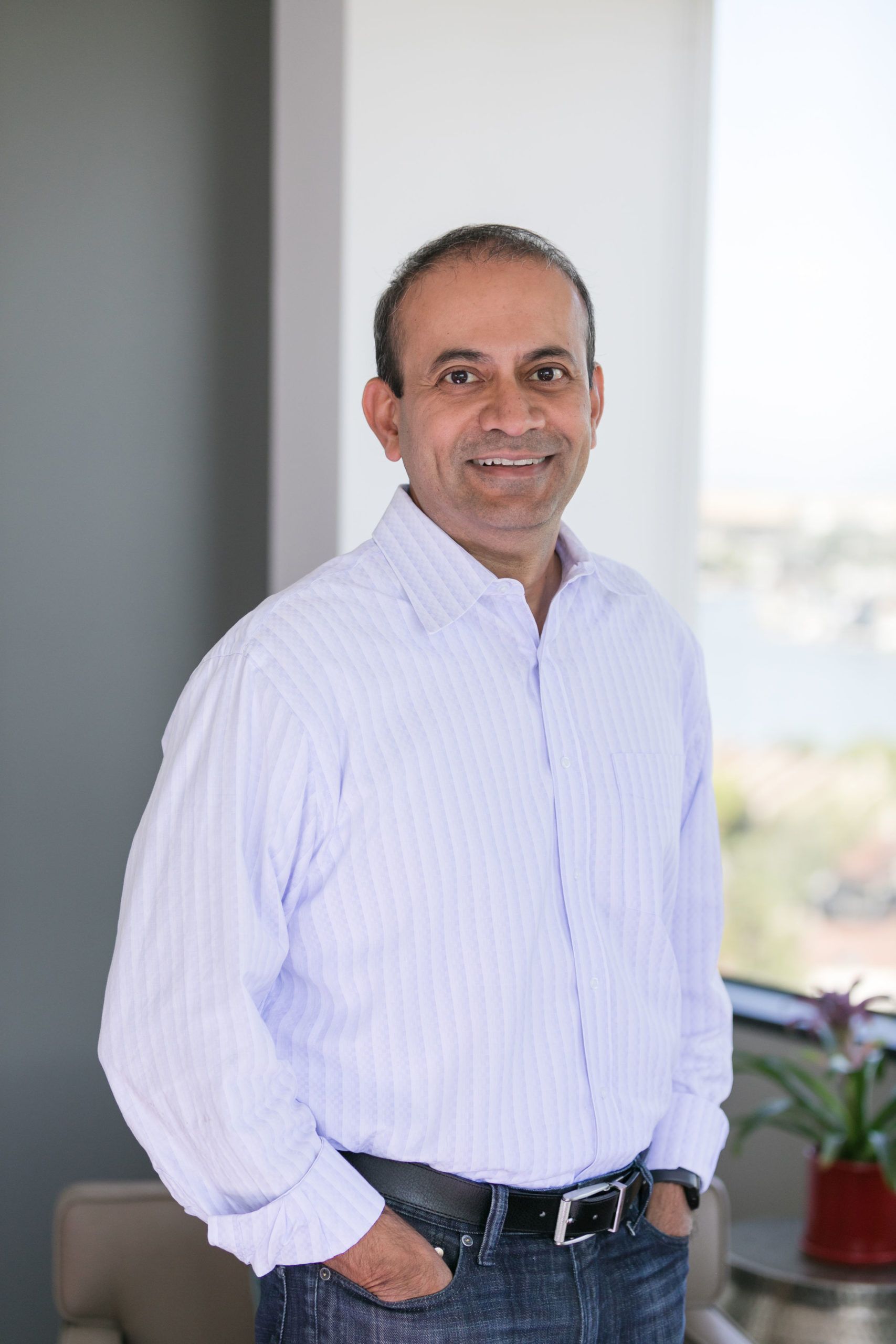
Sierra was founded by Peter Wendell, who built the firm's early reputation across the 1980s and 1990s. Today it is steered by managing partners Tim Guleri, Mark Fernandes, and Ben Yu, with Shashank Saxena joining as a fourth managing partner in 2024 - a succession signal for a firm entering its fifth decade. The addition matters because venture longevity usually breaks on the same rock: the founding generation cannot let go, and the franchise fades. Sierra has kept refreshing its bench instead.
.jpeg)
The platform side is run by Anne Gherini, who joined as chief marketing officer after building marketing at the relationship-intelligence CRM Affinity and, before that, at the venture firm Shasta Ventures. Her remit is telling: at a modern early-stage firm, marketing is not brochures - it is deal flow, founder support, and the machinery that keeps the network humming. She has also written for Inc. Magazine for years, which is its own kind of platform.
04 / The PortfolioFrom invoices to quantum
The current book is a decent map of where enterprise technology is heading. Sierra has backed Q-CTRL, which builds control software for quantum computers; Reify Health, which digitizes clinical trials; Spectro Cloud, which manages Kubernetes and AI infrastructure; and DeepHow, which uses AI to train skilled-trade workers. The range - from the deeply exotic to the deeply mundane - is the tell. Sierra is not chasing a single theme. It is applying one repeatable question across many: is this a B2B company solving a real operational problem for an enterprise buyer, and can we be early?
05 / The ModelHow a first-check firm makes money
The business itself is unglamorous by design. Sierra raises capital from institutional limited partners into successive funds, deploys it as early equity, and earns management fees plus carried interest on the gains it realizes when portfolio companies go public or get acquired. What sets it apart is not the mechanism - every venture firm runs the same math - but the posture layered on top. Check sizes run up to about $5 million at Seed and up to about $10 million at Series A, deliberately sized to buy a meaningful early stake in a company Sierra intends to help for years.
Around the capital, Sierra wraps operating support through programs like ASCEND and an EPL Council - talent, marketing, and go-to-market help meant to give a young company a sturdier foundation than money alone provides. The firm's own culture reads the same way: collaboration, open-mindedness, and a stated preference for staying in the boardroom during the hard periods rather than only showing up for the good ones.
The distinction sounds soft until a company hits trouble. Early-stage investing is mostly a story about the years between the first check and the first real revenue, when a founder is deciding whether to keep going and needs an investor who will help fix the product rather than manage the downside of their own position. Sierra's smaller funds change the incentives here, too. With fewer companies per partner, the firm can afford to be present - to make the introduction, sit through the messy board meeting, and treat the founder relationship as the actual product rather than a line item.
06 / The PositionThe quiet lane in a loud business
Venture capital rewards noise, and Sierra has mostly declined to make it. That places the firm in a specific lane: the disciplined, enterprise-focused early-stage investor, alongside peers such as Shasta Ventures, Costanoa Ventures, Boldstart Ventures, and the early-stage arms of Battery and Bessemer. Against the megafunds it competes on being useful rather than being large. Against smaller seed shops it competes on four decades of pattern recognition and a network no first-time fund can assemble.
It helps that Sierra never depended on a single macro trend to justify its existence. Firms built entirely around one wave - social, crypto, a particular flavor of consumer app - tend to rise and fall with it. An enterprise generalist that insists only on B2B fundamentals and an early entry point has more room to rotate as the technology shifts underneath it. That is how the same firm can hold a quantum-computing company and an invoice-automation company in the same portfolio without any sense of contradiction. Both are answers to the same underlying question about who is buying and why.
The interesting question for the next decade is whether the CXO model scales into the age of AI, when the buyers themselves are being reorganized by the technology. Sierra's bet is that it does - that enterprises will always need someone to vouch for the founder in the room, and that being early on B2B is a durable edge precisely because it is boring. Forty years in, the firm has outlasted five boom-bust cycles doing one thing consistently. In a business obsessed with the next thing, consistency turns out to be the contrarian move.