
Photo: City of Goodyear, via ABC15.
Microsoft has acquired an enviable problem: one of its businesses is now so large that $100 billion sounds like a membership requirement. Azure crossed that annual revenue threshold for the first time in fiscal 2026. Meanwhile, Xbox content and services revenue fell 10% in the fourth quarter. The cloud gets a champagne reception; the games business gets an awkward conversation.
Both results belong to the same company, and that is the story. Microsoft’s growth is magnificent in aggregate and decidedly unequal in distribution. The customer renting computing capacity and the customer buying entertainment are voting with different wallets. A flourishing corporate technology business offers little evidence that the living room is having an equally prosperous year.
The fiscal year ended June 30. In its July 29 earnings release, Microsoft reported annual revenue of $331.8 billion, up 18%, and operating income of $155.2 billion, up 21%. Profit from operations grew faster than sales. Those totals describe a company expanding from an already enormous base, with enough earnings power to make weakness elsewhere look small. Small, however, is a question of perspective.
Figures and executive remarks: Microsoft’s July 29, 2026 earnings release.
The cloud earns its entrance
Azure’s milestone deserves its own line on the invitation. More than $100 billion of annual revenue is a measure of money already earned over the fiscal year. It gives the cloud business a scale that cannot be conveyed by a breathless product demonstration or a crowded conference stage.
The fourth-quarter growth figure measures something slightly different: Azure and other cloud services revenue rose 43% year over year. That reporting category includes “other cloud services”; its percentage should not be presented as a separately disclosed annual Azure growth rate. Microsoft Cloud, another broader measure, generated $59.3 billion in the quarter, up 27%.
These figures travel together because they describe related parts of Microsoft’s business. They should retain their labels because they do not describe identical things. Annual Azure revenue, quarterly Azure-and-other-services growth, and quarterly Microsoft Cloud revenue cannot be stacked into one larger pile of sales. An impressive number needs no assistance from double counting.
What they do establish is commercial momentum across cloud services. Microsoft has a large revenue base and a fast-growing quarterly category at the same time. The milestone supplies the weight; the growth rate supplies the speed.
Same company. Different directions.
Q4 FY2026 revenue change, year over year
Source: Microsoft Q4 FY2026 earnings release.
Thirty million seats at the AI table
Then comes the AI number with a purchase attached. Microsoft said Microsoft 365 Copilot exceeded 30 million paid seats. Paid seats are a more concrete adoption signal than curiosity, registrations or people trying a free feature. Someone has agreed to pay for access.
A seat is still a seat. It does not tell us how often a person uses Copilot, how much time the software saves, or what price every customer pays. Multiplying the count by a single advertised price would manufacture a revenue estimate the announcement does not provide. The result is meaningful without that embellishment: Microsoft has persuaded customers to buy AI assistance at substantial scale.
In the release, Satya Nadella said, “This year, Azure revenue surpassed $100 billion for the first time”. His statement paired that milestone with Copilot’s paid-seat count. The pairing offers Microsoft’s preferred account of the year: computing infrastructure and workplace AI finding paying customers together. It does not establish how much of Azure’s revenue came from AI. That distinction matters when enthusiasm threatens to do the accounting.
An impressive number needs no assistance from double counting.From this story
The $678 billion waiting room
The largest number in the growth story has yet to become recognized revenue. Commercial remaining performance obligation reached $678 billion, an 84% increase from a year earlier. It represents contracted business still to be recognized as revenue as the relevant obligations are fulfilled.
There is a temptation to call this a $678 billion payday. Resist it. Contracts describe future business; revenue records what qualifies to be recognized in the reporting period. A growing obligation balance can demonstrate substantial demand without telling the reader that Microsoft has already delivered the services, booked all the sales or collected an equivalent amount of cash.
Timing is the missing ingredient in any quick comparison with annual revenue. Some contracted work can extend across multiple periods. The headline balance alone cannot tell us how quickly the entire amount will turn into sales, or supply a clean forecast for the next quarter. Treating it as such would give a contract the magical ability to travel through time.
For the story of Microsoft’s cloud expansion, the balance adds evidence of commitments beyond today’s sales. For the story of Microsoft’s future results, it leaves an execution question: how efficiently can the company turn those commitments into delivered services and recognized revenue?
Committed. Still to be earned.
Commercial remaining performance obligation • +84% year over year
Xbox misses the party
Back in the consumer business, the invitation is less flattering. The 10% fourth-quarter decline concerns Xbox content and services revenue. That is the reported measure; it is not a disclosed 10% fall in console shipments, player numbers or the entire Xbox business. Each of those would require its own evidence.
Windows OEM and Devices revenue also fell, by 7%. Together, the two declines show that Microsoft’s expansion did not carry every familiar brand along with it. Corporate demand for cloud capacity and paid AI tools can rise while consumer-facing revenue categories retreat. There is no rule requiring all the rooms in a large house to enjoy the same weather.
The figures establish the weakness more clearly than they establish its cause. The release’s percentages alone cannot settle whether game schedules, customer spending, pricing or another factor drove the Xbox decline. Assigning a favourite explanation would make the story livelier at the expense of making it true. The immediate conclusion is sharp enough: a celebrated cloud year included a difficult quarter for Xbox content and services.
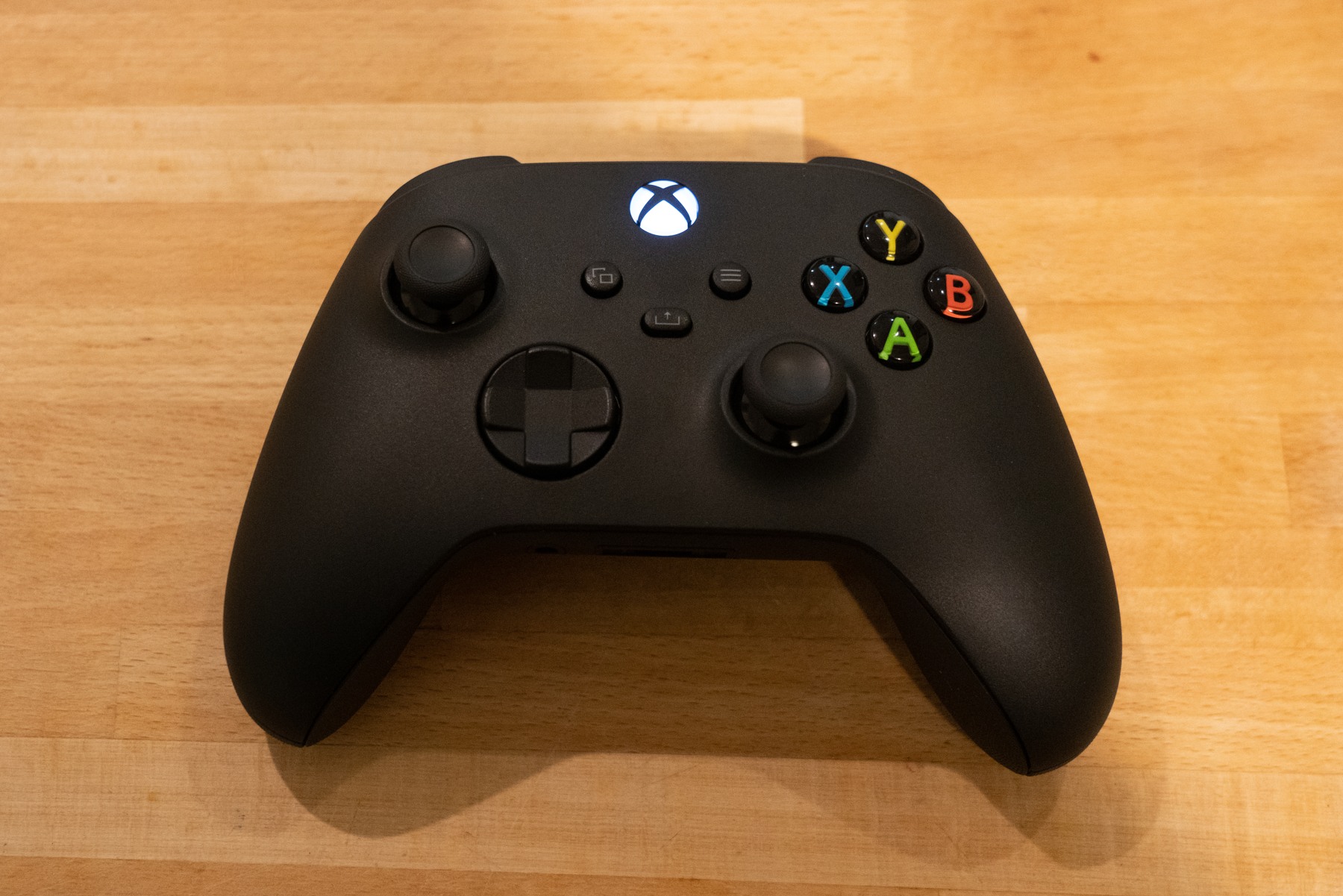
Photo: Tom Page / CC BY-SA 2.0. Resized; shown under the same license.
.jpg)
A bigger company, an uneven victory
Microsoft now offers two stories in one earnings announcement. The first is scale: annual sales of $331.8 billion, Azure beyond $100 billion, and tens of millions of paid Copilot seats. The second is selectivity: growth collects around cloud and workplace software while prominent consumer categories lose revenue.
That split changes what deserves attention next. Azure’s milestone sets a new base from which to judge growth. Copilot’s paid seats invite questions about continued adoption and customer value. The contract balance invites scrutiny of delivery and recognition. Xbox needs evidence that its content and services revenue can recover; a larger cloud operation does not answer that question for it.
The company can afford an uneven quarter more easily than most. Its operating income makes that plain. But the success of the whole should not confer a borrowed victory on every part. Azure has earned its place in the $100 billion club. Xbox still has to earn its next round of applause.

Photo: Derrick Coetzee / public domain. Headquarters: Redmond, Washington.

Five quick answers
Did Azure pass $100 billion in one quarter?
No. Microsoft said Azure exceeded $100 billion in annual revenue in fiscal 2026, which ended June 30, 2026.
How fast did Azure grow in the fourth quarter?
The reported category, Azure and other cloud services, grew 43% year over year in Q4 fiscal 2026.
Is the $678 billion contract balance already revenue?
No. Commercial remaining performance obligation represents contracted business that has not yet been recognized as revenue.
Which Xbox revenue measure declined?
Xbox content and services revenue fell 10% year over year in Q4 fiscal 2026. That percentage does not describe console shipments or player numbers.
How many paid Microsoft 365 Copilot seats were reported?
Microsoft reported more than 30 million paid seats. The count alone does not disclose Copilot revenue or usage frequency.