The most revealing object in Microsoft’s history is not a beige PC, a Windows 95 box, or the green hill of that famous desktop wallpaper. It is a write-down. In July 2015, the company announced that the phone hardware business it had bought from Nokia was worth roughly $7.6 billion less than expected. Up to 7,800 jobs would go. The grand attempt to manufacture a third smartphone ecosystem had met the two ecosystems people already carried in their pockets.
A corporate empire had discovered the difference between being powerful and being chosen. Windows ruled the desk because software makers wrote for it and computer makers shipped it. On mobile, those decisions had already been made elsewhere. Buying factories and handset designs could not buy back the missing developers, habits and timing.
The failure is useful because it makes Microsoft’s comeback legible. The company did not recover by inventing another sacred center. It learned to occupy the useful layer beneath many centers. It put Office on the iPhone. It made Azure friendly to Linux. It bought GitHub and promised that code could travel to any cloud, operating system or device. Then it threaded Copilot through products people already opened before their first coffee.
The company that sells the in-between
Bill Gates and Paul Allen started Microsoft in 1975 after seeing the Altair 8800 on the cover of Popular Electronics. The Altair itself was primitive. The interesting thing was what it implied: computers were about to multiply, and every one would need software. Their first product, BASIC, was not the machine. It was the layer that made the machine useful.
That instinct became the business. MS-DOS sat between IBM’s PC and its users. Windows sat between applications and hardware. Office sat between workers and their documents. Azure now sits between organizations and computing capacity. GitHub sits between developers and code. Copilot is an attempt to sit between intent and action.
This explains why Microsoft can look like several companies accidentally sharing a campus. Consumers see Windows, Xbox, Minecraft and Surface. A finance chief sees Microsoft 365, Azure, Dynamics and security. A programmer sees Visual Studio, GitHub and Copilot. A recruiter sees LinkedIn. The portfolio is untidy on a slide and formidable in a purchasing department. One identity system, one contract and one familiar set of administrative controls can connect the pieces.
The money arrives in several rhythms. Microsoft 365 charges by the seat. Azure charges largely by consumption. Windows is licensed to device makers and businesses. LinkedIn sells recruiting tools, ads and subscriptions. Xbox sells games, hardware and access. Search sells attention. Increasingly, Copilot adds a paid AI layer to an existing relationship. This is why the bundle matters: each product reduces the friction of adopting the next.
The $7.6 billion change of mind
The phone business failed first because its flywheel never turned fast enough. Fewer users meant fewer developers; fewer apps meant fewer users. Microsoft’s purchase price for Nokia’s devices and services assets totaled about $9.4 billion. In fiscal 2015, it recorded $7.5 billion in goodwill and asset impairment charges tied to phone hardware, plus restructuring costs. A year after Satya Nadella became chief executive, Microsoft shifted from growing a standalone phone business to building a Windows ecosystem across a narrower family of its own devices.
- OLD RULE
- Protect Windows by making Microsoft products work best on Windows.
- BREAK
- Mobile users and developers chose iOS and Android faster than Microsoft could manufacture relevance.
- NEW RULE
- Put Microsoft services wherever customers already are, then make Azure the common infrastructure underneath.
Nadella’s “growth mindset” language can sound like the sort of phrase printed on a lanyard. Its credibility came from product decisions. Linux, once treated as an existential threat, became a first-class Azure workload. Office crossed platform borders. When Microsoft paid $7.5 billion in stock for GitHub in 2018, it said the service would remain open to any language, operating system, cloud and device. The promise was strategically necessary. Developers did not need another Windows annex; Microsoft needed their trust.
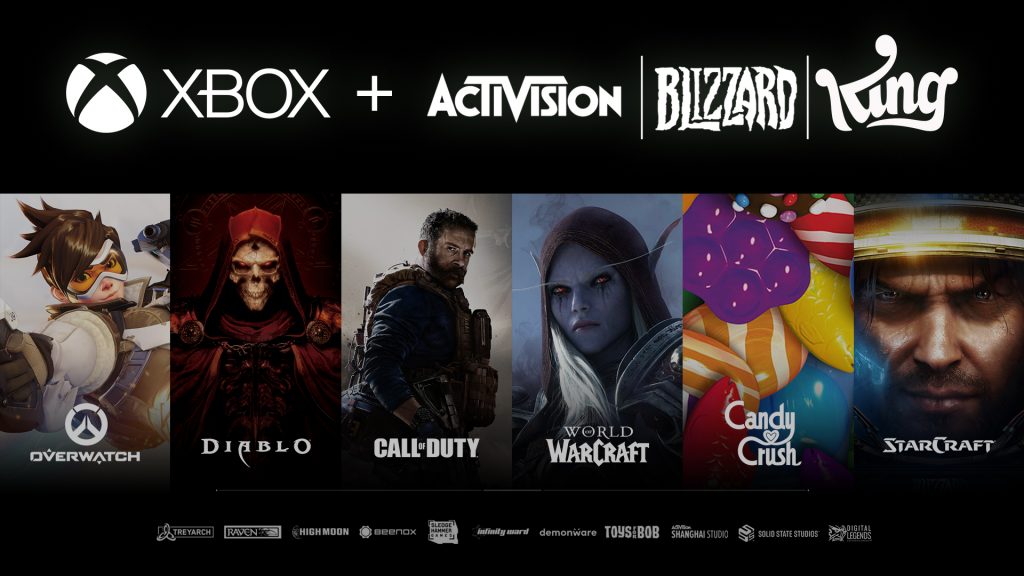
The same logic shaped its large acquisitions. LinkedIn cost $26.2 billion and kept its own brand and culture. Activision Blizzard was announced at $68.7 billion, adding game communities and durable intellectual property. Microsoft was no longer simply making applications for its operating system. It was buying networks with their own gravity and attaching them carefully to its cloud, identity and subscription machinery.
AI arrives through the doors already open
Microsoft’s AI position began with infrastructure, not a chatbot window. In 2019 it invested $1 billion in OpenAI and agreed to build Azure supercomputing systems. The relationship expanded in 2021 and again through a multiyear, multibillion-dollar investment in 2023. By 2026, the agreement had loosened: Microsoft remained OpenAI’s primary cloud partner, but its license became non-exclusive through 2032 and OpenAI gained more freedom to serve customers across clouds.
That amendment matters. It shows both the strength and limit of partnerships. Microsoft gained years of model access and a reason for customers to consume more Azure. OpenAI gained capital and computing. But neither party wanted its future reduced to dependence on the other. Microsoft has responded by offering multiple models through its AI platform and by treating Copilot as a family of interfaces across work, coding, security, health and consumer software.
Its edge is distribution. A new AI company must persuade a bank to approve a vendor, connect identity, secure data, train staff and survive procurement. Microsoft is often already inside the bank. It can place an assistant in Word, Teams, GitHub or a security console, then bill by seat and by usage. In its own reported figures, more than 90 percent of the Fortune 500 use Microsoft AI. That statistic says less about a single model’s intelligence than about the value of doors that are already open.
The playbook you can actually borrow
No startup can copy Microsoft’s installed base, global datacenters or acquisition budget. It can copy the sequence of its change. Start by naming the constraint honestly. Microsoft’s constraint was the belief that Windows had to win for Microsoft to win. Then move the metric. Cloud consumption, recurring subscriptions and developer activity reward useful service across platforms; Windows share rewards defense of one platform. Culture follows incentives more reliably than slogans.
Five moves worth stealing
- Separate the enduring capability from the aging product that once expressed it.
- Put your service where customers already work, even when a competitor owns the surface.
- Price so that customer usage, not forced migration, produces growth.
- Buy communities carefully and preserve the reasons they trusted the product.
- Use failure as a budget decision: stop feeding the old thesis and fund the new one.
There are conditions where this strategy misfires. Bundling works only when the products are good enough to reduce work rather than merely reduce vendor count. Cross-selling becomes a liability when customers feel trapped. Acquisitions can repel the communities being purchased. Cloud and AI also turn software into physical infrastructure: datacenters require capital, power, water and local consent. Microsoft has promised community-first development and carbon-negative, water-positive operations by 2030, but the scale of AI makes those promises harder, not easier.
The competitive question has changed accordingly. Amazon remains a cloud rival; Google spans cloud, productivity and AI; Apple owns premium consumer devices; Sony and Nintendo command gaming loyalties; open source can erase a feature advantage overnight. Regulators also notice when the company that supplies the road sells cars on it. Microsoft’s integration is a convenience and a source of power. It must continually prove which one customers are paying for.
Fifty-one years after BASIC, Microsoft still sells the in-between. The machines have shrunk, multiplied and moved into warehouse-sized datacenters. The interface has shifted from commands to windows to prompts. What endured was a talent for finding the layer that makes the new thing usable at scale. The odd triumph of Microsoft’s second act is that it became more central by giving up the demand to be the center.