A telephone call used to come with a small, unwelcome guest: the meter. Distance had a price. A conversation across an ocean invited arithmetic. Skype’s proposition was wonderfully easy to understand. Install some software, persuade the other person to install it, and talk over the internet. The conversation could wander. Nobody had to keep checking the clock.
- The idea: free calls between Skype users; paid connections to ordinary phones.
- The complication: successive owners and added features pulled a simple tool in different directions.
- The ending: consumer Skype retired on May 5, 2025. Microsoft chose Teams Free as its successor.
01 / The meter disappears
Founded in 2003 by Niklas Zennström and Janus Friis, Skype had a distinctly European beginning. Its technical founding team included Estonians Ahti Heinla, Priit Kasesalu, Jaan Tallinn and Toivo Annus. The engineers brought experience from Kazaa, the file-sharing service. Software that connected computers could carry voices, too. The early architecture used peer-to-peer networking, distributing work across the network rather than treating every conversation as a conventional telephone call.
The customers were anyone with somebody elsewhere: families, friends, freelancers, small companies. Voice became video; messaging, file sharing and screen sharing widened the possibilities. A colleague could explain a document. A family could see a face. Skype sat between the telephone network and internet software, bringing everyday communication onto computers and, later, mobile devices.
Free had a boundary. Skype-to-Skype calls cost nothing beyond the user’s internet connection. Calling a landline or mobile number required credit or a subscription; receiving calls through a Skype Number was another paid service. Prices depended on destination and plan. The clever distinction was between people already inside the software and people still reachable through a telephone number.
Scale could conceal that distinction. Skype’s 2010 IPO filing recorded 560 million registered accounts by June. Average monthly connected accounts for that quarter were 124 million; average monthly paying accounts were 8.1 million. Registrations, activity and payment described different populations. For a founder studying freemium, that is the useful arithmetic.
02 / Three owners. Three different ideas.
In 2005, eBay bought Skype for an initial $2.6 billion. The proposed fit was commerce: communication might help buyers and sellers transact. By 2007, eBay had taken a $1.4 billion write-down. In its later account of the deal, eBay acknowledged that the expected connections to its core business had not materialized. An acquisition can buy an audience without giving that audience a reason to do something new.
A Silver Lake-led investor group took majority control in 2009, valuing the business at $2.75 billion. Microsoft then announced an $8.5 billion cash acquisition in 2011 and closed it that October. These were ownership transactions, not three rounds of cash deposited into Skype’s operating account. Microsoft’s ambition stretched across devices and products. Skype also powered Facebook video calling in 2011, extending its technology into somebody else’s social network.
03 / The call gets harder to find
The first big failure in this ownership story was eBay’s strategic fit. A later failure was visible on the screen. Skype’s 2017 design experiments included Highlights, a social-sharing feature. The trouble was painfully close to the product’s purpose. Peter Skillman, its design director, acknowledged that the changes had complicated core activities.
Calling became harder to execute.
Peter Skillman / Skype & Outlook design director, 2018
Customer feedback helped change the team’s mind. In 2018, Skype removed Highlights and Capture and returned mobile navigation to three essentials: Chats, Calls and Contacts. Its design explanation described observing users, testing prototypes and simplifying. The lesson is practical: measure how quickly someone completes the original task after a redesign. A feature that makes the central action harder carries a cost even when nobody pays for it.
04 / Two children, two languages, one call
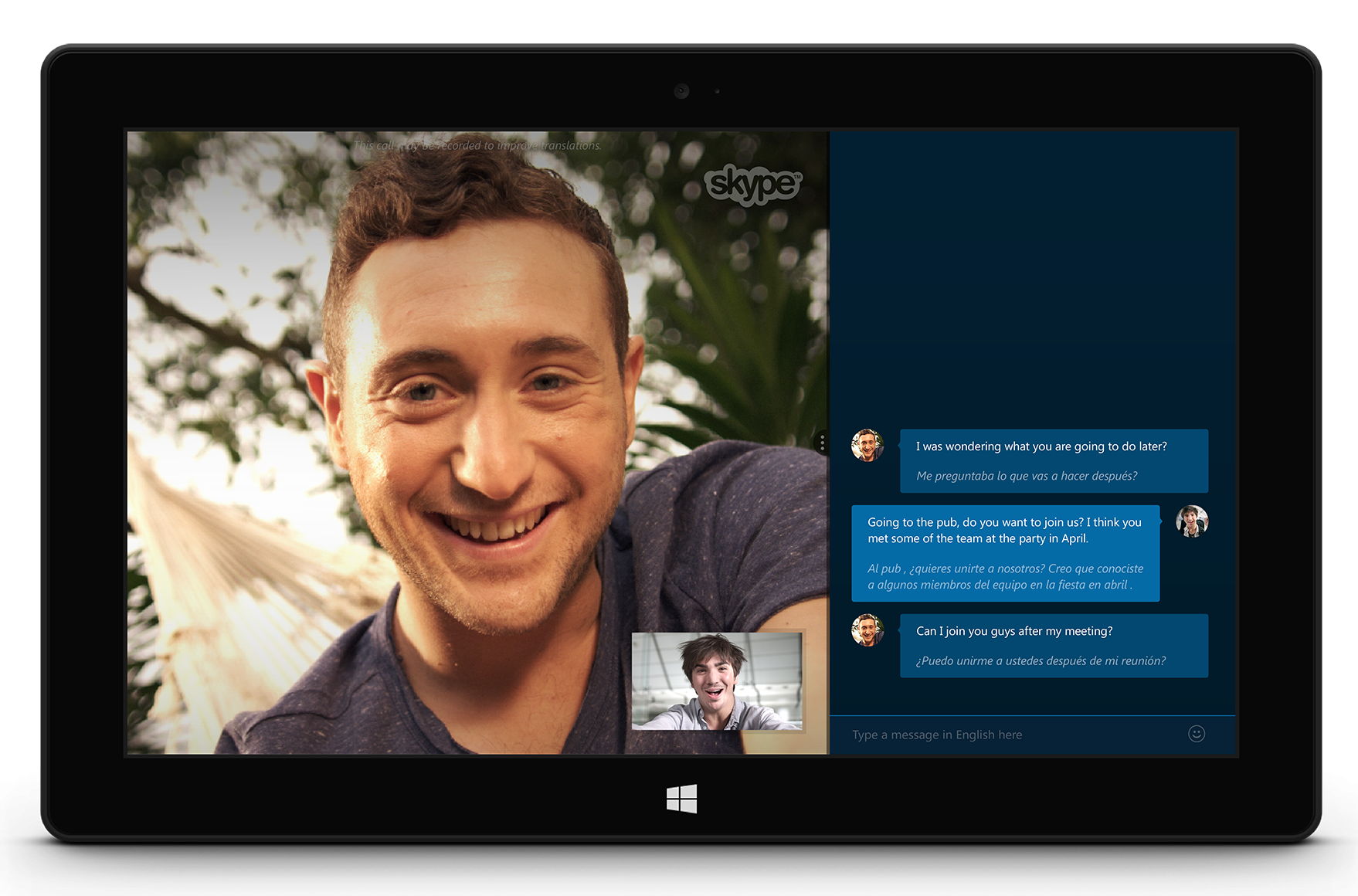
Skype could still pursue ideas closely connected to conversation. In December 2014, its Translator preview linked schoolchildren in Washington and Mexico City, translating between English and Spanish. By the October 2015 Windows desktop rollout, Microsoft listed six spoken languages and 50 messaging languages. Klingon was among the text options. Even interstellar diplomacy, apparently, needed a chat window.
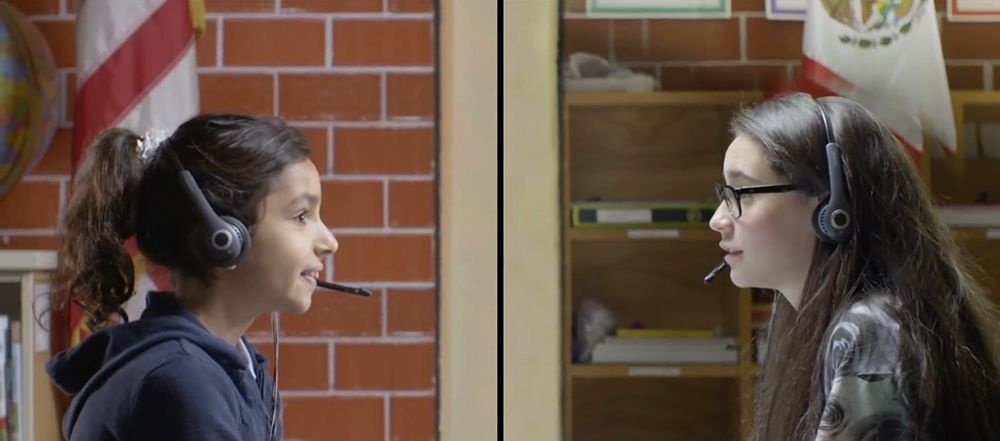
The motivation was personal for some of the builders. Researcher Frank Seide lived in a multilingual household; program manager Lilian Rincon had arrived in Canada as a child speaking Spanish. Their experiences of language barriers gave the project a human problem to solve. Speech recognition and machine translation became tools for understanding the person already on the call.
Demand for Skype had not simply evaporated. In March 2020, Microsoft reported 40 million daily users, up 70 percent month over month. Meet Now offered meetings without signups or downloads. Yet the same announcement previewed Teams features for personal life. Microsoft was serving an immediate need while developing another destination for it.
Teams also complicates the familiar story of an old app losing to a new one. In its 2017 workplace announcement, Microsoft said a modern Skype infrastructure was already powering communication experiences in Teams. Some of the engineering could continue while the familiar application lost its central role. That distinction matters when judging the acquisition: a retired brand does not, by itself, establish that every asset was wasted. Equally, surviving technology does little for a customer who must change a familiar routine. Microsoft’s portfolio and a family’s contact list were two very different ways of measuring that continuity.
05 / The next call goes elsewhere
By February 2025, the company’s choice was explicit: consolidate free consumer communication around Teams. Skype retired that May. Its historical alternatives included phone carriers; later choices included WhatsApp, FaceTime, Zoom and Google Meet. Inside Microsoft, Teams had already been designated the future client for workplace communication in 2017. Consumer Skype and Skype for Business were separate products; the 2025 retirement excluded the latter.
For readers choosing a service today, Skype is a history lesson rather than a new subscription to buy. Teams Free handles internet conversations, but ordinary phone-number calling is a separate requirement to check. Microsoft says all Skype Number subscriptions ended in May 2026. Its stated history-export request deadline, June 15, 2026, has also passed.
What can another company copy? Remove a cost people already resent. Make the invitation easy. Protect the action they return for. The approach depends on both participants having suitable connectivity, compatible tools and a reason to meet there. It loses force when customers already have another convenient channel, or when the paid bridge serves a shrinking need. Skype made distance cheap. Every extra step between two people remained expensive.