A bank account can begin with a video call. That sounds like a convenience story: stay on the sofa, show your face, spare yourself a visit to a branch. But in the BBVA deployment announced in 2017, the interesting piece was what happened to the conversation after it happened. The video needed to become a record. Someone had to capture it, preserve it and make it available when a transaction was questioned.
- Dialogic makes the components underneath calls, conferences and recordings.
- Its buyers are carriers, software developers and enterprises connecting different communications systems.
- Its pitch combines media expertise with network interoperability and software deployment.
- Enghouse bought the business in 2020; Sangoma had already bought a separate hardware division.
A bank account begins with a recording
Quobis supplied the WebRTC application, BT deployed it, and Dialogic’s PowerMedia XMS supplied recording and archiving capabilities. Customers could identify themselves through two-way mobile video. The announcement described interactions retained by the bank for up to five years for audit or dispute resolution.
The arrangement puts Dialogic in its natural habitat: underneath something more visible. The customer sees a bank. The bank needs a workflow. Inside that workflow, a media server does a particular job. A beautiful interface would have been an incomplete answer if the conversation could not be kept.
“Recording and archival of the transaction was a critical requirement”
Elias Pérez Carrera, Quobis CEO · 2017
The revealing question is therefore less “Can we make a video call?” than “Can this call do the work the institution requires?” That distinction opens a surprisingly large cupboard of technical problems. Dialogic has spent decades selling its contents.
The business of being an ingredient
The original Dialogic began in 1983 with James Shinn, Nicholas Zwick and Kenneth Burkhardt. Its early products linked voice processing to computers. Rather than sell the finished application, it supplied hardware and software components that other manufacturers and resellers could build into their own systems.
There is a commercial advantage in that choice. A finished application has to win its own audience. A useful component can travel inside many applications, wearing other people’s names. Dialogic’s customers could choose the particular market; Dialogic could concentrate on the recurring technical obstacle.

Burkhardt recalled that early venture fundraising failed. The founders financed the business themselves and imposed tight financial controls. Later, consensus management became cumbersome as sales passed $20 million. In March 1991, the three decided to recruit outside leadership. Their arrangement had become a constraint on the company it had helped create.
The lesson travels well: a technical business can need a management upgrade before it needs another invention. Knowing how to build the product does not settle who should run the operation.
A call has several jobs
Think of a call as an assignment passed between specialists. One part establishes and controls the connection. Another handles the actual sound and pictures. A third decides which resources are available. Confuse those jobs and the phrase “communications platform” becomes a very expensive fog.
PowerMedia XMS is the software media server. Its applications include conferencing, interactive voice response and transcoding - converting media between formats. It supports on-premises and cloud deployment. Developers buy a building block and supply their own application around it.
PowerMedia MRB, the Media Resource Broker, manages a pool of those servers. It allocates resources and supports load balancing and failover. To an application, the pool can appear as one media server. The attraction is straightforward: avoid leaving capacity stranded in separate islands while another service runs short.
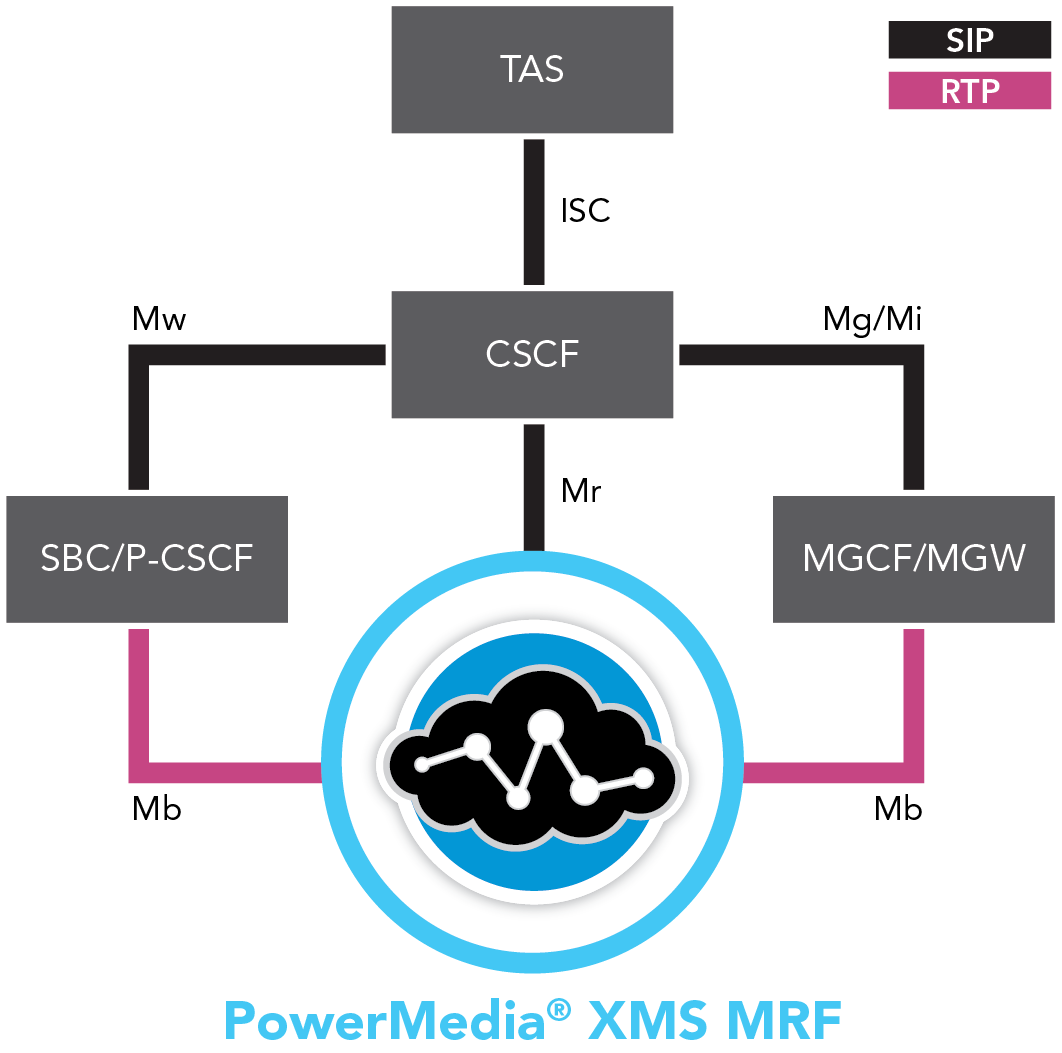
BorderNet SBC operates at a different layer. A session border controller manages signaling and media across network boundaries. Its duties include protocol interworking, security and call control. Dialogic’s published deployment options include conventional servers, virtualized environments and Amazon’s cloud.
PowerMedia HMP handles media processing on host computers running Windows or Linux. Its support for established Dialogic interfaces gives existing applications a migration route. Enghouse Networks also markets the Dialogic lineage through a cloud softswitch, media gateway control functions, and signaling products. These are different tools for different parts of a network, with support and technical training alongside them.
The dividing line matters when comparing alternatives. SBC vendors and application-level communications providers answer different questions. An open-source telephony stack may be a plausible choice for some workloads; a carrier interconnection project has its own demands. Dialogic’s appeal is the combination of media processing and experience joining unlike networks. That is a purchasing hypothesis to test against the actual system.
The balance sheet had its own migration
Dialogic’s corporate history is almost as layered as a telephone network. Intel acquired the original company in 1999. In 2006, Intel agreed to sell its media and signaling business to Eicon. The assets included the Dialogic product lines, host media processing, SS7 technology and gateway solutions. The combined operation adopted the Dialogic name.
Then came a more sobering number. The 2014 Novacap merger agreement specified $35.3 million in total cash consideration. Roughly $34.2 million was allocated to funds managed by Tennenbaum Capital Partners. The agreement provided for approximately $78.3 million of term debt to be canceled and another $8.75 million to be converted to equity before the tender offer.
The deal was completed that November. Its significance was more than a change of owner: it addressed the capital structure. Useful technology and an awkward balance sheet can inhabit the same company. Any account that treats the acquisition as a simple victory lap misses the arithmetic.
Sangoma’s announced cash price for key hardware-division assets.
Enghouse’s announced purchase price for Dialogic Group Inc.
Sangoma bought key assets of the Converged Communications Division in 2018. Enghouse Systems acquired Dialogic Group Inc. in January 2020. At that later purchase, Enghouse projected revenue of $58 million to $63 million over the following twelve months. That is a dated forecast, rather than a current measure of the business.
For buyers, ownership is practical information. A familiar Dialogic badge on hardware does not establish the supplier or support route today. Sangoma’s IMG documentation lists September 30, 2026 as the end of sale for affected products, with end of life scheduled for September 2028. The software portfolio under Enghouse has a separate history.
Buy the bridge, test the crossing
One example of Dialogic’s development economics comes from CreaLog. In 2014, it reported using PowerMedia XMS to add browser-based video to its contact-center software in less than a month of development. The customer already had a product and a market. Buying media capabilities helped it extend the service without inventing every underlying mechanism.
That is the useful move to copy: identify the layer that is difficult but common, buy it where appropriate, and spend your engineering effort on the workflow that customers actually choose. It works best when the component’s interfaces, supported media formats and operating model fit what you already run.
It also has boundaries. The XMS sample applications require installed software and an activated license; individual demos carry additional build and execution requirements. A component does not absolve a team of integration work. Nor does a cloud deployment automatically preserve calls through every failure. Redundancy needs an architecture, capacity needs testing, and somebody still owns operations.
Pricing follows that architecture. Dialogic offers sales contact and cloud subscription options. For a real budget, a buyer needs a scoped quote covering licensing, compute, resilience, integration and support. The reported month of development at CreaLog is evidence about one project’s speed, not a universal delivery promise or a bill.
Dialogic fits where the old system has to remain useful while a new service takes shape. Banks need evidence, contact centers need richer conversations, and operators need networks that can cross protocol boundaries. The telephone has acquired an impressive collection of costumes. Underneath them, someone still has to make the call work.
Explore the machinery
Products, working examples and the company’s public channels.