Imagine a conference room with an immaculate display. The picture is sharp. The furniture is expensive. Someone at the far end of the table begins to speak, and the colleague joining from home hears half a sentence, a scrape, and something that might be an opinion. The room has fulfilled the photograph in the sales brochure. It has failed the meeting.
This is a useful way into DataVox, the Houston business technology company. Its work concerns the space between an impressive collection of equipment and a system people can actually use. That space contains microphones, network connections, permissions, installation decisions, support arrangements, and a surprising amount of human patience.
- The job: connect business IT, audiovisual rooms, physical security, communications, and building infrastructure.
- The offer: design and installation, followed by ongoing support where the customer wants it.
- The useful lesson: test the everyday workflow, then standardize what works.
The screen gets the applause.
The microphone does the work.
In July 2026, DataVox published an argument for putting conference-room audio ahead of video. Its diagnosis was specific: designs can allocate the budget to screens and cameras, then fit microphones around whatever remains. Placement follows cable routes rather than voice coverage. Audio processing stays at factory settings. The room never gets properly tuned.
None of those choices requires defective equipment. A good microphone in the wrong place can make a poor system. Hard surfaces, ceiling height, seating, and table shape all enter the calculation. Remote participants have an especially unforgiving position: they cannot lean across the table to catch the sentence they missed.
DataVox’s AV portfolio addresses that whole environment. It covers conferencing, control systems, digital signage, and spaces ranging from huddle rooms to training centers and command rooms. The expertise lies in selecting and integrating equipment for a particular use, then making operation predictable. The distinction matters to a buyer comparing two proposals that appear to contain similar boxes.
“Customer Success Drives Us”
DataVox’s stated mission
Put that mission through a practical test. Can an unfamiliar employee enter the room, start a call, share material, and recover from a mistaken button press? The answer tells you something a resolution specification cannot.
A building does not respect departmental boundaries
DataVox’s breadth initially looks like a catalog that has escaped its binding. Cloud infrastructure sits beside cameras. Phone systems sit beside fiber. There are access controls, data protection, distributed antenna systems, paging, power protection, and sound masking. The common setting is an organization whose technology occupies both the screen and the building around it.
A camera needs connectivity. A conferencing system depends on the network and the room. An access-control project touches security, facilities, and IT. The appeal of a broad integrator is straightforward: someone can follow a problem across those boundaries. Buying separately can work, but the customer then has to coordinate the seams.
The company traces its origin to Ross Ferguson and his sons opening the business in 1990. In a public founder tribute, DataVox describes Ferguson moving his family from Scotland to America in 1983. That gives the enterprise a family origin rather than a venture-round origin. Its community program also names employee volunteering with DePelchin Children’s Center and Habitat for Humanity.
Its customers span business and institutional settings: commercial real estate, energy, healthcare, education, local government, logistics, and manufacturing appear in its industry offerings. DataVox says thousands of businesses have relied on it since its founding. The company’s practical fit is with organizations that need installed technology, specialist knowledge, and support across several systems.
The handoff is part of the product
There are two purchases inside a technology project. One is the installation. The other is the arrangement for living with it. DataVox’s business covers equipment resale and integration work, with consulting and ongoing services alongside them. Its DVX365 managed IT offering makes the second purchase explicit.
Customers can choose fully managed support or a co-managed arrangement that supplements internal staff. The listed work includes help desk service, remote and onsite support, patch management, endpoint protection, server administration, and network operations. An internal IT team can retain responsibility while engaging outside capacity for an agreed scope.
The same question follows the network. DataVox’s performance guidance starts with discovery across topology, traffic, wireless behavior, WAN links, and device health. It recommends baselines and alerts tied to action. A dashboard becomes useful when someone knows what normal looks like and who should respond when it changes.
Equipment + deployment + operation
Compare the installed system and its support over time. Include licensing, maintenance, internal effort, and future refreshes in the scope you request.
That is a way to think about cost, rather than a promise of savings. A scoped installation and a continuing service package answer different questions. The buyer should ask which work is included, which requires another project, and which remains with employees. A cheaper purchase can leave more coordination on the customer’s desk; a broader contract has to earn its additional scope.
For eligible public-sector buyers, DataVox lists Texas DIR, TIPS, and Choice Partners purchasing routes. Those arrangements address a different kind of friction: how an institution procures the work. Procurement access and technical performance both matter, but one does not prove the other.
The cloud is a location, not a loyalty test
DataVox offers cloud services without insisting that everything belongs there. Its data center portfolio includes compute, storage, backup, virtualization, and hybrid infrastructure. Its own discussion points to latency-sensitive and high-cost workloads as reasons customers may consider bringing selected applications back on premises.
The phone portfolio has a similar range: cloud, on-premise, and hybrid VoIP systems, plus contact centers. This flexibility suits organizations whose existing applications, requirements, and budgets do not fit a single migration prescription. The useful question is where a particular workload belongs, and what it needs around it.
Consumption-based infrastructure is another option in the portfolio. DataVox describes a metered approach intended to reduce overprovisioning and accommodate changing demand. That does not make it automatically economical. Utilization, contract terms, support responsibilities, and the workload itself still decide whether the arrangement fits.
Physical security brings the argument back into the building. DataVox supplies access control, video surveillance, emergency communications, and license plate recognition. Its description of Motorola Solutions’ ecosystem emphasizes joining security and communication functions. Integration here is a design and operating task: alerts, access, and response need an agreed relationship.
Try one room before buying twenty
DataVox’s room-standardization guidance offers a particularly copyable sequence. Inventory the rooms. Identify what users need and what currently fails. Define a small set of profiles by size and purpose. Then pilot a room kit before rolling the design out across locations.
Standardization reduces the number of unfamiliar controls and configurations a support team must understand. It also makes procurement, spare equipment, and future refreshes easier to plan. The limit is equally practical: a training room and a small huddle room need different designs. Repeat the workflow where possible; adapt the physical design to the space.
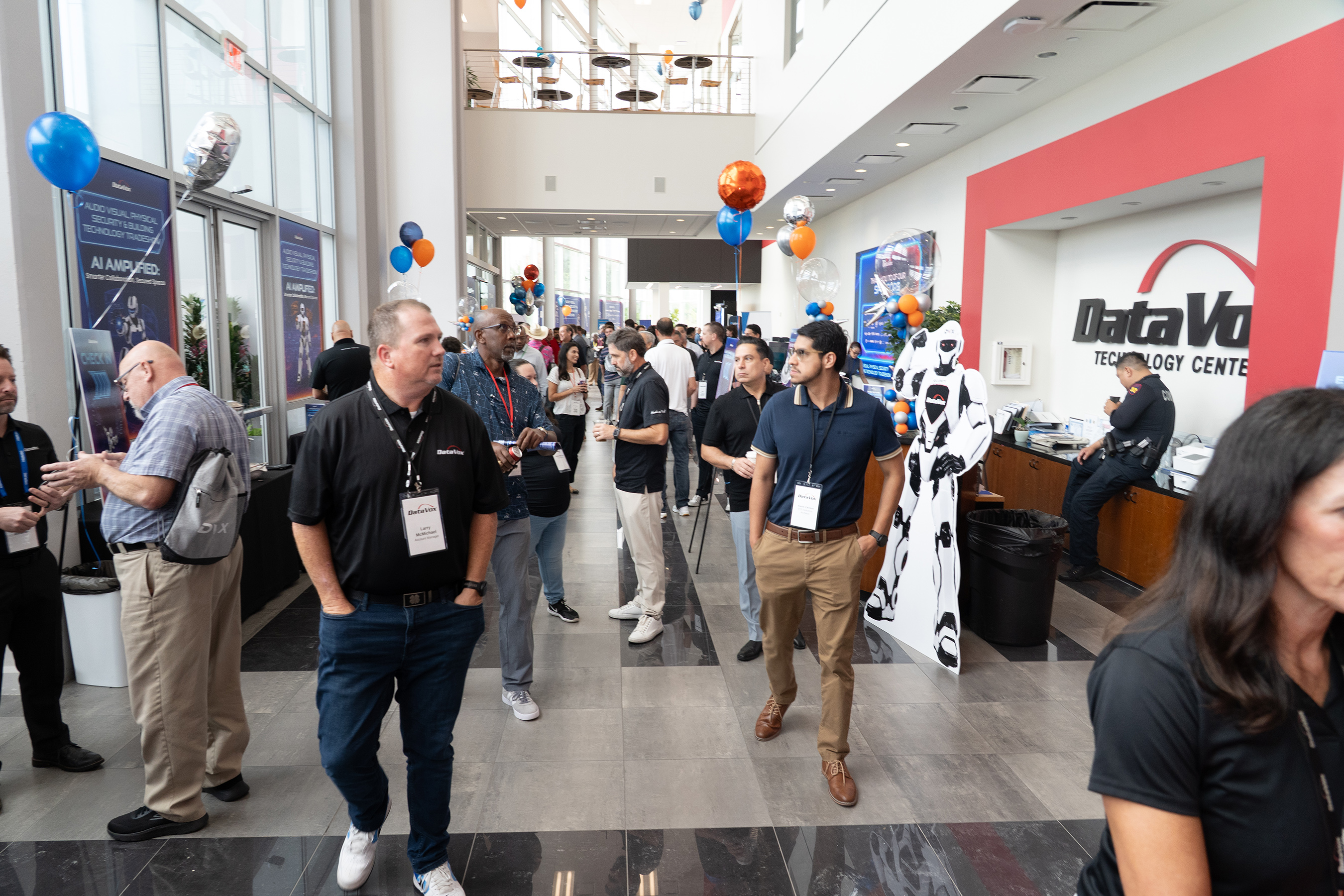
The company also argues for seeing AV in person before buying. A demonstration lets buyers hear the audio, judge a display in a room, and operate the controls. In August 2026, its audiovisual, physical security, and building technology tradeshow brought those categories together. A September notice advertised a joint Verkada security demonstration event in North Texas.
Education supplies another concrete test of execution. In May 2026, DataVox announced that HPE Networking had named it a Top 15 Partner for the 2026 E-Rate season. Its account emphasizes summer installation windows, labeled equipment, validated configurations, documentation, and knowledge transfer. A school needs a network that staff can operate when students return.
These are sensible buying criteria even for organizations that choose someone else. A specialist may suit a narrow project. An internal team may already have the expertise and time to coordinate several vendors. DataVox’s breadth becomes most relevant when dependencies, installation, and continuing support create more work than that team can comfortably absorb.
Ask for a demonstration of the ordinary day. Ask who owns the maintenance. Ask how the next room will differ from the first. Then sit at the far end of the table and listen. The equipment has had its presentation. The people using it deserve theirs.