physical-security
(44)
Hanwha Vision Europe wants your cameras to earn their keep
A warehouse conveyor, an airport checkout and a Finnish substation explain Hanwha Vision Europe’s bet: cameras become more useful when they help people act on what they see.

Rob Frechette Wants the Camera Business to Stop Selling Cameras
After years on the reseller side of physical security, Rob Frechette crossed the counter. His pitch at Spot AI is blunt: let partners keep the customer, keep the cameras and sell what the footage can do.

EPIC iO Bet the Camera Was Never the Point
The Fort Mill company is stitching cameras, sensors and wireless links into one operating layer for remote sites - a useful idea whose economics depend less on magical AI than on good placement, clean signals and humans who still make the call.

Alexandra Ozerkis Learned to Sell the Invisible
The Evolv Technology CMO spent two decades translating complicated categories, from trade associations to AI screening. Now her brief is to turn trust, fieldwork and careful language into growth.

Evolv Sold the End of Security Lines. Then Reality Walked Through the Scanner
The Boston-area company turned the security checkpoint into a subscription business used by schools, hospitals and stadiums. Its next act depends on proving that speed, detection and sober claims can finally travel together.

Brivo Put the Office Key in the Cloud - Then Spent 25 Years Teaching Security People to Trust It
Brivo started with a parcel box, pivoted to doors, and made a subscription business out of the least glamorous hardware in a building. Its latest act combines access control and AI video under one roof - with a playbook worth stealing and a few catches worth reading first.

Patrick Barry Put Building Security in the Cloud. Now He Wants It to Think.
After helping build an early cloud security platform at Touchcom, Patrick Barry returned with BluBØX, a name born from moving boxes and a plan to make buildings less reactive. His latest bet is that AI should lower costs as well as add capability.

Lukas Quanstrom Is Turning Security's Messy Signals Into a Business Language
The Ontic co-founder has spent his career making scattered information useful. His larger bet is that corporate security earns influence when it can turn signals into decisions, quickly and clearly.

Christopher Hugman Turned the Site Walk’s Messy Minutes Into a Living Map
A customer’s awkward question exposed a failure hiding in plain sight. Hugman’s answer was to give cameras, doors, notes and decisions one visual place to live.

Eric Smith Built a Career by Asking Security to Prove It
For nearly three decades, the Lares co-founder has treated cybersecurity as a claim that must survive contact with reality. His work helped give penetration testers a shared playbook - and executives a more useful question than “Are we compliant?”

Eric Styles Built a Security Company Around Three Words: I’ve Got Your Back
The YourSix CEO turned an Army phrase into a company promise - then built a partner-led cloud platform designed to replace rooms of security hardware with one operating system.

BluB0X Put the Security Desk in the Cloud - Now It Wants AI to Run the Building
The Andover company rebuilt doors, cameras, turnstiles and elevators as one cloud service. Its bet is that the winning security system will own less hardware, share more context and tell operators what happened before they ask.

The Two Engineers Who Turned Locked Doors Into a Software Problem
Justin Dagen and Jason Higley spent 15 years wiring up access control for Fortune 100 campuses. Then they built the off-the-shelf product they wished existed - and sold it to the company chasing the same doors.

System Surveyor’s $50 Bet: Turn the Messy Security Site Walk Into a Living Map
Security projects used to shed context at every handoff - from yellow pad to PDF to spreadsheet to technician. System Surveyor built a visual record that follows the cameras, doors and decisions from first walk to final maintenance call.

The Company That Turned Corporate Security Into a Single Screen
Corporate security teams drown in tabs, feeds and spreadsheets. Ontic bet that connecting all of it in one place - now with AI - is worth $287 million to investors and the attention of the Fortune 50.

Alex Pachikov Built a Security Guard That Takes Off
A noise outside his house gave Alex Pachikov an idea. A pandemic nearly killed it. Now Sunflower Labs is turning autonomous drones into roaming eyes for airports, rail yards and other hard-to-watch places.

Shawn Guan
Shawn Guan is the CEO and co-founder of Umbo Computer Vision, an AI company building autonomous video security systems that watch camera feeds and flag real threats instead of stray animals and swaying trees. After roughly 2,000 client meetings in the traditional surveillance business taught him how badly false alarms wear people down, he co-founded Umbo in 2014 with Ping-Lin Chang and Tingfan Wu to put deep learning behind the lens. The company raised about $17.6 million, won a Best Startup nod at NVIDIA's 2016 deep learning conference and SIA's Best in Video Analytics in 2017, and ran offices in San Francisco, Taipei and London.

Intellicene
Intellicene is a Melville, New York-based security software company that builds Symphia, a unified, video-centric platform for physical security operations. Spun out of Verint and Cognyte's Situational Intelligence Solutions business and acquired by Canada's Volaris Group in December 2022, the company connects and correlates data from cameras, access control, intrusion detection and other networked devices so security teams can detect threats and respond to mission-critical events in real time. With roughly 25 years of heritage, it serves retail, airports, transportation, healthcare, safe cities, higher education and industrial customers worldwide.

Greg Colaluca
Greg Colaluca is the CEO of Intellicene, a unified security management and situational intelligence software company formerly known as Cognyte Situational Intelligence Solutions and now owned by Volaris Group. He stepped in as general manager in mid-2024 and took the CEO title, steering the business toward a customer-first culture and intelligent, AI-driven security platforms for mission-critical environments. His career spans more than 20 years of global operations leadership at Sensormatic, Astreya Partners, and Hewlett Packard Enterprise, with a focus on customer success, growth, and operational excellence.

Lumana
Lumana is an enterprise AI video security company that turns ordinary IP cameras into real-time monitoring, detection and response systems. Founded in 2021 by former Intel computer-vision leaders and based in Los Gatos, California, Lumana pairs its proprietary VIA-1 vision model with vision language models and agentic AI to run analytics on more than a billion images a day - flagging weapons, fires, falls and unauthorized access, cutting false alerts, and letting security teams search footage across 100+ attributes. The company raised a $40M Series A in 2025, bringing total funding to $64M, and counts McDonald's, Meta, the Minnesota Twins and NYU among its customers.
Sunflower Labs
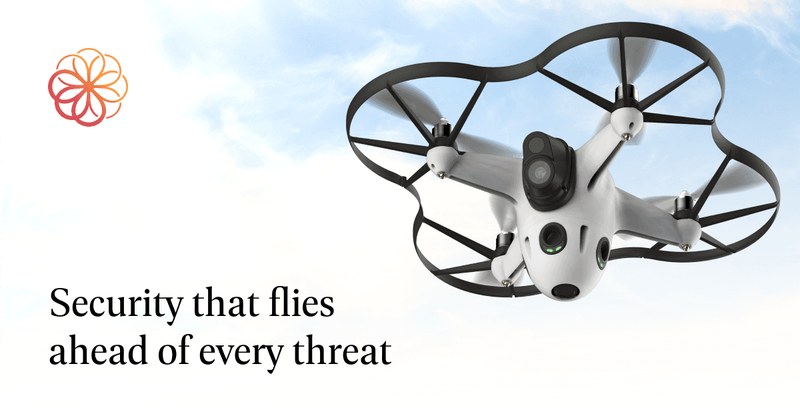
Sunflower Labs builds the Beehive - a fully autonomous, AI-powered drone security system for large outdoor properties. Its 'Bee' drone lives inside a weatherproof 'Hive' base station, launches within seconds of a triggered sensor, patrols a property while avoiding obstacles in nearly any weather, streams HD and thermal video, then returns to recharge on its own. Founded in 2016 and based in Zurich and San Francisco, the company pitches drones as a lower-cost, faster-responding alternative to human security patrols for industrial sites, commercial campuses, and high-value residential properties.
Umbo Computer Vision
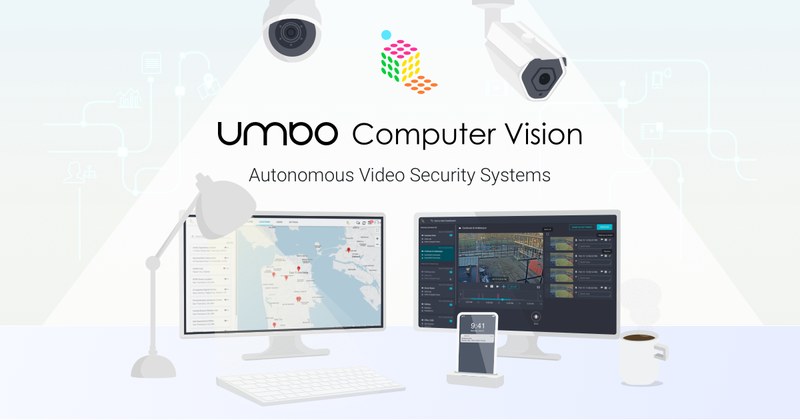
Umbo Computer Vision is a San Francisco and Taipei based startup building autonomous video security systems that use deep learning to watch camera feeds the way a human guard would - flagging intrusions, tailgating and wall-scaling in real time while ignoring birds, cats and weather. Founded in 2014 by Shawn Guan, Ping-Lin Chang and Tingfan Wu, the company pairs its SmartDome camera hardware with a neural-net engine called Light and a cloud platform, and has raised roughly $17.6M to sell mostly through security integrators to businesses, schools and public-safety customers.
Paul Mazzo
Paul Mazzo is the President and Chief Executive Officer of Technology Integrators, Inc., an IT services firm specializing in structured cabling, network integration, physical security, audio/visual systems, and managed services. He has led the company since January 2004, following a stint as Project Director of Information Technology at Pfizer. His work sits at the seam where copper meets code - the unglamorous plumbing that keeps modern enterprises running.

Monarch
Monarch is a San Francisco based reseller and deployment partner for cloud-managed physical security and connected-operations technology. As an authorized Verkada reseller and Samsara channel partner, it designs and installs AI-powered camera systems, access control, environmental sensors, and fleet dash-cam and GPS telematics for schools, hospitals, warehouses, construction sites, and multi-site enterprises. The pitch is enterprise-grade security without the NVR/DVR complexity - hardware that updates over the air and is managed from a single cloud dashboard.

Athena Security Inc.
Athena Security is an Austin-based physical-security company that builds AI-powered concealed weapons detection and visitor management systems for schools, hospitals, casinos, businesses and public venues. Founded in 2018 by serial entrepreneurs Lisa Falzone and Chris Ciabarra (the pair behind iPad point-of-sale pioneer Revel Systems), Athena combines walk-through metal detection, thermal imaging, lidar, cameras and machine learning to screen roughly one person per second - up to 3,600 people an hour - without asking anyone to empty their pockets or bags. Its flagship Apollo 500 system uses colored light boxes to show operators exactly where a suspected weapon is on the body, and its screening-compliance software helps organizations meet a growing patchwork of state security laws.

Cambridge Terahertz
Cambridge Terahertz is an MIT spinout building a chip-based imaging system that combines the 3D vision of lidar with the see-through power of X-ray, but using human-safe terahertz waves at a thousandth the power of a cell phone. Shrunk from an airport-scale scanner into a palm-sized, two-pound device, its AI-powered sensors detect concealed weapons through clothing and bags, and can see inside sealed packages without opening them. Founded in 2023 by MIT PhD Nathan Monroe, the company raised a $12M seed round led by Felicis with participation from Amazon's Industrial Innovation Fund.

Hirsch Group (fka Vitaprotech)
Hirsch Group (formerly Vitaprotech Group) is a France-based provider of premium, integrated physical-security systems for sensitive and high-security sites. Built by rolling up specialist companies - perimeter-intrusion pioneer Sorhea, access-control firm TIL Technologies, video-analytics maker Foxstream, UK detection specialist Harper Chalice, and others - it made its biggest leap in 2024 by acquiring the security business of U.S. firm Identiv for about $145 million, which brought the iconic Hirsch access-control brand into the fold. In 2026 the whole group unified under a single name, Hirsch, spanning command-and-control (PSIM), access control, video intelligence, credentials, door readers, and perimeter protection, with roughly $185M in revenue and 700+ employees.

Michael Green
Michael Green is the CEO and co-founder of Athena Security, an Austin-based company that builds AI-powered concealed weapons detection systems for schools, hospitals, casinos, and other public spaces. A Harvard-educated former family-business operator turned compliance-software builder, Green pivoted into physical security after surviving a close encounter with gunfire. He leads a roughly 110-person company that has raised $18.6 million to keep guns out of the places where people gather.

Steven Humphreys
Steven Humphreys is Deputy CEO of the Hirsch Group (formerly Vitaprotech), a French-headquartered high-security technology company that emerged from the 2024 merger of Vitaprotech and Identiv. Over three decades he has run a string of companies at the seam where the physical and digital worlds meet - SCM Microsystems, ActivCard, and Identiv - building the smart-card readers, secure credentials, and access-control platforms that guard U.S. embassies, federal agencies, and sensitive sites worldwide. A Yale and Stanford engineer who started his career at General Electric, he has spent his life turning identity into infrastructure.

PTS
PTS is a global, independent, employee-owned technology consultancy that designs the digital nervous system of buildings - connecting people, technology and space across workplaces, data centres, campuses and smart infrastructure. Founded in 1983 and headquartered in London, PTS advises on everything from audio-visual and networks to cyber and physical security, helping organisations transform their real estate through technology while improving user experience, wellbeing and sustainability.