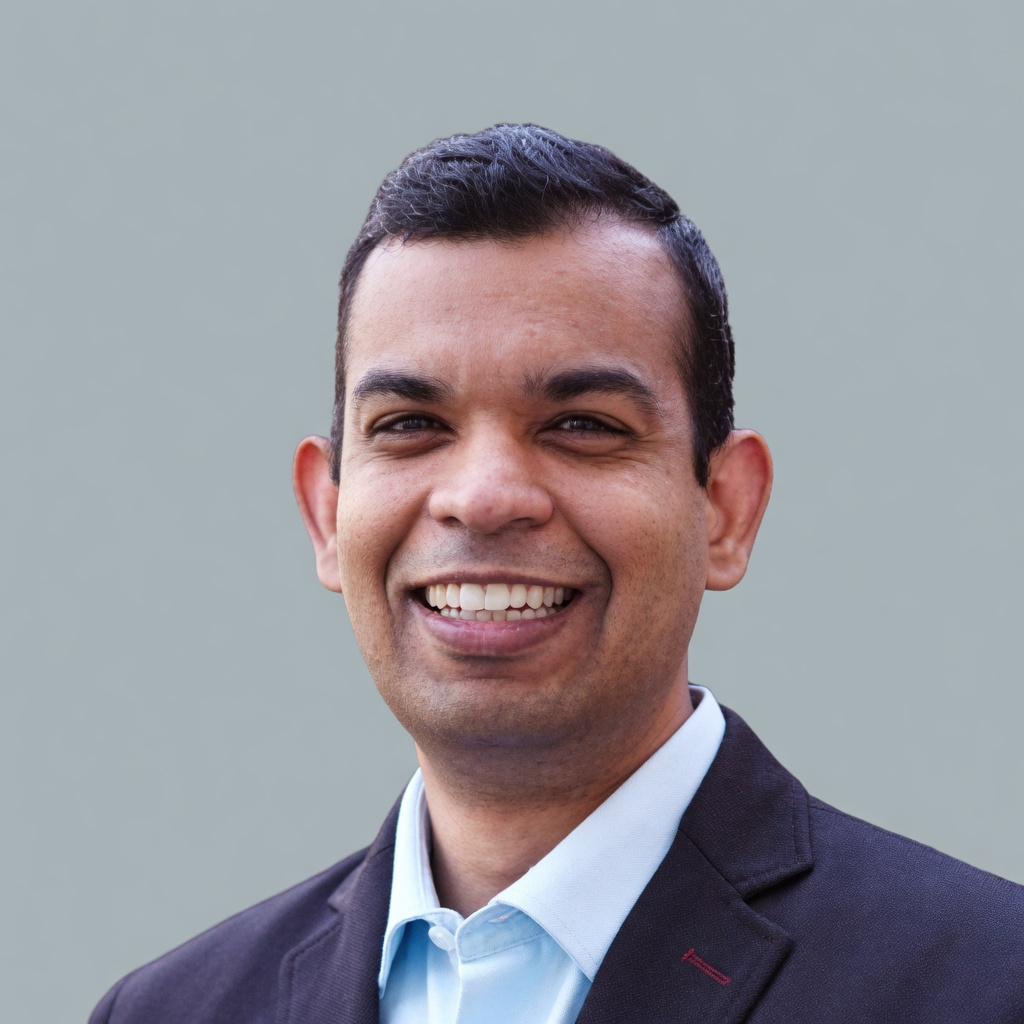
The AI that never blinks
There is a surveillance camera pointing at a door somewhere in America right now. It has been pointing at that door for four years. In those four years, it has sent 11,000 alerts. A security professional has reviewed each one. Eleven thousand times. Three were real. Samuel Joseph decided that was insane - and then built a company to fix it.
Hakimo is not a camera company. It is not a software-bolted-onto-cameras company. It is an autonomous AI agent that reads your existing hardware - every camera, every badge reader, every access control panel already installed on-site - and replaces the human eye that stares at monitors waiting for something to happen. The system monitors in real time, correlates badging data with video feeds, detects tailgating and piggybacking with less than 1% false positives, and fires forensic searches in seconds that would take a human operator hours of VCR-style rewinding.
Security teams shouldn't have to waste hours searching through video just to find one key moment. Our goal is to help teams go from incident to insight in seconds.
- Samuel Joseph, Co-Founder & CEO, HakimoGold medal, then a PhD, then a startup
Joseph grew up academically exceptional. At the Indian Institute of Technology Madras, he graduated with a B.Tech. in 2016 and received the President's Medal - not the top of his department, but the top of the entire graduating batch across every field of study. The kind of honor that stays on your LinkedIn forever and means very little about what you will actually build.
He went to Stanford, where he joined the Platform Lab under Prof. Sachin Katti and spent his PhD working on self-driving networks - the idea that networks, like cars, should be able to navigate themselves without constant human steering. He earned both a Master's and a PhD in Electrical Engineering. Between degrees, he made one detour: an early-stage role at Totemic, where he built novel AI algorithms for wearable-free sensors that could detect falls in elderly people by analyzing movement patterns without any device on the body. It was his first taste of AI that does something quietly useful instead of loudly clever.
In early 2020, Joseph and his co-founder Sagar Honnungar - another IIT Madras + Stanford double - left their academic perches and founded Hakimo. The timing was deliberate. Camera hardware was getting cheap. Computer vision was getting good. And the physical security industry was still operating on a model that hadn't changed in decades: humans watching screens, waiting. That gap was the company.
The first customer who couldn't stop signing up
Hakimo's earliest public customer was Curio Storage - a self-storage operator with a recurring problem: former tenants breaking in. The founders ran a prototype on a sample of Curio's alarm videos. The storage operator was impressed enough to pilot two facilities. Then nine. The pattern repeated across industries. A car dealership. A university. An airport. Punta Gorda Airport eventually deployed Hakimo not just for general monitoring but specifically to satisfy TSA compliance requirements around piggybacking and tailgating - an endorsement that regulatory oversight gets right when it picks technology that actually works.
The pitch inside enterprise security departments landed for a reason Joseph describes bluntly: "This level of reduction in false alarms is something that many in the industry still assume is impossible." He is right to call that out. The assumed impossibility was the moat. When the industry doesn't believe a problem can be solved, it stops trying to solve it. Joseph just solved it.
Hakimo has reduced false alarms by more than 80% at customer sites. This level of reduction is something that many in the industry still assume is impossible.
- Samuel Joseph, Co-Founder & CEO, Hakimo$20.5M and the autonomy bet
The $4M seed round in October 2020 brought in Neotribe Ventures, Defy Ventures, and Firebolt Ventures. The $10.5M Series A in March 2025 was led by Vertex Ventures and Zigg Capital, with RXR Arden Digital Ventures and returning investors Defy.vc and Gokul Rajaram joining. That's $20.5M in total - modest by the standards of an AI company that competes at the infrastructure level, substantial by the standard of a company that sells directly into an industry famous for buying on relationships and paper spec sheets rather than live demos.
The Series A announcement came with a deliberate phrase: "autonomous security agent." Not monitoring software. Not alarm management. An agent - a system capable of understanding what is happening, deciding what it means, and taking the appropriate response action without a human in the loop for every step. The 2025 version of Hakimo integrates with LenelS2, one of the leading access control providers, and works across video management systems, badge readers, and existing camera infrastructure via ONVIF compliance. Customers don't rip and replace anything.
The company ended 2024 with 3x growth in both customers and revenue. It crossed 400 protected properties spanning multifamily apartments, car dealerships, construction sites, universities, corporate offices, and Fortune 500 enterprise campuses. The math, per Joseph: each Hakimo deployment saves a customer roughly $125,000 per year compared to the equivalent security guard coverage. The product is not cheap. It is dramatically cheaper than the alternative.
Thought leadership, done quietly
Joseph joined the Forbes Technology Council in November 2021 - an invitation-only group for senior technology executives. He appeared at ISC West 2022, ISC West 2023, and GSX 2022, the major security industry trade shows where vendors typically show flashy demos and analysts ask skeptical questions. Hakimo left ISC West 2022 with the Judges' Choice Award, evaluated by a panel of 30+ vendor-neutral security professionals with 10+ years of industry experience each. The people most likely to catch a bluff were the ones who handed him the award.
He does not appear on the conference circuit to build a personal brand. He appears to move an industry. The security sector is notoriously conservative - it changes slowly, trusts slowly, and buys slowly. Joseph's strategy is less "disrupt" and more "demonstrate, then let the industry self-convince." The results back the approach.
We're not just automating security - we're redefining it with AI that can recognize and act on any security event and deliver unmatched protection for businesses worldwide.
- Samuel Joseph, Co-Founder & CEO, HakimoWhat comes next
Joseph's stated goal is to make Hakimo the definitive autonomous security agent for physical security operations globally. The vision is not incremental - it is a complete substitution of the human operator role for routine monitoring, with human experts elevated to exception-handling and strategic oversight. The "human-in-the-loop" framing in the company's materials is intentional: Hakimo doesn't want to replace human judgment entirely. It wants to make human judgment rare and therefore more valuable.
That is the kind of bet that requires believing, before the market does, that the technology will get good enough to earn that trust. Samuel Joseph made that bet in 2020. In 2025, 400+ properties are paying for it. The industry's skeptics are running out of objections.
Quotes from Samuel Joseph
Hakimo has modernized the physical security industry by bringing cybersecurity-like tools powered by artificial intelligence.
Our goal is to help teams go from incident to insight in seconds, so they can focus on prevention, not playback.
AI that can recognize and act on any security event - that's what we've built. Not a tool. An operator.
Hakimo's Capital Stack
Things worth knowing
The President's Medal at IIT Madras goes to the top student across the entire graduating class - not just one department. Samuel Joseph won it in 2016.
Hakimo's AI saves customers roughly $125,000 per year compared to equivalent security guard staffing - before accounting for the 80%+ false alarm reduction.
His co-founder Sagar Honnungar is also an IIT Madras + Stanford graduate. Two President's Medal-caliber engineers built Hakimo together.
Punta Gorda Airport deployed Hakimo specifically to meet TSA compliance requirements for piggybacking and tailgating detection - not just for efficiency.
Hakimo requires no hardware replacement. It works via ONVIF compliance with any existing cameras, badge readers, or access control system already on-site.
ISC West 2022's Judges' Choice Award was evaluated by 30+ vendor-neutral judges with 10+ years each in the physical security industry. These are the industry's toughest critics.