voip
(50)
BTC Broadband has a plan for the next severed cable
The Bixby telephone company grew into a fiber, voice and managed IT provider. Its next test is keeping Oklahoma customers connected when something goes wrong.

Svetlana Lepikhova Makes the Business Phone Sound Human Again
The MightyCall CMO brings a finance-trained eye to the decidedly human business of explaining phone software - then leaves the dashboards behind for a surfboard and a dog walk on the Northern California coast.

Ari Rabban Built for the Small Business Everyone Else Put on Hold
A lawyer turned telecom operator spent nearly two decades making sophisticated phone tools feel ordinary. His enduring bet was simple: tiny businesses deserve serious infrastructure without an IT department.

Scott Lahman Kept Betting on the Phone's Next Act
From a prescient Nokia meeting to JAMDAT's $680 million exit and textPlus's pending Truecaller deal, Lahman's career is a study in spotting the next job a phone will do - then doing the patient work to make it ordinary.

Phone.com Built the Small-Business Switchboard - Then Sold for One Year of Revenue
A perfect domain, a stubbornly practical product and nearly two decades of small-business customers built a real communications company. The $22.6 million exit reveals both the power - and the ceiling - of making complicated software feel like a utility.

The App That Gave Away Free Phone Numbers Until a $15 Million Buyer Came Calling
textPlus built a business on the one thing carriers refused to give away: a phone number. Fifteen years and 150 million downloads later, Truecaller wrote the check.

The Firefighter Who Wired Middle Georgia While the Rest of Us Signed 36-Month Contracts
A former Bibb County firefighter turned his side gig into a 16-person shop that undercuts the alarm giants on price and skips the contract entirely. Here is how a small-town security company keeps winning against companies 1,000 times its size.

Clear Rate’s Bet: The Best Telecom Upgrade Is One Human Who Answers
For 25 years, the Michigan provider has sold a gloriously unsexy idea: one bill, one number to call, and fewer vendors to blame. Its opportunity is the mess between national carriers - and its risk is whether local service can stay personal as the platform grows.

Insight Communications
For 27 years, Insight Communications wired the parts of the Midwest the coastal giants ignored - then sold the whole thing to Time Warner Cable for about $3 billion.

RingCentral
The company that dragged the office phone into the cloud is now betting the whole switchboard on AI agents that answer, route, and read the room.
Squaretalk
The cloud contact center platform trying to turn every outbound call into a smarter, faster, better-connected conversation - without the enterprise price tag.
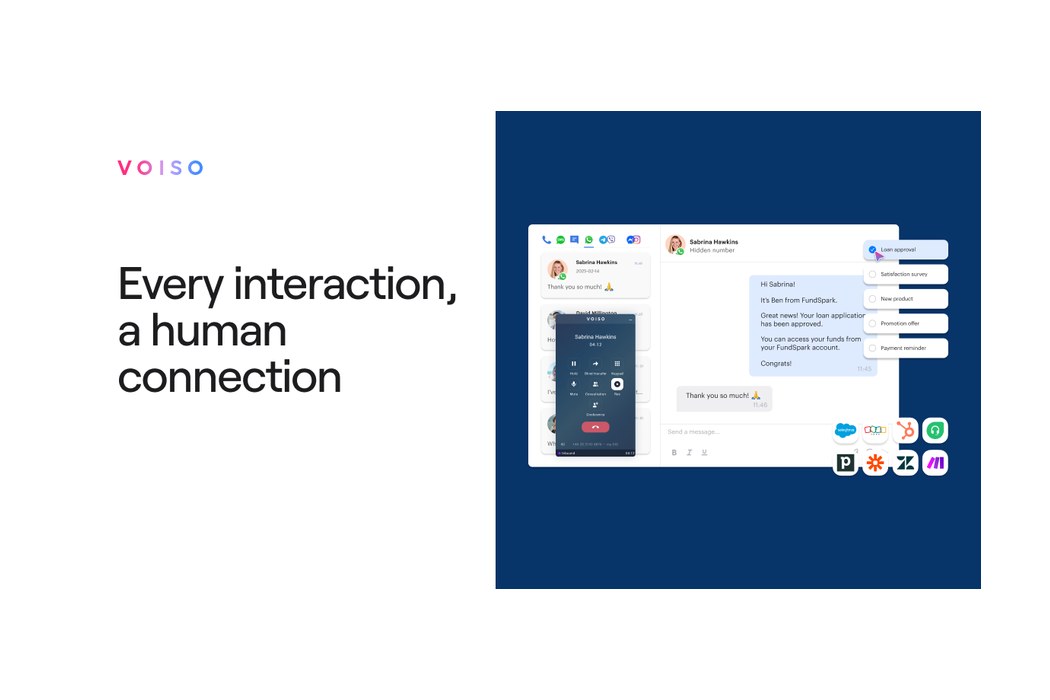
Voiso
Every interaction, a human connection.

8x8
One company built its whole pitch on erasing the line between the phone on your desk and the call center that answers your customers. Here is how 8x8 turned four decades of telephony into an AI-driven customer-experience platform.

Aircall
The Paris-born company turned the office phone into a line of software - and is now teaching it to answer calls on its own.

REVE Systems
For more than two decades, a company born in Dhaka has quietly wired the plumbing behind millions of internet phone calls - one softswitch, one dialer, one SMS gateway at a time.

TCN
For 25 years, a self-funded company in southern Utah has quietly wired the phone lines of collections agencies, hospitals and call centers - no contracts, no venture money, and a stubborn belief that AI should help agents, not fire them.
Nextiva
A phone company that decided phone calls were only the beginning. How Nextiva turned a VoIP line for small businesses into an AI platform that runs a billion customer conversations a year.

Mitel
For half a century Mitel has run the office phone. After a 2025 debt reset, the Canadian veteran is betting that hybrid - part on-premises, part cloud, part AI - is where enterprise communication actually lives.
GoTo
Powering a world of work without limits.

Dialpad
The company that turned every phone call into data is betting its future on AI agents that answer before you finish asking.

Eight AI Contact Center Platforms Chasing the Same Phone Call
Dialpad, 8x8, Sprinklr, Broadvoice, Squaretalk, CloudTalk, Convoso and UJET all promise to run your phone lines with artificial intelligence. Here is what actually separates them once the demo ends.

The Software War Behind Every 'Please Hold'
8x8, Aircall, CloudTalk, Cisco, Nextiva, UJET, Vocalcom and Broadvoice are all chasing the same few seconds before a human picks up. Here is how eight very different companies ended up fighting over the cloud behind your customer service line.

CloudTalk Bets the Phone Call Isn't Dead - It's Just Dumb
The Slovak startup raised $28 million to turn the business phone call into software - and picked a fight with UJET, Mitel and Salesforce over who owns the voice in customer conversations.

Convoso
The leading AI-powered sales platform for fueling growth.

AVOXI Wants Your Business Call to Stop Looking Like Spam
The 25-year-old Atlanta voice company sells phone numbers in more than 150 countries. Now it is betting that the hardest problem in business calling is not connecting - it is getting people to pick up.

Six Contact Center Platforms, Six Very Different Bets
Twilio, UJET, Cisco, Alvaria, CloudTalk and Gladly all promise to handle your customers - but each one was built for a very different company. Here is who each is really for.
CloudTalk
CloudTalk wants the business phone call to behave like modern software: measurable, connected and increasingly automated. Its bet is that the winners in voice AI will own both the conversation and the plumbing underneath it.
Broadvoice
CX Built For Where Your Business is Going Next. Broadvoice replaces overbuilt, underperforming communications platforms with cloud calling, contact-center, and AI tools built for small and mid-sized businesses.
AVOXI
AVOXI delivers unmatched cloud voice coverage that's orchestrated by software. It's the only platform you'll ever need.
Avaya
The 25-year-old telecom spinoff that answers the phones for most of the Fortune 100 is betting its second act on hybrid AI-powered customer experience - without asking anyone to rip out what already works.