The Software War Behind Every 'Please Hold'
8x8, Aircall, CloudTalk, Cisco, Nextiva, UJET, Vocalcom and Broadvoice are all chasing the same few seconds before a human picks up. Here is how eight very different companies ended up fighting over the cloud behind your customer service line.
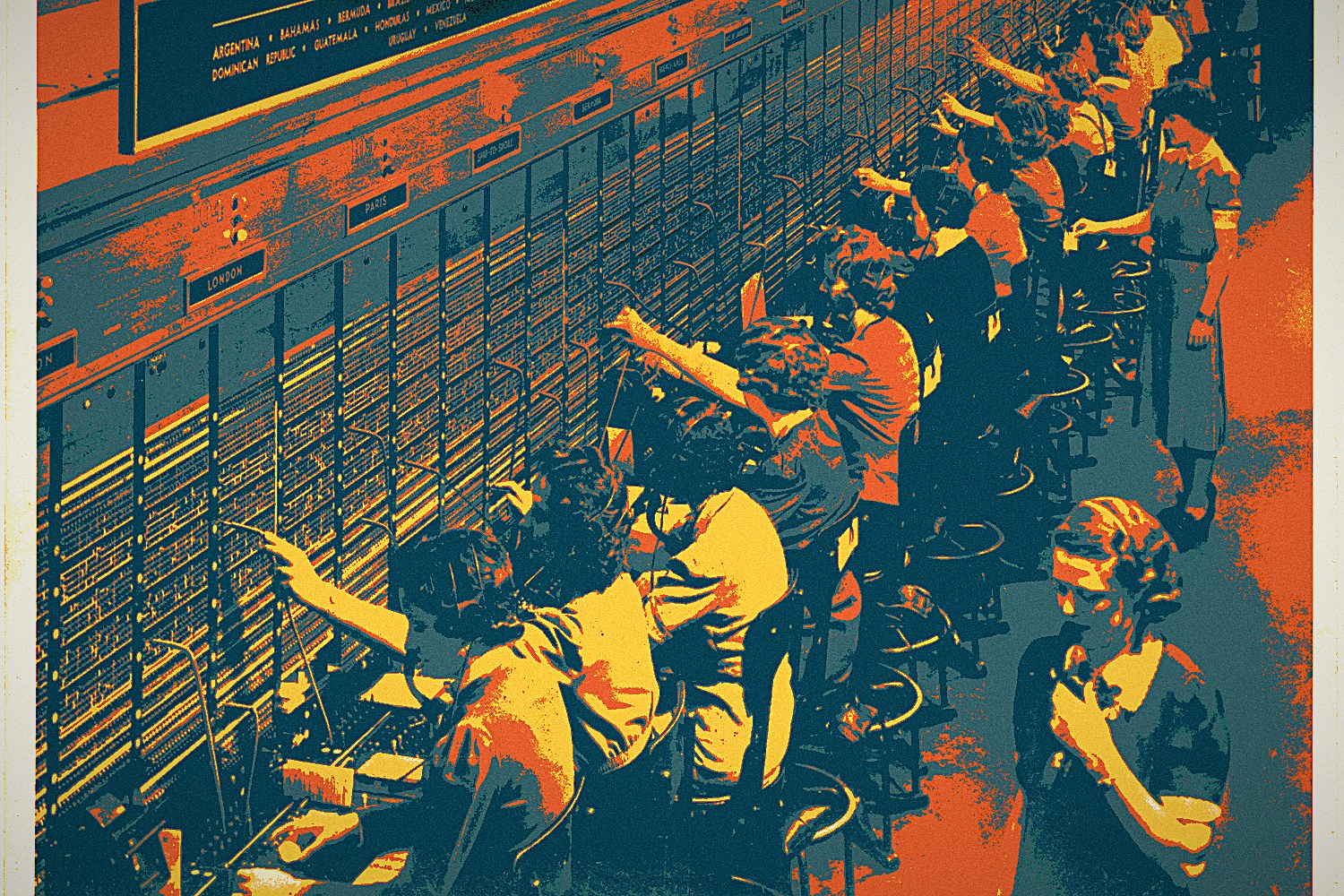
Think about the last time you called a company for help. Somewhere in the two or three seconds between the ring and a voice, a piece of software decided who you were, why you were probably calling, and which agent - or which machine - would pick up. That handoff is invisible to you. It is the whole business for a surprising number of companies, and right now eight of them are fighting over it.
The names read like a spelling test: 8x8, Aircall, Vocalcom, CloudTalk, Cisco, Nextiva, UJET, Broadvoice. They rarely make headlines. But together they sit inside a market - cloud contact centers and business phone systems, known in the trade as CCaaS and UCaaS - that touches almost every customer interaction you have ever had over a phone or a chat window. And after two quiet decades, it is having its loudest year.
Eight companies, eight starting lines
Where they came from
The interesting thing about this list is that no two of these companies started in the same place. They arrived at the same queue from wildly different directions, which is why they still feel so different to use.
8x8 is the elder. It was founded in 1987, closer to silicon than software - its early life sat in video and chip technology before it became a cloud-phone company. Today it trades publicly under the ticker EGHT and reported roughly $729 million in annual revenue. It is the one that has seen the most cycles.
Cisco is the giant that wandered in. The networking company Leonard Bosack and Sandy Lerner founded in 1984 does about $56.7 billion a year overall, and it does not even break out its contact-center revenue separately. The reason Cisco's Webex answers so many corporate calls is a single 2018 purchase: it bought BroadSoft for around $1.9 billion, and that platform became Webex Contact Center.
The same list runs from a 1987 chip company to a 2016 startup - all now selling into the same three seconds of your phone call.
Vocalcom, founded in France in 1995, grew up on outbound predictive-dialer technology - the machinery behind sales and collections calls - before reinventing itself as an omnichannel cloud platform. Nextiva, founded in Scottsdale by Tomas Gorny and Tracy Conrad in 2008, took the opposite road: it bootstrapped, reportedly reaching around $200 million in revenue before taking a dollar of venture money. Then in 2021 it took a single $200 million check from Goldman Sachs at a roughly $2.7 billion valuation.
The younger cohort is where the design language changed. Aircall, founded in Paris in 2014 by Olivier Pailhes, Jonathan Anguelov and their co-founders, had one deceptively simple pitch - put the phone inside the CRM - and rode it to unicorn status with a $120 million Series D in 2021 and more than $100 million in annual recurring revenue. UJET, founded by Anand Janefalkar in San Francisco in 2015, went mobile-first and built on Google Cloud's conversational AI, and has topped G2's user-satisfaction rankings for six years straight. CloudTalk, out of Bratislava since 2016, raised a $28 million Series B in 2024 explicitly to build AI voice agents. And Broadvoice, an SMB and BPO specialist rooted in early-2000s VoIP, bought the Portuguese CCaaS firm GoContact in 2021 to move up the stack.
8x8
Cloud voice and contact center. ~$729M revenue, ticker EGHT. The long-timer of the group.
Cisco / Webex
Networking giant whose ~$1.9B BroadSoft deal powers Webex Contact Center for large enterprises.
Aircall
Paris unicorn. Phone system that lives inside your CRM. $120M Series D, $100M+ ARR.
CloudTalk
Slovak scale-up, now all-in on no-code AI voice agents. 4,000+ customers in 100+ countries.
Nextiva
Bootstrapped to nine figures, then a $200M Goldman round. ~$350M revenue, 100,000+ businesses.
UJET
Mobile-first CCaaS on Google Cloud AI. $76M round led by Sapphire; #1 on G2 six years running.
Vocalcom
French veteran built on predictive dialing, now omnichannel across four continents.
Broadvoice
VoIP and UCaaS for SMBs and BPOs. Its GoContact arm won a 2025 Product of the Year award.
Timeline • how eight vendors reached the same queue
Foundings shown approximate; Broadvoice's lineage traces to the early 2000s. Sources: company sites, Wikipedia, Crunchbase.
The thing they are all actually selling
Convergence
Here is the twist that makes this a fight rather than eight separate businesses. For years there were two different purchases. One was UCaaS - the software your own staff use to call, meet and message each other. The other was CCaaS - the software your support and sales teams use to run customer queues. Different buyers, different budgets, different vendors.
Those two decisions are collapsing into one. Roughly 43% of businesses now buy their contact-center and communications platforms from the same vendor. When a company like Nextiva or 8x8 can hand you calling, meetings, messaging and a full support queue on one bill, the old boundaries stop mattering. The industry has an ugly name for the combined thing - "MultiCaaS" - but the strategy behind it is clear: own more of the stack, and you own the account.
Whoever owns the moment a customer needs help owns the customer. Eight companies noticed at roughly the same time.
Why 2025 was the year it got loud
The AI turn
The reason the volume went up is the same reason it went up everywhere else: AI agents. Not the chatbot that annoyed you in 2019 - the newer kind that can actually take a request, look something up, and finish the job without a human. In March 2025 Gartner put a number on it that the whole industry has been quoting since: agentic AI could autonomously resolve about 80% of common customer-service issues by 2029, cutting operating costs by roughly 30%.
You can see every vendor on this list reacting to that forecast. CloudTalk now markets AI voice agents it says you can build in under ten minutes and run in more than 60 languages. Nextiva bought the AI contact-center firm Thrio in 2024. UJET leans on Google Cloud's conversational AI as its foundation. Cisco's pitch is convergence - CCaaS, calling and messaging in one Webex stack. Even the incumbents that spent decades selling human seats are now, awkwardly, selling the software that reduces the number of seats you need.
Positioning map • where each vendor plays
A rough editorial reading of public positioning, not a formal ranking. Horizontal: typical customer size. Vertical: how central AI and CX are to the pitch.
The quiet part: the price list is changing
Follow the money
If you want to know where an industry is heading, watch how it charges. For thirty years, contact-center software was sold per agent, per month - a seat license. It was simple, and it aligned the vendor's revenue with the size of your team.
AI breaks that math. If a machine resolves 80% of routine tickets, you need fewer seats, and a per-seat vendor is quietly rooting against its own customers' efficiency. So the pricing is moving. In 2025 Salesforce introduced consumption-based pricing for its Agentforce product, charging for work done rather than seats filled. Others are experimenting with usage rates measured in cents per minute, and with outcome-based pricing that charges only when a problem is actually solved. The seat license that built this business is not dead yet, but you can hear it winding down.
Who wins
A buyer's read
There is no single winner here, and that is the honest answer. The right pick depends entirely on the job. If you are a sales or support team that lives in a CRM and wants calling switched on this afternoon, Aircall and CloudTalk are built for you. If you want one vendor for the whole company's communications, Nextiva and 8x8 bundle broadly. If you are a large enterprise already standardized on Webex, Cisco is the path of least resistance. UJET fits mid-market teams that want a Google-AI foundation, Vocalcom suits heavy omnichannel and outbound operations, and Broadvoice serves smaller businesses and outsourcers.
What ties them together is the bet. Every one of these companies is wagering that the few seconds before a human picks up - the routing, the context, the first response - is the most valuable real estate in customer service. For a century that space was filled by switchboard operators plugging cables into a board. Now it is filled by code, and increasingly by an AI that may never have been human at all. The wiring changed. The job did not.