At his daughter’s volleyball game, Tript Singh Lamba watched two players run for the same ball. Neither called it. The ball fell between them. On another play, both assumed the other would take responsibility. Down it went again. Lamba had spent two decades around technology teams, and here was an organizational problem arriving in a much smaller uniform.
He described the scene in February 2026, connecting it to duplicate work, unclaimed dependencies and teams discovering a problem after it had already become expensive. The players were able to reach the ball. The missing ingredient was an audible agreement about who would do so. Any product manager who has watched a deadline pass between two departments can appreciate the distinction.
That question of ownership runs through his work at ProductNow, the company he founded after Microsoft, Google and Expedia. Its early build involved Lamba and an intern. Its announced seed round was $6 million. There is a pleasing economy to the setup: someone who had worked inside very large organizations began his next chapter with barely enough people for a meeting.
When everyone understands the goal, who owns the next step?
Terms on the takeaway box
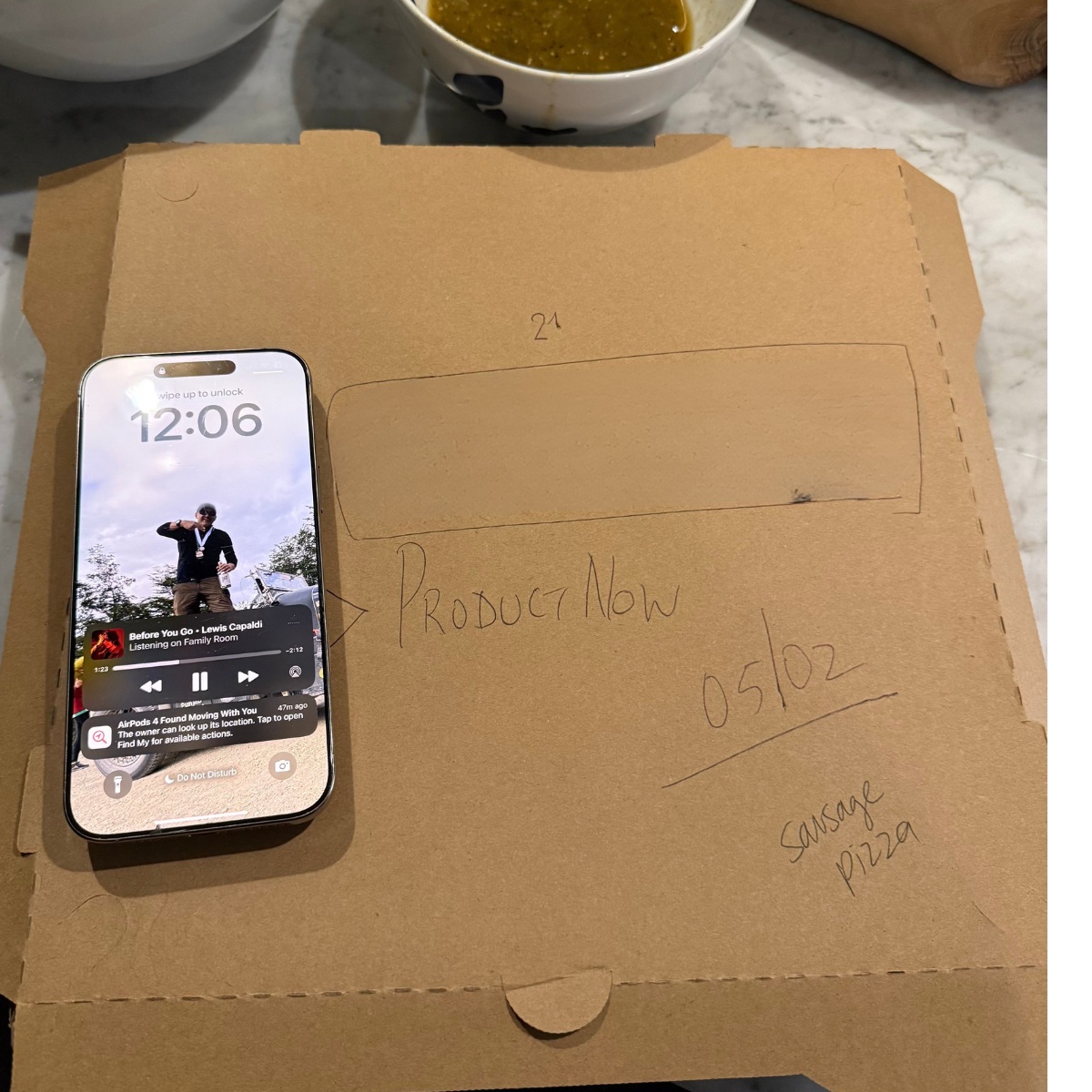
The investment story has its own small cast. While serving as an executive-in-residence at Sierra Ventures, Lamba spent two months exploring ideas with managing partner Tim Guleri. Guleri invited him to the firm’s offsite in Healdsburg. At 12:06 a.m., they shook hands on terms and recorded the commitment on a pizza box.
Three weeks later, the round closed. Sierra led, with Parameter Ventures and individual operators also investing. The funding announcement followed on July 15, 2025. The box supplies a memorable prop, but the sequence matters more: a period of working through ideas, a commitment, then the formal investment. Even a company concerned with reducing process had some process to get through.
At the time, Lamba was building software for the work around software: articulating a product’s purpose, translating it into tasks and keeping an organization aligned as those tasks changed. Product teams were the starting point. The launch proposition was to give those teams AI assistance inside the tools they already used, with human judgment directing what happened next.
on the early build
Led by Sierra Ventures, with Parameter Ventures and individual operators participating.
Three companies, three kinds of scale
Lamba’s earlier career had supplied plenty of places to observe coordination. At Microsoft, his work included the early Messenger platform and helping launch Bing and technology that became Azure. At Google, he co-founded an advertising AI personalization team and later led product work in YouTube Ads. In 2022, Expedia Group announced him as SVP of Consumer Product.
Those company names can make a career seem tidier than it felt to the person living it. Lamba’s own account of the lessons is more useful. Microsoft taught him to build platforms with simplicity, durability and scale in mind. At Google, serving enormous numbers of users made scale an everyday operating condition. Expedia brought the demands of organizing people and platforms across a collection of travel brands.
By September 2023, eleven months after joining Expedia, he was describing new consumer experiences across Expedia, Hotels.com and Vrbo. They included travel guides, group trip planning and conversations designed to help travelers choose a neighborhood. He also wrote about EG Labs, where consumers could try experimental products. These were practical questions about what a traveler needed to understand before making a choice.
The connection to ProductNow is a way of reading that career: first help people navigate choices in search, advertising and travel; then work on how the people building those experiences make decisions together. Across those settings, a product has to survive more than its initial idea. It must be understood, implemented and revised by people with different jobs.
Electricity, education, and a dorm room
There is another route through Lamba’s story, and it begins with access to learning. In August 2024, he announced that he was joining BrainPOP as a board advisor. He connected the appointment to his own experience growing up with inconsistent electricity and educational materials. Making learning accessible and enjoyable for children was a purpose he stated directly.
It is a specific reason for taking an advisory role. Learning resources were something he had experienced as unevenly available. Years later, he had a chance to contribute to a company making educational experiences for children. That connection gives the appointment a personal dimension beyond the customary list of board affiliations.
A month later, he wrote about finishing Stanford’s Innovative Product Leadership program. Among the subjects he remembered were customer decisions, systems leadership, negotiation and storytelling. He particularly enjoyed a NASCAR tire-changing exercise. Leadership education occasionally benefits from an activity in which the consequences of poor coordination are visible before the next quarterly review.
He also enjoyed living in a college dorm again. The detail is cheerful and disarming: an Expedia executive, back in student accommodation, making time to learn. He attended alongside colleague Reena Nora Patil and described working through ideas together during group activities.
At Expedia, he said, his traveler-products organization made room for a learning day every quarter. His Stanford week allowed him to take some of the time he encouraged others to take. The story is less about collecting another credential than about a practical choice: give learning a place in the calendar, then actually occupy it.
“How do we make our best people better?”
Tript Singh Lamba, on the question behind ProductNow
The colleague who was the company’s memory
In another recollection, Lamba described a colleague from his first product-management job. This person knew where the useful information lived: which specification mattered, which decisions had held and which document could be trusted. The team depended on him to navigate its own work. Then he retired.
Lamba wrote that they spent a year rediscovering decisions they had already made. The anecdote carries a familiar office absurdity. An organization can possess a great many documents and still lose its memory when one person leaves. A folder full of files is only so helpful if the explanation of their importance has gone home for good.
That recollection helps make sense of ProductNow’s current public description. By October 2026, its website presented the company as a context engine for enterprise AI. The scope had broadened from the product-team execution language of the 2025 launch. The website described bringing together information from code, calls, customer records, tickets, documents and conversations, then reconciling conflicting signals.
Reconciliation is the interesting word. Two teams may each have accurate records of different moments in the same project. A decision made on a call might supersede a ticket without anyone changing the ticket. Finding both records still leaves somebody with the job of deciding what holds now. ProductNow describes a system intended to keep that shared understanding current and support actions governed by permissions.
What changed · why · who owns it
For Lamba, the retired colleague is a concrete example of why that work matters. Someone had been doing the connecting, remembering and interpreting all along. The burden becomes visible when that person is no longer there to carry it.
He applies a related test to the demand for an AI strategy. In public advice to product leaders, he described the danger of committing to the technology before identifying a problem that matters to customers and the business. The pressure can send a team searching for a justification after the decision to build has already been made. His proposed discipline is to state the gap clearly enough that the team can judge whether AI helps close it.
For a founder selling an AI product, that advice creates a useful obligation. The vocabulary has to lead back to somebody’s work: the decision they need to make, the information they can trust and the action they are allowed to take. Otherwise the next document risks becoming another object the organization must explain to itself. His examples keep bringing the discussion back to those ordinary moments of confusion.
Leave room for the next hill
His advice to leaders returns to the human conditions around that shared understanding. In a post about communication, he warned that a manager’s reaction to unwelcome news can discourage the next person from speaking. He advocated making it easier for teams to surface problems early. A leader who wants useful information has to be someone people can bring useful, uncomfortable information to.
The same preference for learning appears in his account of teaching a Stanford CPO-program session in August 2026. He described career chapters as hills. Each came with a setting, an objective, an unexpected challenge and a lesson. The exercise asked people to consider what a new chapter would require them to learn. Another title could arrive without much new terrain.
He ended the session with a clip of Miley Cyrus singing The Climb. It is a funny choice for a room of product executives, partly because it punctures the solemnity that can gather around a career framework. A pop song is permitted to get to the point rather faster than a leadership deck.
That account gives a useful shape to his own move. After years building inside established companies, he returned to the practical work of making something with a tiny team. The next problem was close at hand: people trying to carry a decision across the space between teams, tools and changing information.
At the volleyball game, everyone could see where the ball was going. Someone still had to call it. Lamba’s next chapter is built around the work that begins there.
- ProductNow Current company website ↗
- Tript Singh Lamba on LinkedIn Writing, career updates and product thinking ↗
- The investment, and the pizza box Tim Guleri · August 2025 ↗
- The founder-and-intern build Dean Takahashi’s interview · July 2025 ↗
- Lamba on learning and BrainPOP His advisory appointment announcement ↗
- Choosing the next career hill Lamba’s Stanford teaching account ↗